
Online Marketplaces vs. Local Sporting Goods Resellers
Weighing up where to buy secondhand sports gear? Here's how online platforms and local resellers differ in price, convenience, and risk.
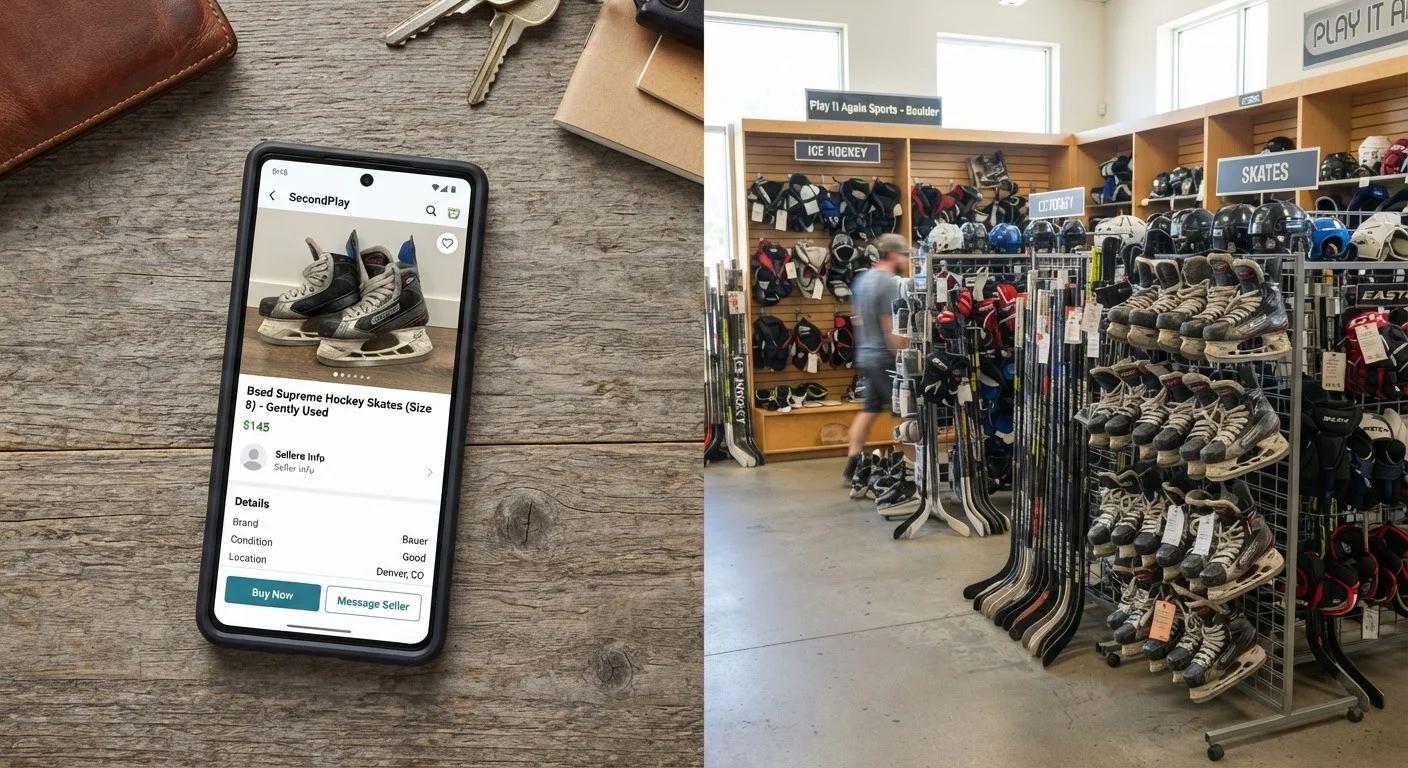
Photo: SaverSteals.com | Explore More. Shop Smarter. editorial
—— In This Article
Key Takeaways
- Online marketplaces offer broader selection but add shipping costs, fees, and the inability to physically inspect items.
- Local resellers let you handle gear before buying and avoid shipping risks, though inventory is more limited.
- Buyer protections vary significantly between platforms — always understand the dispute policy before paying.
- For safety-critical gear like helmets, in-person inspection is generally the more cautious approach.
- Pricing on local resale can be negotiable; online prices are often firmer due to platform visibility.
- Neither channel is universally better — the right choice depends on the item type, urgency, and your risk tolerance.
Selection and Availability
Online marketplaces aggregate listings from sellers nationwide — sometimes globally — giving you access to a far deeper pool of inventory than any single local store can stock. If you need a left-handed lacrosse stick in a specific size or a discontinued ski boot shell, a broad online search is realistically your best shot.
Local sporting goods resellers — including dedicated consignment stores and shop-run trade-in programs — carry what their local community brings in. That makes selection narrower and more unpredictable, but also more seasonally relevant. A ski shop in a mountain town will have a robust supply of ski gear in fall; a surf consignment store near the coast will stock boards year-round. If your needs are common and regional, local stock is often surprisingly adequate.
For a wider look at how used gear changes hands across its full life, see the full lifecycle of secondhand sports equipment.
| Criterion | Online Marketplaces | Local Sporting Goods Resellers |
|---|---|---|
| Selection breadth | Very wide — national/global inventory | Limited to local supply |
| Physical inspection | Not possible before purchase | Always possible in store |
| Shipping costs | Added cost, varies by item size | None — pickup only |
| Platform/transaction fees | Typically 5–15% on most platforms | Built into asking price |
| Price negotiability | Limited — market-visible pricing | Often more flexible |
| Buyer protections | Structured dispute processes available | Varies; stronger at established stores |
| Speed of acquisition | Days to weeks depending on shipping | Same day if item is in stock |
| Safety-gear suitability | Higher risk — rely on photos/descriptions | Lower risk — inspect before buying |
Price, Fees, and Negotiation
Sticker prices on online platforms are shaped by market visibility — sellers can see comparable listings instantly, so prices tend to cluster around a going rate. That's useful for gauging fair value, but it also limits how far below market you can realistically negotiate. Add platform transaction fees (often 5–15% depending on the service) and shipping, and the apparent savings can erode quickly.
Local resellers operate differently. Consignment stores build their margin into the asking price, but that price is often more flexible, particularly for items that have been sitting on the floor for a while. Private sellers at local shops or through community boards are frequently open to reasonable offers. Negotiating a fair price on secondhand sports equipment covers how to research market value and make credible offers before you walk in.
5–15%
Typical seller fees on major resale platforms
Transaction and payment processing fees on peer-to-peer resale platforms commonly range from 5% to 15% of the sale price, reducing net proceeds and sometimes inflating asking prices.
~30%
Average discount on used vs. new sporting goods
Industry resale data generally suggests used sports equipment in good condition sells at roughly 30–50% below new retail, though this varies widely by category and condition.
Inspection, Risk, and Buyer Protections
The single biggest practical difference between the two channels is whether you can handle the item before buying. In-person inspection lets you check structural integrity, test moving parts, verify sizing, and spot cosmetic damage that photographs routinely obscure or omit. For safety-relevant equipment — helmets, harnesses, protective padding — this matters beyond just getting value for money. Damage that isn't visible in a photo can affect how gear performs in a fall or collision.
Online purchases require trusting seller descriptions and photos, with recourse only available after the fact. That recourse does exist on reputable platforms — most offer some form of dispute process or buyer protection — but navigating a return dispute for a heavy or bulky item is a real inconvenience, and outcomes aren't guaranteed.
Cash-in-hand local transactions carry the opposite risk profile: you can inspect thoroughly, but if something is misrepresented and you've already paid, you have limited formal recourse. Buying from an established local resale store (rather than a private individual) adds some accountability, since reputable shops have reputations to protect.
For a broader look at the trade-offs that apply to used gear overall, buying used sports equipment: advantages and trade-offs is a useful reference.
Convenience and Logistics
Online shopping wins on convenience for discovery — you can search, compare, and shortlist gear from home at any hour. But the logistics chain (shipping time, packaging quality, potential damage in transit, return shipping if something is wrong) adds friction that local pickup eliminates entirely. For large items — bikes, kayaks, weight equipment — shipping costs alone can make online purchases impractical.
Local resellers require you to travel, operate within store hours, and accept that the item might not be there when you arrive. But when the purchase works out, you leave with the gear the same day, with no shipping anxiety. The comparison isn't entirely unlike used furniture buying online vs. in person, where the same convenience-versus-inspection tension plays out.
For ongoing coverage of pricing patterns and deal timing across sports categories, the sports gear deals hub tracks seasonal and category-specific trends worth bookmarking.

Sports Editorial Team
Sports Editorial Team is the collective byline for our editorial team and contributor network. Articles published under this byline or an editorial pen name are researched, written, and reviewed according to our editorial standards for clarity, consistency, and independence before publication.
View author profile