
Price Alerts and Wishlist Tools: How Passive Tracking Changes Your Buying Habits
Setting up price tracking for sports gear shifts you from reactive to deliberate shopping. Here's how these tools work and how to use them effectively.
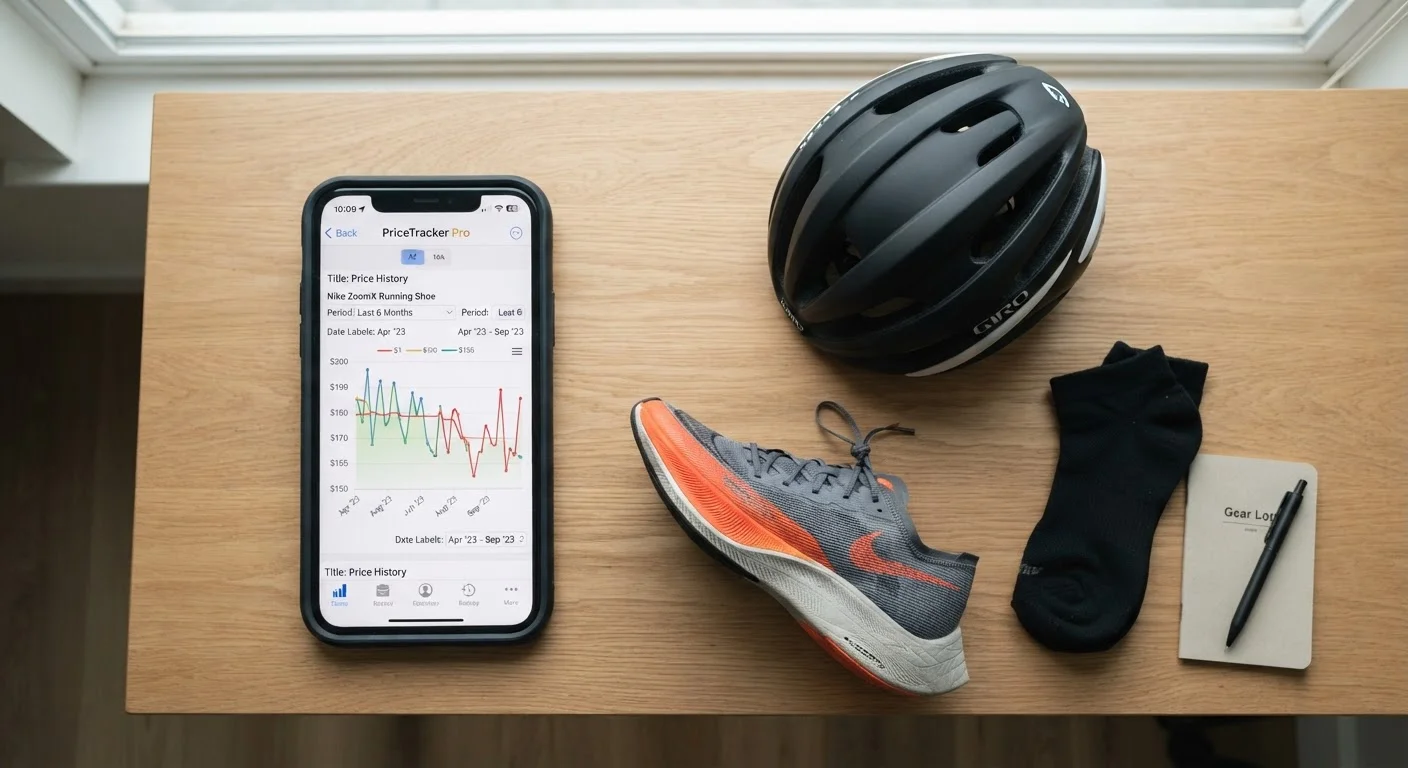
Photo: SaverSteals.com | Explore More. Shop Smarter. editorial
—— In This Article
Key Takeaways
- Price alert tools shift your buying behavior from impulse to intention by removing the need to monitor prices manually.
- Sports gear follows predictable seasonal pricing cycles that make passive tracking especially effective.
- Wishlists create a deliberate waiting period that filters out reactive purchases before they happen.
- Price history data — not just current alerts — is the most useful signal for evaluating whether a drop is genuine.
- Combining wishlist discipline with off-season timing typically yields stronger results than either approach alone.
Why Passive Tracking Works Differently for Sports Gear
Most budget strategies require you to act at the right moment — check the site, catch the sale, move fast. Price alerts and wishlist tools invert that model. You define what you want and at what threshold, then step back entirely until a notification arrives. That shift from active monitoring to passive waiting has a measurable effect on buying behavior.
Sports gear is particularly well-suited to this approach because it follows documented seasonal pricing patterns. Ski equipment tends to drop in late winter and early spring as the season winds down. Running gear often softens in price between major race seasons. Outdoor furniture and camping supplies generally see price reductions in late summer and fall. When you know a price decline is structurally likely, setting a tracker in advance isn't guesswork — it's timing discipline.
Unplanned gear purchases are one of the most common budget traps for active shoppers. Passive tracking interrupts that cycle by inserting a deliberate waiting phase between wanting something and buying it.
30–50%
Typical off-season price reduction range for seasonal sports gear
Consumer pricing analysts have documented that seasonal sports equipment — including ski gear, paddleboards, and camping supplies — commonly sees price reductions of this magnitude during documented off-season windows.
~70%
Shoppers who report impulse purchases they later regret
Survey research from the National Retail Federation has consistently found that a large majority of consumers report making unplanned purchases they later considered unnecessary.
Best Practices for Setting Up Price Alerts
Getting useful alerts requires more than just clicking a "track this" button. The configuration decisions you make upfront determine whether the tool saves you money or just generates noise.
Set your alert threshold based on price history, not the current listed price.
A 10% drop sounds meaningful until you see the item spent three months at that lower price earlier in the year. Price history charts — available through several browser extensions and standalone tracking sites — reveal whether a current price is genuinely low or just returning to a prior baseline.
Track gear in the off-season, not the week before you need it.
The best price windows for seasonal sports equipment typically occur months before peak demand. Setting alerts during the off-season means you're positioned to act when prices are structurally low, rather than scrambling during peak supply pressure.
Limit active trackers to items you've already decided to buy, not items you're still evaluating.
Tracking too many products creates alert fatigue. When a notification arrives, you'll have to re-evaluate the purchase from scratch, which reintroduces the impulse-buying conditions you were trying to avoid. A shorter, committed list keeps decisions cleaner.
Pair price alerts with a personal minimum wait period before purchasing.
An alert tells you a price has moved — it doesn't tell you whether you actually need the item today. A self-imposed waiting rule (for example, revisiting the alert 48 hours later) filters out the urgency reflex that notifications can trigger.
Use separate wishlists for 'confirmed need' and 'considering' items.
Mixing aspirational items with planned purchases blurs the signal your wishlist is meant to provide. When everything is tracked together, it's harder to prioritize which alerts actually require action.
Using Wishlists as a Behavioral Filter
A wishlist isn't just a shopping list — it's a decision delay mechanism. Adding an item to a list instead of a cart forces a pause. That pause is where a lot of reactive purchases get filtered out naturally. If you revisit the list two weeks later and no longer want the item, you've avoided a purchase driven by moment-to-moment enthusiasm rather than genuine need.
For sports gear specifically, wishlists work well when combined with seasonal awareness. Add items you anticipate needing for the next season before that season begins. By the time you circle back, you'll have a clearer read on whether you actually need the item and whether the price has moved.
The used sports equipment market follows a parallel rhythm worth monitoring alongside new-gear wishlists — secondhand prices for seasonal items often soften at the same time as new inventory.
Understanding the Limits of Price Tracking Tools
Price trackers have real blind spots worth understanding before you rely on them heavily. Most tools track listed prices, not effective prices after stacking coupons, member pricing, or bundled offers. A tracked price might technically stay flat while the real cost of purchasing drops — or rises — due to changes in shipping thresholds or promotion structures.
History data is also only as reliable as the coverage window. A product with three months of tracking history gives you far less signal than one tracked for a full year across at least one seasonal cycle. Short histories can make a modest dip look like a significant drop when it's just ordinary volatility.
Automated price trackers alert you to drops, but they have real limitations — the same principle applies across product categories, including sports gear. Similarly, price tracking tools for toys illustrate where these systems fall short in ways that mirror sports equipment tracking gaps.
Use price history as one input, not the final word. Cross-reference with your knowledge of seasonal cycles, and factor in how long you've personally been watching a product before deciding a drop is meaningful.
This article is for informational purposes only. Pricing patterns described reflect general historical trends and are not guarantees of future price behavior.

Sports Editorial Team
Sports Editorial Team is the collective byline for our editorial team and contributor network. Articles published under this byline or an editorial pen name are researched, written, and reviewed according to our editorial standards for clarity, consistency, and independence before publication.
View author profile