
Athletic Equipment That Depreciates Fastest — and What That Means for Shoppers
Some sports gear loses retail value quickly due to model turnover. Knowing which categories depreciate fastest helps you time purchases strategically.
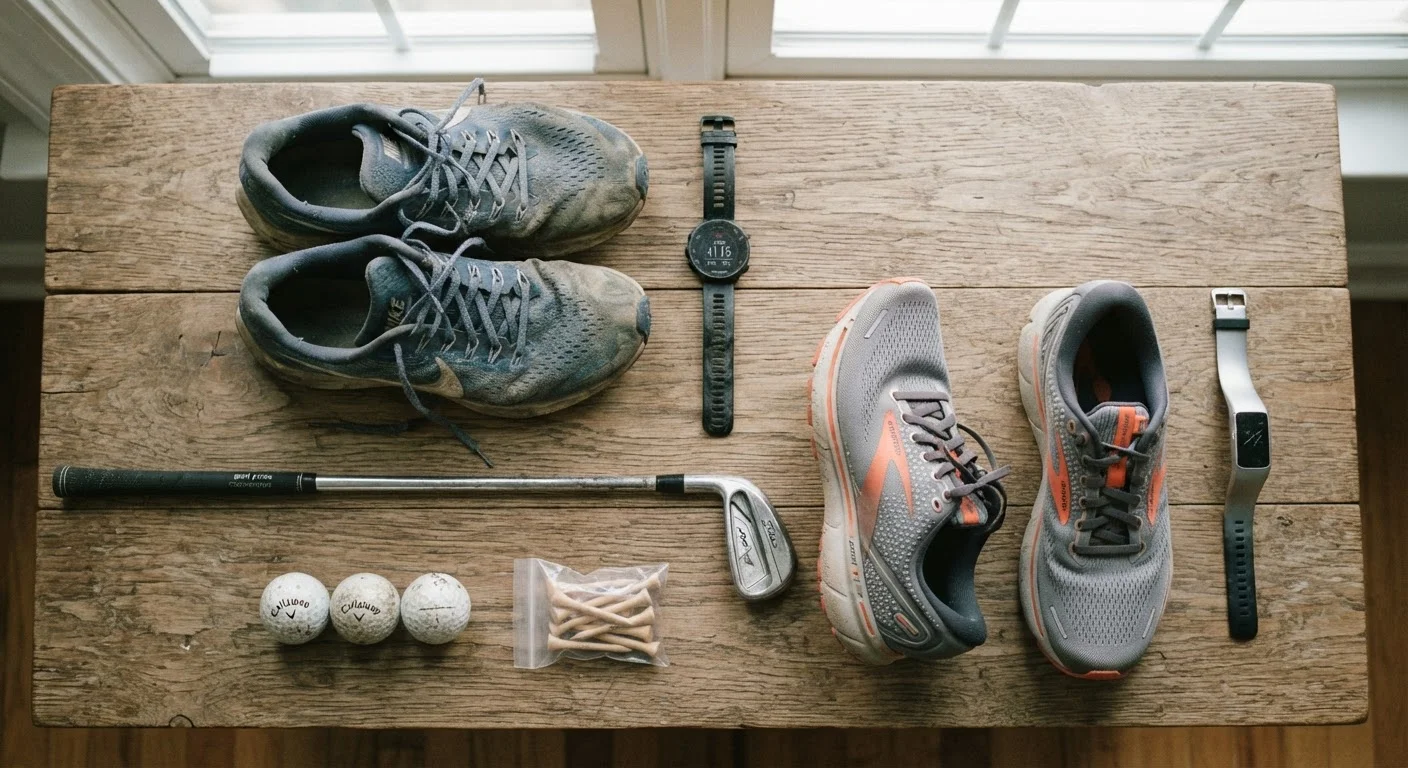
Photo: SaverSteals.com | Explore More. Shop Smarter. editorial
—— In This Article
Key Takeaways
- Running shoes, GPS fitness trackers, and golf clubs depreciate fastest due to frequent model turnover.
- Understanding depreciation cycles lets you time purchases around model transitions for meaningful savings.
- High depreciation doesn't always mean poor quality — last-season gear is often functionally identical to new.
- Safety-critical equipment like helmets should generally be purchased new, regardless of depreciation rates.
- Seasonal demand patterns amplify depreciation, creating predictable windows when older inventory gets discounted.
Why Depreciation Matters More Than the Sticker Price
Retail price tells you what a product costs today. Depreciation tells you how quickly that price will fall — and for budget-conscious shoppers, the second number is often more useful than the first.
In the athletic equipment market, depreciation is driven primarily by model turnover. Manufacturers release updated versions on predictable schedules, and when a new model drops, the previous generation loses perceived value almost immediately — even when the functional difference is minimal. Retailers need to move old inventory, and that pressure translates into markdowns.
Understanding which categories cycle fastest helps you make a straightforward strategic choice: wait for the model changeover and buy at a discount, or decide early in a product's life whether you need the latest version at all. Neither approach is always right, but knowing the pattern gives you real leverage.
For a broader look at when these windows actually open in the calendar year, see the Sports Gear Discount Calendar.
Track Model Launches Before You Need to Buy
Most major athletic equipment manufacturers announce new models weeks or months before they ship. Following product announcement timing — through manufacturer newsletters or enthusiast forums — lets you anticipate when the prior generation will be discounted, rather than waiting passively for a sale. This works especially well for running shoes and GPS devices, where launch schedules are well-documented and consistent year over year.
The Categories That Lose Value Fastest
The list below focuses on equipment categories where depreciation is both steep and predictable — meaning the price drop follows a documented pattern rather than random clearance timing.
Running Shoes
Running footwear has one of the steepest depreciation curves in athletic retail. Major manufacturers typically release updated versions of popular models annually, and when a new version launches, the previous generation is often discounted 30–40% within weeks — sometimes more as the season progresses.
The functional gap between consecutive generations is usually modest. Cushioning platform updates and upper material changes rarely affect performance for recreational runners. Previous-generation running shoes are often a genuinely smart choice, provided you verify the model has no documented structural issues from reviews at the time of its release.
Model transition timing is fairly predictable: spring launches often happen January through March, and fall launches follow in July through September. Buying the outgoing model immediately after a new launch is announced is one of the most reliable discount strategies in sports retail.
The functional gap between consecutive running shoe generations is usually modest enough to ignore entirely.
GPS Fitness Trackers and Sport Watches
Consumer electronics depreciate faster than almost any other sporting goods category, and GPS-enabled fitness devices are no exception. Manufacturers release new hardware annually, and the used and refurbished market absorbs prior generations quickly — often at 40–60% of the original retail price within 12–18 months of launch.
For shoppers whose primary use case is tracking distance, pace, and heart rate, a device from two or three generations back typically delivers identical practical functionality. The headline features added in new generations — sleep tracking refinements, newer sensor arrays, updated app interfaces — rarely change how recreational athletes train day to day.
The sharpest depreciation tends to happen immediately after a successor model is announced, not after it ships. Monitoring manufacturer announcement patterns lets you time a purchase of the outgoing model at its lowest point.
GPS fitness devices often drop 40–60% from retail within 18 months of launch as newer models arrive.
Golf Clubs
Golf equipment follows a model cycle of roughly two years for irons and drivers, and the resale market is well-established and relatively liquid. A set of irons from two seasons ago can often be found on secondhand platforms at 50–70% below its original retail price, with minimal actual wear if the previous owner was a casual player.
The performance gap between club generations for recreational golfers is widely acknowledged to be small. Incremental improvements in face technology and forgiveness ratings are measurable in laboratory conditions but rarely translate to meaningful stroke improvements for players still developing their swing fundamentals.
Golf's used market is also more standardized than most sports categories, with documented grading systems used by major resale platforms, which makes condition assessment more reliable than in categories with no established secondary market infrastructure.
Golf irons from two seasons ago routinely sell at 50–70% below retail with minimal functional difference.
Cycling Computers and Power Meters
Like GPS watches, cycling electronics depreciate rapidly following product generation cycles. Power meters — devices that measure pedaling force to quantify training load — have become increasingly affordable as the category matures, but individual models still lose substantial value when successors launch.
This category benefits from a robust enthusiast resale community. Cycling forums and sport-specific resale platforms carry well-documented listings that often include detailed usage history, which helps buyers assess condition more accurately than general-purpose marketplaces.
One consideration: firmware support and app compatibility can become an issue with older devices as platform ecosystems evolve. Before purchasing a previous-generation cycling computer, verify that the device is still supported by the relevant training software your setup depends on.
Check firmware support before buying older cycling computers — app compatibility can lapse on discontinued models.
Team Sport Cleats and Position-Specific Footwear
Football, soccer, and baseball cleats follow a release cycle similar to running shoes, with seasonal model refreshes that push previous versions into clearance. Unlike running shoes, cleats are often also subject to sport-season demand spikes — prices tend to rise heading into fall for football and spring for baseball, then drop sharply once the season peaks.
The depreciation pattern here is compounded by the fact that cleat designs are heavily trend-driven within youth and recreational leagues, meaning older colorways and silhouettes fall out of demand faster even when the underlying performance technology is unchanged.
Off-season purchasing is particularly effective for cleats. A cleat bought at the end of a sport's season — when demand collapses and inventory is being cleared — can represent substantial savings over the same model purchased two months earlier at peak demand. Sport-by-sport discount timing varies more than most shoppers expect.
Cleat prices can swing dramatically with seasonal demand — off-season timing is one of the most reliable savings levers.
Ski and Snowboard Bindings and Boots
Snow sport hardgoods depreciate sharply at two predictable moments: at season end (March through May) when retailers clear inventory, and when new model years launch (typically late summer). The used market for ski boots and bindings is active, particularly in regions with established ski communities.
Important caveat: bindings carry meaningful safety implications. Binding release function degrades over time and with use, and out-of-date DIN certification tables can create compatibility issues with current boot sole standards. This category requires extra diligence — buying used bindings from a knowledgeable seller who can document service history and verify current certification standards is strongly advisable. When in doubt, prioritize safety over savings on binding components specifically.
Snow sport gear hits its lowest prices in March through May — the most predictable clearance window in outdoor retail.
Safety Equipment Is a Different Calculation
High depreciation doesn't automatically mean a category is suitable for secondhand purchase. Helmets — cycling, skiing, football — are specifically designed to absorb single-impact forces and may be compromised by prior impacts that aren't visible. Industry safety organizations generally advise against purchasing used helmets for this reason. The savings calculus that applies to shoes or electronics does not apply equally to head protection or other safety-critical gear.
How to Use This Information Without Overcomplicating It
The simplest takeaway: if a category appears on the list above, there's a reasonable case for waiting rather than buying at full price the moment you need something. The discount will likely arrive, and it will arrive on a schedule you can anticipate.
The more nuanced takeaway: depreciation creates two distinct opportunities. The first is buying discounted new gear when models turn over. The second is buying used gear that has already absorbed the sharpest part of the depreciation curve. Both are legitimate approaches, but they carry different considerations — especially around safety-critical items. Not all secondhand gear carries the same risk, and it's worth understanding those distinctions before shopping the secondary market.
If you find yourself making unplanned gear purchases anyway — which most active shoppers do at some point — understanding what drives that pattern can help you build better habits going forward. And for shoppers refreshing across multiple categories, a phased approach to gear upgrades tends to stretch the budget further than replacing everything at once.

Sports Editorial Team
Sports Editorial Team is the collective byline for our editorial team and contributor network. Articles published under this byline or an editorial pen name are researched, written, and reviewed according to our editorial standards for clarity, consistency, and independence before publication.
View author profile