
Subscription Pet Food Deliveries vs. Buying In-Store: What the Numbers Actually Show
Weigh the real costs of auto-ship subscriptions against in-store pet food purchases, including hidden fees, flexibility, and long-term savings potential.
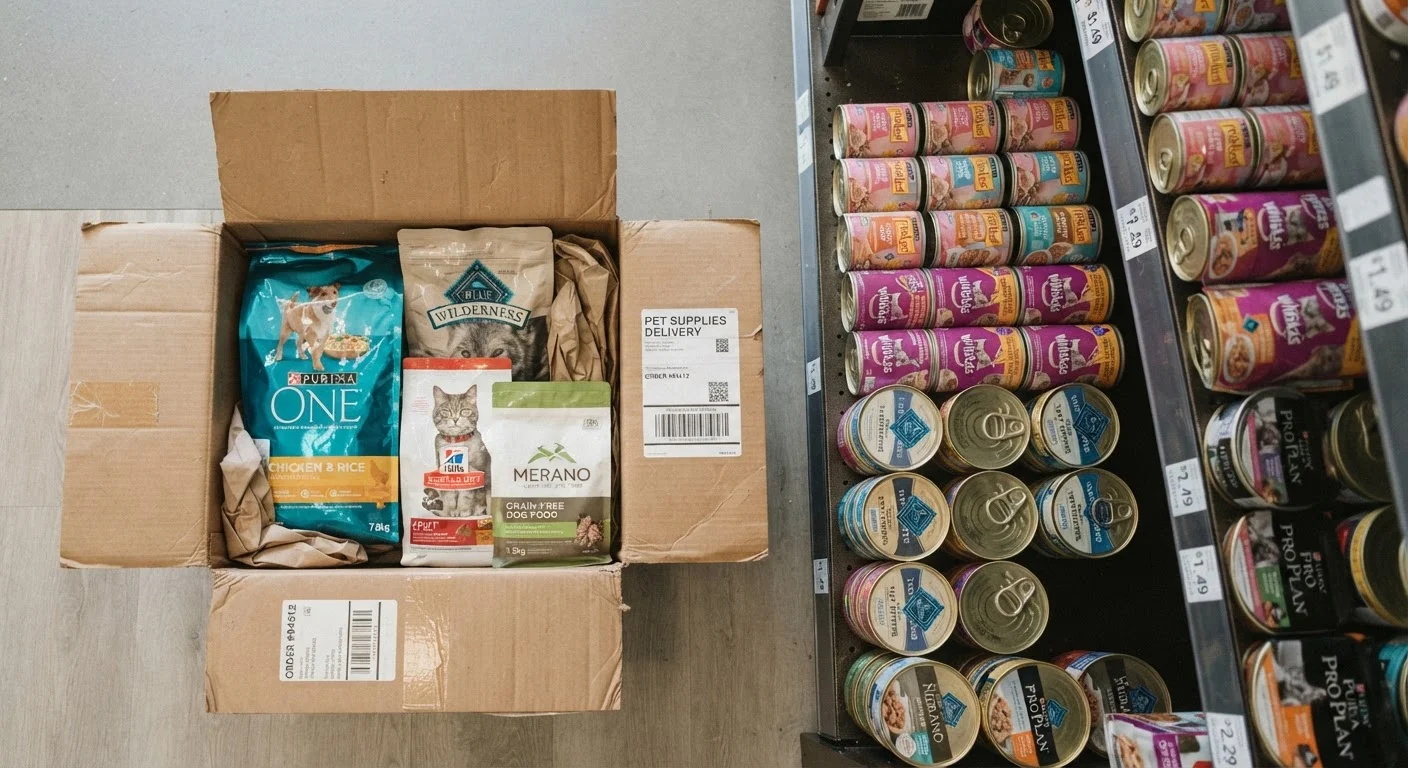
Photo: SaverSteals.com | Explore More. Shop Smarter. editorial
—— In This Article
Key Takeaways
- Subscription discounts typically range from 5% to 15%, but only matter if you'd buy that exact product at full price anyway.
- In-store purchases allow real-time price comparison and access to clearance or loyalty pricing unavailable online.
- Auto-ship programmes can quietly charge full price after introductory discount periods expire.
- Shipping minimums, delivery windows, and cancellation policies create hidden costs in subscription models.
- Neither channel is universally cheaper — the better option depends on your pet's specific food, your household rhythm, and local store competition.
Breaking Down the Actual Price Difference
The headline case for subscription delivery is the discount — usually advertised as 5% to 15% off the listed retail price when you enroll in an auto-ship programme. On a $60 bag of dog food, that's $3 to $9 per order. Over a year with monthly deliveries, that's a potential range of $36 to $108 in savings — real money, but not transformative on its own.
The complication is the baseline price. Subscription platforms often set their standard retail price higher than what a local grocery chain or warehouse club charges for an identical product. If an in-store price is already $52 for the same bag, a 10% subscription discount brings you to $54 — still more expensive. Understanding why the same item costs different amounts across channels is foundational here; pet supply pricing works differently across retailers depending on volume agreements, shelf fees, and margin structures.
In-store buyers also have access to price matching, loyalty card tiers, and short-window clearance deals that subscription platforms rarely replicate. These aren't guaranteed, but in competitive markets they're more common than shoppers realize.
| Criterion | Subscription Delivery | In-Store Purchase |
|---|---|---|
| Typical discount | 5%–15% off list price | Varies; loyalty/clearance possible |
| Price flexibility | Fixed until manually changed | Adjusts with market competition |
| Shipping cost | Free above order minimum | Gas/transit cost applies |
| Brand switching ease | Requires subscription edit | Immediate, no friction |
| Inventory control | Cadence may cause overstocking | Buy only what's needed |
| First-order pricing | Often heavily discounted | Standard shelf price applies |
| Physical effort | Delivered to door | Transport required by buyer |
The Hidden Costs on Both Sides
Subscription models carry several costs that don't appear in the advertised discount. Free shipping often requires a minimum order value — typically $35 to $49 — so smaller households with a single small pet may fall below that threshold and face delivery fees. Introductory discounts (sometimes as high as 35% on a first order) expire after one shipment, and the standard subscription rate is what you'll pay from month two onward. Cancellation, while usually possible, sometimes requires navigating account settings that aren't designed for ease.
There's also the inventory risk. Auto-ship schedules are set at signup and don't automatically adjust when a bag lasts longer than expected. Overlapping deliveries mean excess stock that may expire before use — a cost not captured in any per-unit comparison. For a fuller look at how to manage frequency and quantity responsibly, auto-ship subscription trade-offs deserve a careful read before you commit.
In-store buying has its own friction costs: gas or transit time, the physical effort of transporting large bags, and the temptation of impulse purchases when walking past displays. These aren't dollar amounts on a receipt, but they're real considerations — especially for households managing tight schedules or physical limitations.
5%–15%
Typical auto-ship discount range
Most major pet retail auto-ship programmes advertise this range as their standard recurring subscriber discount.
$35–$49
Common free-shipping order minimum
Many subscription platforms require a minimum order value to waive delivery fees, which can affect small-pet households.
~30%
Pet owners who switch food within 6 months
Industry surveys suggest a significant share of pet owners change their animal's food formula within the first half-year, complicating fixed subscription schedules.
When Each Approach Makes Financial Sense
Subscription delivery earns its keep when three conditions align: your pet eats the same formula consistently, you reorder at roughly the same interval each month, and the subscription price is genuinely lower than what you'd pay in-store. Multi-pet households that burn through food quickly tend to benefit most, since high volume amplifies the per-unit discount. Managing supply costs across multiple pets involves volume strategy that subscriptions can support well.
In-store purchasing makes more sense when your pet's dietary needs are still being established, when local retail competition keeps shelf prices low, or when your monthly cash flow varies enough that a locked-in delivery cadence creates budgeting stress. It's also worth noting that bulk in-store purchases at warehouse retailers can rival or beat subscription pricing without any commitment. Bulk buying pet supplies has its own trade-offs around storage and spoilage, but it's a legitimate third path that many subscription comparisons ignore.
The most reliable approach is a hybrid: use subscription delivery for a single high-consumption staple where the math clearly works, and buy everything else in-store as needed. Building this kind of deliberate structure into your pet spending is exactly what a practical pet supply budget helps you do consistently.

Pets Editorial Team
Pets Editorial Team is the collective byline for our editorial team and contributor network. Articles published under this byline or an editorial pen name are researched, written, and reviewed according to our editorial standards for clarity, consistency, and independence before publication.
View author profile