
Pet Supply Pricing: Why the Same Item Costs Different Amounts in Different Places
Understand how pet supply pricing works across retailers, subscription services, and warehouse stores — and what drives those price gaps.
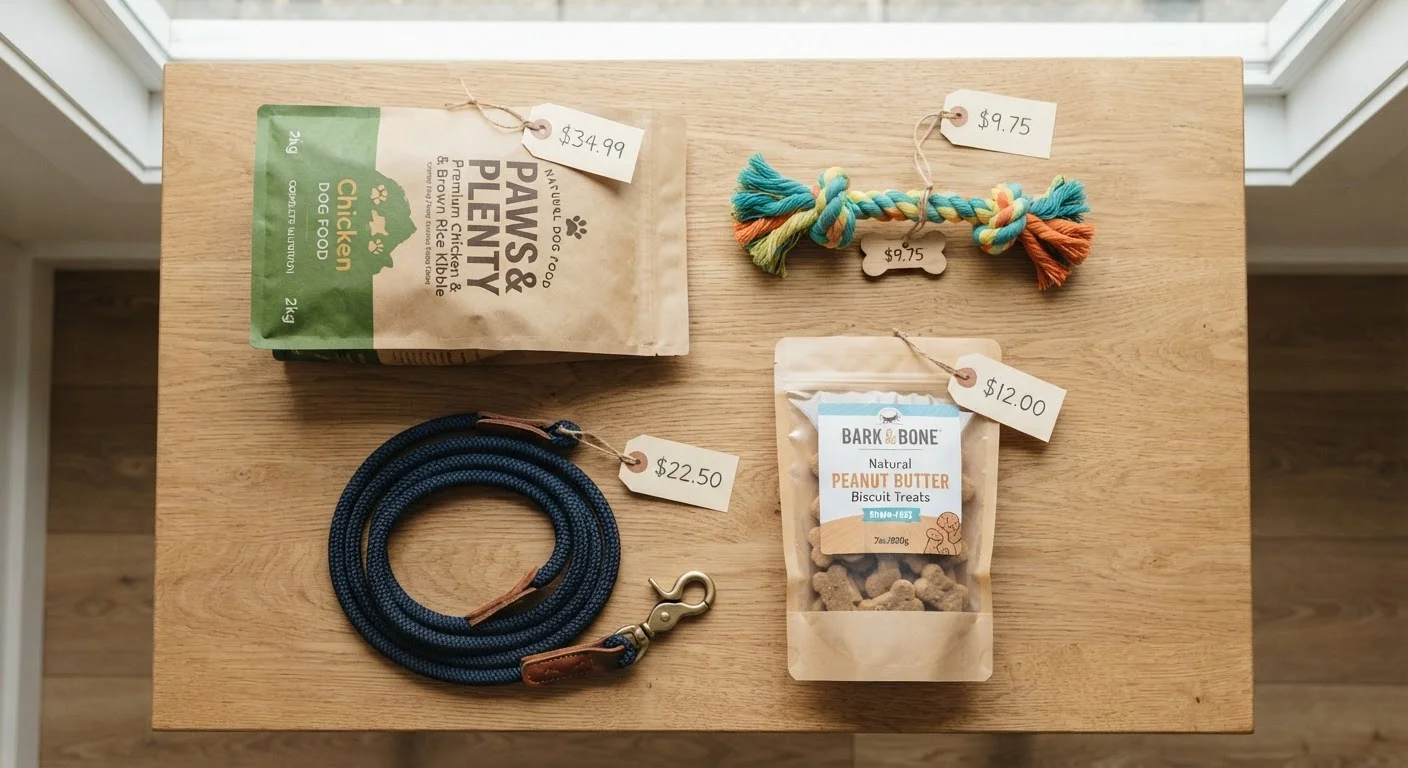
Photo: SaverSteals.com | Explore More. Shop Smarter. editorial
—— In This Article
Key Takeaways
- The same pet food bag can carry meaningfully different prices across retail formats.
- Distribution costs, volume purchasing, and retail overhead all shape the final shelf price.
- Subscription auto-ship programs typically offer lower per-unit prices in exchange for your purchase commitment.
- Warehouse clubs reduce per-unit cost but require bulk buying, which suits some pet owners more than others.
- Comparing unit price — not package price — is the most reliable way to evaluate value across formats.
The Mechanics Behind Price Gaps
When you spot a 30-pound bag of dog food priced differently at three stores in the same week, it's not a glitch — it's the predictable result of how each retail channel is built. Every business in the supply chain adds costs and margin. How much gets added depends on the retailer's overhead, the volume it buys from the manufacturer, and what its target customers expect to pay.
Specialty pet retailers typically pay more per unit from distributors than high-volume general merchandise chains, because they order smaller quantities. That cost difference flows downstream to the shelf price. Meanwhile, a warehouse club negotiating contracts for pallets at a time secures lower per-unit costs — some of which reach the consumer.
Shipping and logistics also play a role. A product sold through a direct-to-consumer online channel avoids the middle-distributor margin entirely, but adds fulfillment and last-mile delivery costs instead. Depending on the product's weight and the retailer's logistics efficiency, those costs may be lower or higher than traditional retail overhead.
Price Gaps Don't Always Mean Lower Quality
A lower price at a general retailer doesn't mean the product is inferior to the same item at a specialty store. For nationally distributed products, the formulation is typically identical regardless of where it's sold. Price differences usually reflect channel costs, not product differences. That said, store-brand or private-label alternatives may have different formulations — always check ingredient panels when switching.
For a fuller picture of where pet supplies fit within your total annual spending, see our category-by-category cost breakdown.
Subscriptions, Bulk, and the Trade-Off You're Actually Making
Auto-ship subscriptions and warehouse memberships both lower per-unit price — but through different mechanisms, and with different trade-offs attached.
Subscription services discount the per-unit price in exchange for a purchase commitment. You agree to receive a product on a set schedule, which gives the retailer predictable demand and reduced marketing costs. Those efficiencies fund the discount. The risk for shoppers is inflexibility: if your pet's dietary needs change or you find a better option, switching mid-subscription may involve fees or friction.
30–50%
Typical price range spread for identical pet products
Consumer pricing research consistently finds that identical pet food and supply products can vary by 30–50% across retail formats, depending on channel and purchase volume.
~5–15%
Common auto-ship subscription discount range
Many major online pet retailers advertise auto-ship discounts in the 5–15% range off standard pricing, though terms and ongoing rates vary by retailer.
Warehouse clubs operate on a different logic. You pay a membership fee for access to high-volume, low-margin pricing. The savings per item can be real — but they require purchasing in quantities that may not suit every household. A single-cat owner buying a 40-pound litter bag may not see the full benefit if storage is limited or the product degrades before use.
Comparing subscription costs against in-store prices requires looking at the full picture: base price, shipping, any membership cost, and how flexible the arrangement actually is.
How to Compare Prices Accurately Across Formats
Package size is one of the most common sources of price confusion in pet supplies. A 15-pound bag at one store and a 17.5-pound bag at another are not directly comparable by sticker price. The only reliable metric is unit price — cost per ounce, per pound, or per count, depending on the product type.
Most retailers are required to display unit pricing on shelf tags, though the format varies. Online listings sometimes include it and sometimes bury it. Calculating it yourself takes seconds: divide the total price by the weight or count listed on the package.
A few other variables affect true comparability:
- Formulation changes: Some products sold under the same name vary in ingredients by region or channel. Reading the label matters, not just the product name.
- Expiration dates: Bulk purchases only deliver value if the product is used before quality degrades. Check dates before committing to large quantities.
- Loyalty point values: Some specialty retailers offer points programs that effectively reduce net price over time. Factor that in if you shop frequently at the same store.
For a deeper look at how coupons and retailer promotions interact with base pricing, see how manufacturer and retailer discounts actually work. And if you're looking to apply these principles more broadly, explore the range of strategies budget-conscious pet owners use.
Frequently Asked Questions

Pets Editorial Team
Pets Editorial Team is the collective byline for our editorial team and contributor network. Articles published under this byline or an editorial pen name are researched, written, and reviewed according to our editorial standards for clarity, consistency, and independence before publication.
View author profile