
Bulk Buying Pet Supplies Without Wasting Money or Space
Bulk buying pet food and supplies can save money — but only if done carefully. Here's how to approach it without spoilage, clutter, or regret.
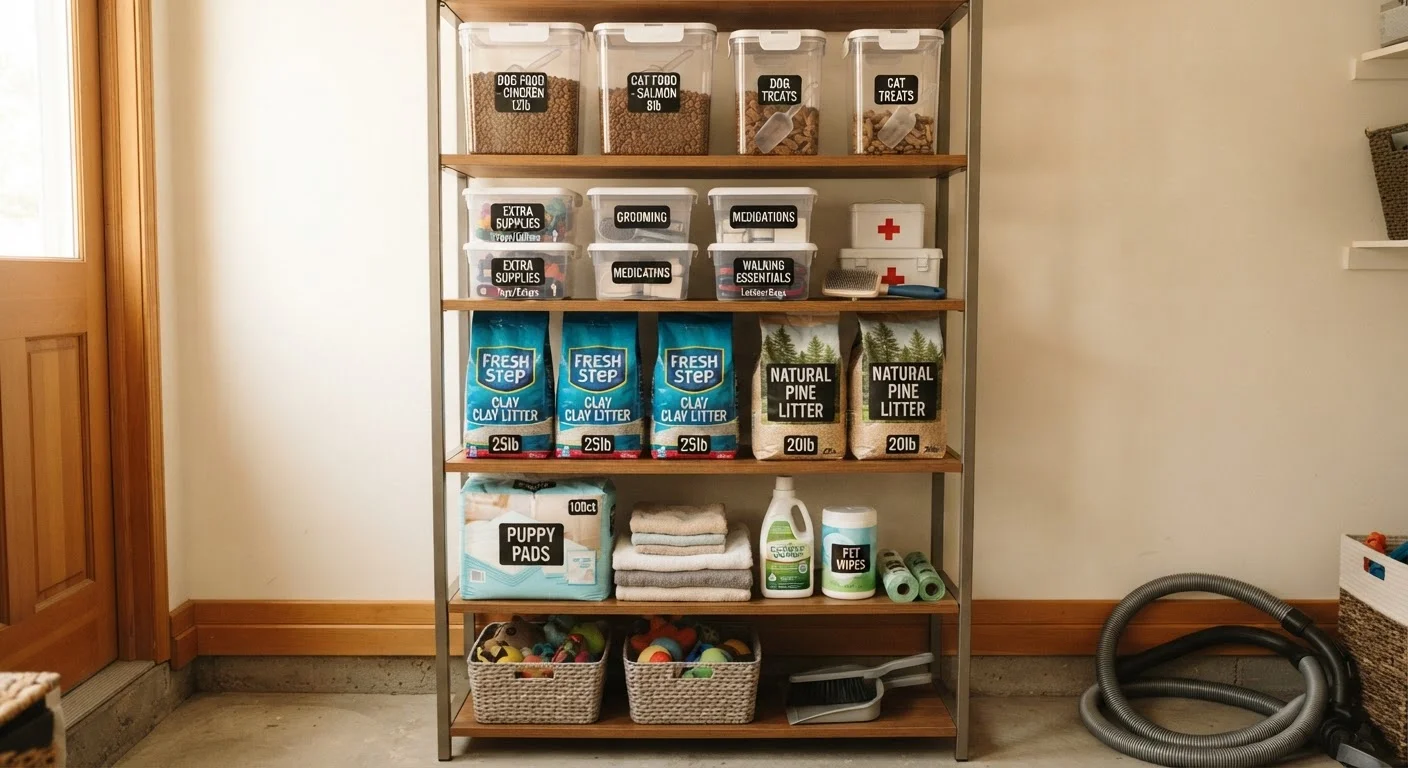
Photo: SaverSteals.com | Explore More. Shop Smarter. editorial
—— In This Article
Key Takeaways
- Bulk buying saves money only when you purchase items your pet already uses and can consume before expiration.
- Proper storage is essential to preserving pet food quality and preventing spoilage.
- Calculating your pet's actual consumption rate before buying prevents costly over-purchasing.
- Non-perishable supplies like litter and training pads are generally safer bulk purchases than food.
- Multi-pet households can leverage bulk buying more effectively than single-pet owners.
Why Bulk Buying Can Go Wrong — and How to Avoid It
Bulk buying pet supplies sounds straightforward: buy more, pay less per unit, save money. In practice, it's easy to overspend on products that spoil before they're used, take up storage space you don't have, or sit unused because your pet rejected them. The savings are real, but only when the purchase is matched to your pet's actual needs and your household's realistic storage capacity.
Food is the trickiest category. Dry kibble and wet food have expiration dates and, once opened, degrade in quality over time regardless of the packaging. Buying a six-month supply of food when your pet eats a month's worth per month may seem efficient, but it introduces spoilage risk and the possibility of nutritional degradation. Litter, pads, and grooming supplies are much more forgiving — they don't expire on the same timelines and store easily in most homes.
Never Bulk-Buy a Food Your Pet Hasn't Tried
Introducing a new food in large quantities is a common and expensive mistake. Pets can refuse unfamiliar foods, develop digestive sensitivities, or experience allergic reactions. Always confirm your pet tolerates a food through normal-sized purchases before committing to bulk quantities. A 40-lb bag of rejected kibble is money with nowhere to go.
If you're new to buying pet supplies strategically, the first-timer's roadmap to stocking a pet home on a budget is a useful starting point before committing to bulk quantities of anything.
What You Need Before You Start
Effective bulk buying requires a small amount of preparation. You'll need a clear picture of what your pet currently eats and uses, confirmed tolerance for any food in the bulk order, and physical storage space that's dry, cool, and accessible.
What you will need
Airtight food storage containers
Preserve dry pet food freshness and prevent moisture, pests, and odor contamination during long-term storage.
Permanent marker or label maker
Mark purchase dates and expiration dates on storage containers to track freshness at a glance.
Kitchen or postal scale
Measure precise daily food portions to calculate accurate monthly consumption rates before buying in bulk.
Dedicated storage shelf or cabinet
Organize bulk supplies in a cool, dry location away from heat sources that can accelerate spoilage.
Spreadsheet or notes app
Track consumption rates, expiration dates, and spending to refine your bulk buying decisions over time.
It's also worth considering how bulk buying compares to alternatives. Auto-ship subscriptions, for example, offer a different model — regular deliveries at a discount without the storage burden. Our article on auto-ship subscriptions for pet supplies breaks down when that approach makes more sense than buying in bulk outright.
Step-by-Step: Buying in Bulk Without the Waste
Calculate your pet's actual consumption rate
Before buying anything in bulk, measure how much your pet actually consumes per day. For dry food, weigh daily portions for one week and find the average. For litter, track how quickly a standard bag depletes. This baseline tells you exactly how long any bulk purchase will last — and whether it will expire before you finish it.
Compare the per-unit cost against your typical purchase price
Divide the bulk price by the number of units, ounces, or pounds included to get the true per-unit cost. Then compare that directly against what you currently pay per unit in standard sizes. Factor in any delivery or membership fees associated with the bulk source. The savings need to be real after all costs, not just apparent at first glance.
Check expiration dates and calculate your usage window
Using your consumption rate from Step 1, determine how many days or weeks the bulk quantity will last. Then check the product's expiration date. If your pet will consume the food well before it expires — with at least a few weeks of buffer — the purchase is a reasonable candidate. If the math is close, consider a smaller size instead.
Prepare your storage before the purchase arrives
Set up your storage space before the bulk order lands at your door. Airtight containers protect dry food from moisture, air, and pests. Store supplies in a cool, dry location — not a garage that experiences temperature extremes. Assign a dedicated shelf or cabinet so bulk supplies don't create clutter or become hazards.
Prioritize non-perishables for your largest bulk purchases
Items like training pads, litter, waste bags, grooming supplies, and certain toys carry no spoilage risk and require minimal storage conditions. These are the safest categories for large bulk quantities. Food should be approached more conservatively, with bulk sizes scaled to realistic consumption timelines rather than maximum available package sizes.
Track results and adjust your approach over time
After your first bulk purchase cycle, note whether you finished the product on time, whether quality held up in storage, and whether the savings were meaningful. Use a simple spreadsheet or notes app to log these observations. Over two or three purchasing cycles, you'll develop an accurate, personalized bulk buying rhythm that minimizes waste and genuinely reduces costs.
Label and Date Every Container
When you transfer food or supplies into storage containers, write the purchase date and expiration date directly on the container with a marker or label. This simple habit prevents you from accidentally serving stale food and helps you plan your next purchase with better timing.
For context on how bulk food fits into broader nutrition decisions, see our piece on misconceptions about cheap pet food that could end up costing more — it addresses common assumptions about value and quality that often influence bulk purchasing decisions.
Making Bulk Buying a Sustainable Habit
The goal isn't to buy as much as possible at once — it's to buy the right quantities at the right intervals. Once you've established accurate consumption rates and a reliable storage setup, bulk buying can become a low-effort routine rather than a calculated gamble each time.
Pet owners who share compatible supply needs with neighbors, friends, or family — for example, co-owning a large bag of a shared litter type — can stretch bulk savings further. This approach works especially well for multi-pet households where consumption rates are naturally higher and larger quantities move through faster.
If you're looking for a broader view of cost-reduction strategies beyond bulk buying, our roundup of ways pet owners stretch their supply budget without cutting corners covers loyalty programs, seasonal purchasing patterns, and other practical approaches that complement what you've built here.

Pets Editorial Team
Pets Editorial Team is the collective byline for our editorial team and contributor network. Articles published under this byline or an editorial pen name are researched, written, and reviewed according to our editorial standards for clarity, consistency, and independence before publication.
View author profile