
Why End-of-Season Garden Sales Are More Complicated Than They Look
Clearance plants and discounted tools can be genuine bargains — or hidden disappointments. Learn what to check before you buy.
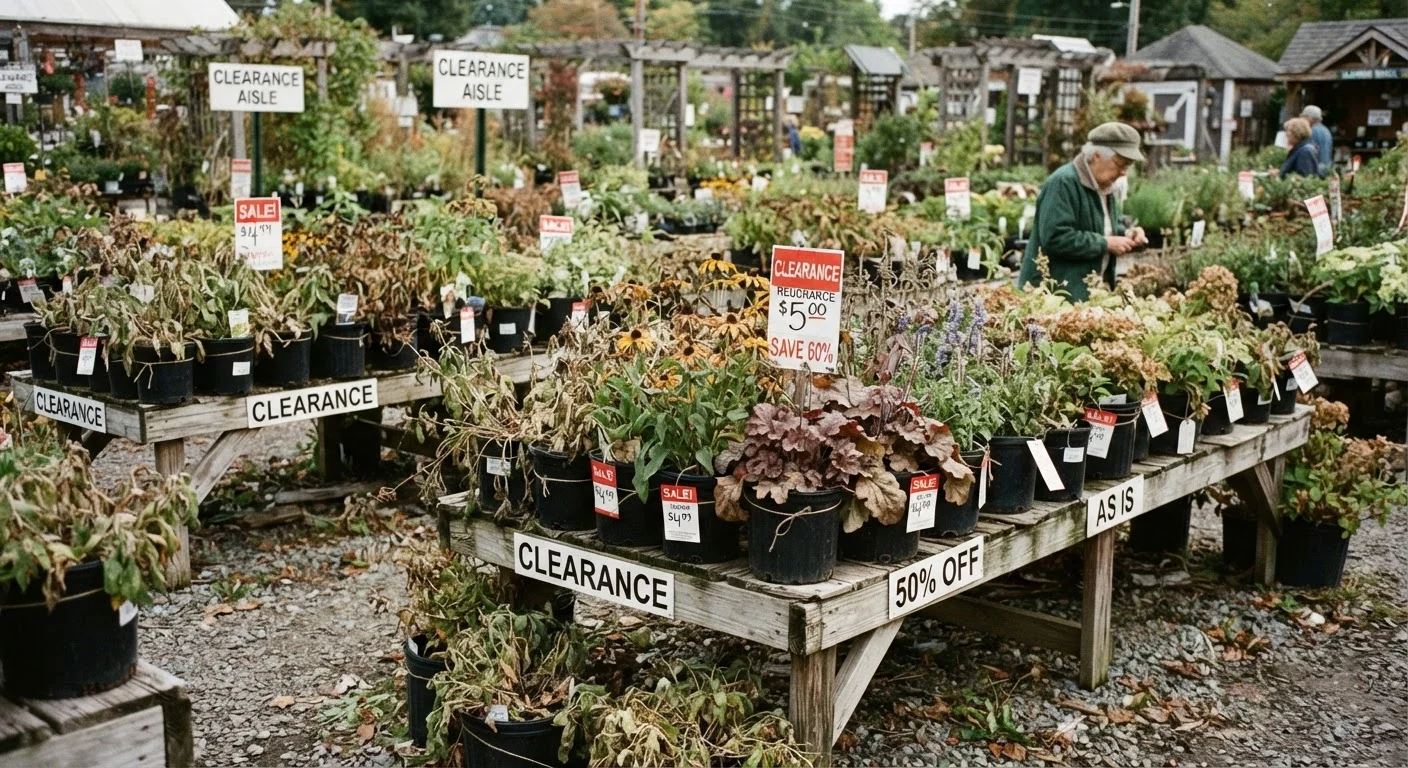
Photo: SaverSteals.com | Explore More. Shop Smarter. editorial
—— In This Article
Key Takeaways
- Clearance plants may be stressed from heat, drought, or root-binding — visible health matters more than price.
- End-of-season tools can be genuine savings, but warrant a close physical inspection for damage or missing parts.
- Hardy perennials and shrubs often survive clearance conditions better than annuals or tropicals.
- Timing your purchases using known pricing cycles helps you plan rather than impulse-buy at clearance events.
- A discounted plant that dies is more expensive than a healthy full-price plant that thrives.
What Actually Drives the Markdown
When a garden center slashes prices by 40% or 60% at the end of summer, the discount isn't random generosity — it's inventory math. Retailers operate on seasonal buy cycles, and unsold stock costs money in labor, water, and space. The markdown reflects the store's need to move product before winter resets the calendar, not necessarily a change in an item's intrinsic value.
This distinction matters for shoppers. A bag of slow-release fertilizer marked down simply because the season is ending may be just as useful next spring. A perennial shrub that's been sitting in a 1-gallon container for four months under a parking lot sun canopy is a more complicated proposition. Understanding why an item is marked down is the first step toward evaluating whether the discount represents real savings.
50–75%
Typical end-of-season plant markdown range
Garden centers commonly apply markdowns in this range during late summer and fall clearance cycles to clear perishable inventory before winter.
~30%
Average germination rate decline in 2-year-old seeds
Seed viability studies generally show measurable germination loss after the packed-for date, varying by species and storage conditions.
Tools and hard goods tend to fall into the straightforward category: they're discounted because demand has dropped, not because they've degraded. Live plants require more scrutiny, because retail environments — inconsistent watering, root restriction, heat stress — can compromise a plant's ability to establish even if it looks passable on the surface.
Reading Plant Health at a Clearance Table
A drooping plant isn't automatically a lost cause, but it does require closer inspection before you commit. Start with the roots: gently slide the plant out of its container if possible. Roots that are white or tan and fill — but don't strangle — the pot are a positive sign. Dark, mushy roots suggest root rot. A root ball that has spiraled into a tight, impenetrable mass may struggle to spread outward even after planting.
Above ground, look for at least some green growth at the base or on stems, even if the plant is partially defoliated. Yellowing leaves caused by underwatering can recover; yellowing caused by disease or severe nutrient deficiency is harder to reverse. Avoid plants with powdery residue on leaves (a sign of fungal issues), sticky deposits (indicating pest activity), or any foul odor from the soil.
Ask Before You Buy Clearance Plants
Many garden centers will let you slide a plant out of its container briefly to check root health before purchasing. Don't hesitate to ask staff — a few seconds of inspection can save you from bringing home a plant with root rot or severe compaction. Staff may also know why a specific plant is marked down, which can help you make a more informed decision.
Hardy perennials — coneflowers, black-eyed Susans, hostas, ornamental grasses — are generally good candidates because they go dormant naturally in fall. A partially dormant perennial that looks unimpressive in late September may simply be doing exactly what it should. Native shrubs and deciduous plants follow similar logic.
Annuals, by contrast, are near the end of their natural life cycle regardless of where you buy them. A $1 petunia in October has minimal weeks left to flower. The emotional satisfaction of the deal tends to outlast the plant itself. For more on planning purchases to avoid this trap, see our piece on reducing garden waste through better planning.
Tools and Supplies: A Different Set of Trade-offs
Non-perishable garden items — hand tools, hoses, planters, soil amendments — follow different clearance logic than live plants. Here, the primary risks are physical damage during display and, for consumables, potential loss of potency or viability over time.
Inspect metal tools for surface rust, which may be superficial and cleanable, versus deep pitting that compromises structural integrity. Check handles for cracks, especially at stress points near the ferrule (the collar where handle meets head). For items like pruners or loppers, confirm the tension mechanism and blade alignment still function correctly. Our detailed tool inspection guide covers each component systematically.
For seed packets, check the packed-for date. Seeds lose germination rates over time, and a packet from two seasons ago may perform poorly even under ideal conditions. Fertilizers and soil amendments are generally stable if bags are sealed and undamaged — moisture infiltration is the main concern. Weed-control products, pest treatments, and concentrated liquids warrant a closer look at seals and expiration information.
If you're curious how these clearance dynamics compare in other categories, the differences between outlet and clearance tool pricing follow a similar pattern worth understanding.
Building a Clearance Strategy That Actually Saves Money
The most reliable approach to end-of-season sales is intentionality before you arrive. Know your garden's needs — which areas lack perennial structure, which tools are genuinely worn out — so you're evaluating real gaps rather than reacting to whatever is discounted. Impulse clearance purchases have a way of becoming expensive mistakes, especially with live plants.
Pair clearance shopping with an understanding of the garden pricing calendar throughout the year. Certain plant categories drop in price predictably, and knowing those windows lets you plan rather than scramble. Our garden pricing calendar maps out these cycles month by month.
Finally, hold a realistic standard: a heavily discounted plant that fails to establish costs more than a full-price healthy plant that thrives. The goal is value, not just a low number on a tag. When those two things align — a healthy, viable plant or tool at a meaningfully reduced price — end-of-season sales can be one of the most efficient ways to build and equip a garden on a budget.
Frequently Asked Questions

Home & Garden Editorial Team
Home & Garden Editorial Team is the collective byline for our editorial team and contributor network. Articles published under this byline or an editorial pen name are researched, written, and reviewed according to our editorial standards for clarity, consistency, and independence before publication.
View author profile