
Perennials vs. Annuals: The Long-Term Cost of Each Planting Strategy
Annuals look great but need replacing every year. Perennials cost more upfront. See how each strategy plays out over a five-year garden.
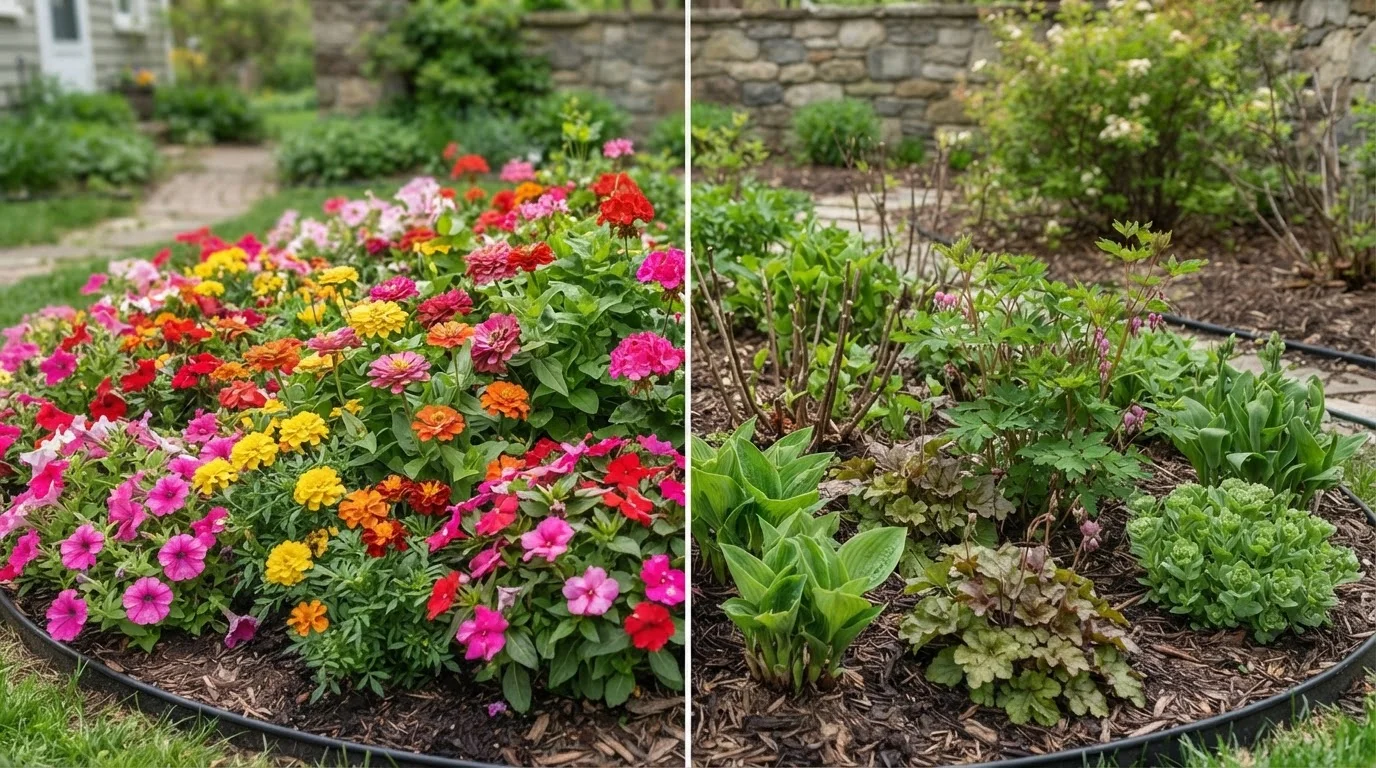
Photo: SaverSteals.com | Explore More. Shop Smarter. editorial
—— In This Article
Key Takeaways
- Annuals require full replanting each season, making them more expensive over a five-year horizon.
- Perennials cost more per plant upfront but return year after year, spreading that cost over time.
- A mixed strategy — anchoring beds with perennials and filling gaps with annuals — often delivers the best value.
- Timing purchases around end-of-season sales can meaningfully reduce costs for either planting approach.
- Division of established perennials can effectively bring your per-plant cost close to zero over time.
Understanding the Core Cost Difference
The most common mistake gardeners make is comparing annuals and perennials only at the point of purchase. A flat of annuals at a nursery may cost $15–$25 and look immediately impressive, but that investment disappears at the first frost. A perennial of comparable size might cost $8–$18 individually and look modest in its first season — yet return reliably for five years or more.
When you calculate cost-per-season, the math shifts considerably. A perennial priced at $12 that performs for six years works out to $2 per season. An annual flat purchased every spring at $20 totals $100 over the same period for one bed section. These figures will vary by plant type, climate zone, and how well you prepare soil, but the directional pattern holds broadly.
For a deeper look at how plant purchase timing affects what you pay, see when prices drop on plants and supplies.
Five-Year Cost Projection: A Practical Comparison
To make this concrete, consider a 100-square-foot mixed border bed. Below is a general cost framework based on typical nursery pricing and commonly used planting densities. Actual figures will vary by region and plant selection.
| Annual-Only Strategy | Perennial-Only Strategy | Mixed Strategy | |
|---|---|---|---|
| Year 1 plant cost (est.) | $60–$90 | $120–$180 | $80–$130 |
| Year 2–5 annual replanting cost | $60–$90 per year | Minimal (mulch, division) | Partial replanting of annuals |
| Approximate 5-year total | $300–$450 | $160–$220 | $200–$310 |
| Design flexibility | High — full reset each season | Low — fixed plant placements | Moderate — annual fill areas flex |
| Labor demand over time | Consistent replanting each spring | Division and maintenance cycles | Moderate, decreasing over time |
| Risk of total plant loss | Low — replaced annually anyway | Higher — investment per plant greater | Balanced by diversity of types |
The perennial scenario carries a notably higher Year 1 cost due to plant spacing and soil amendment needs. However, from Year 2 onward, the main recurring expense shifts to mulch, fertilizer, and occasional division — tasks that also benefit the overall bed health.
Annual-only beds, by contrast, require full soil preparation and replanting each spring. Costs stay relatively flat year over year, which can feel predictable — but that consistency also means you never see the curve bend downward.
3–6x
Estimated 5-year cost multiplier for annuals vs. perennials
General cost modeling based on typical nursery pricing and planting densities for a 100 sq ft garden bed in the US.
2–3 yrs
Time for perennials to reach full visual impact
Most herbaceous perennials follow the "sleep, creep, leap" growth pattern, reaching mature spread in their third season.
Hidden Costs That Affect Both Strategies
Neither approach is free of surprises. Perennials can take two to three seasons to reach mature size, during which time they may leave visual gaps that tempt you to fill with — you guessed it — annuals. Factor in those transitional purchases when projecting your five-year spend.
Annuals, meanwhile, can generate significant waste: unused transplants, over-purchased flats, and soil amendments that don't carry over effectively. Planning waste is one of the most overlooked sources of garden overspending. Our article on reducing garden waste through better planning walks through habits that curb these losses regardless of which strategy you choose.
Perennials also come with occasional replacement costs. Some varieties are shorter-lived (two to four years), and division — while free — requires time and basic tools. Cold snaps, pest pressure, or poor drainage can kill established plants, resetting your cost calculation unexpectedly.
The Division Advantage: How Perennials Can Pay for Themselves
One financial advantage unique to perennials is propagation through division. Many common perennials — including hostas, daylilies, and ornamental grasses — benefit from being divided every three to four years. Each division becomes a new plant, which you can transplant to another bed or share with neighbors and community garden swaps.
A gardener who starts with five hostas and divides them at year three can potentially have ten to fifteen plants by year five at no additional cost. That effectively reduces the original per-plant investment to a fraction of the sticker price. This dynamic has no equivalent with annuals, which cannot be carried over or multiplied in the same way.
This principle parallels the broader lesson explored in why cheap items often cost more long-term — initial price and long-term value are rarely the same number.
When Annuals Make Financial Sense
Despite the long-term cost advantage of perennials, annuals are not simply the inferior choice. They fill specific needs that perennials cannot. Renters who cannot make permanent changes to a landscape, gardeners testing a new design before committing, or those working with containers and window boxes often find annuals more practical and genuinely cost-effective given their circumstances.
Annuals also give you complete design flexibility each season. If you want to change your color palette or try new plant combinations without any existing structure locking you in, the annual approach delivers that freedom. Pairing this with growing annuals from seed rather than buying transplants can also reduce annual planting costs substantially for varieties that start reliably from direct sow.
A practical middle ground: establish a structural backbone of perennials in permanent beds, then use a smaller annual budget to add seasonal color, fill early-season gaps, or experiment with new varieties before deciding whether to invest in perennial versions.

Home & Garden Editorial Team
Home & Garden Editorial Team is the collective byline for our editorial team and contributor network. Articles published under this byline or an editorial pen name are researched, written, and reviewed according to our editorial standards for clarity, consistency, and independence before publication.
View author profile