
Furniture Joints, Finishes, and Frames: A Plain-Language Reference for Secondhand Shoppers
Quick definitions of the construction terms you'll encounter when evaluating used furniture — dovetail joints, lacquer, mortise, and more.
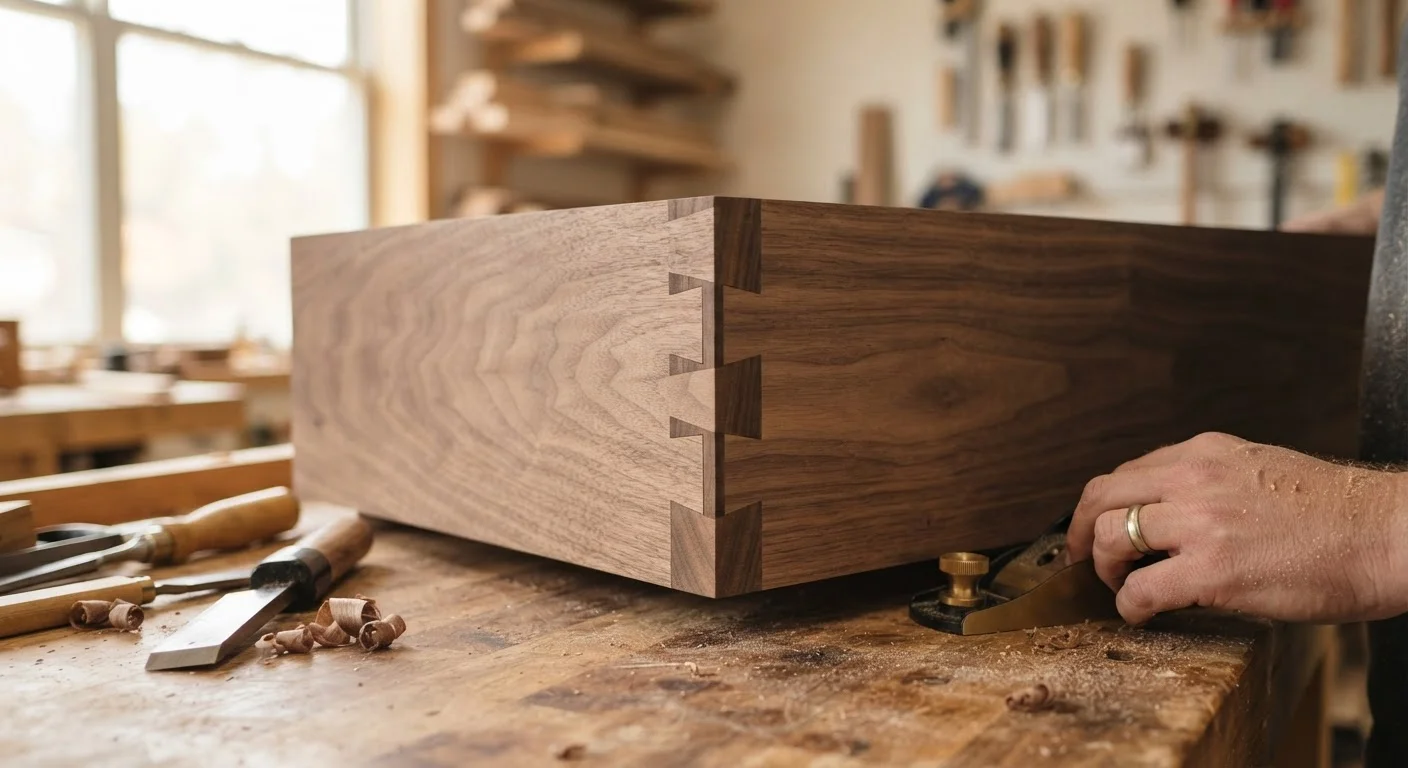
Photo: SaverSteals.com | Explore More. Shop Smarter. editorial
—— In This Article
Why Construction Terminology Matters When You're Buying Used
When you're evaluating a used dresser at an estate sale or scrolling through a marketplace listing, seller descriptions often drop terms like mortise-and-tenon, lacquered finish, or dowel construction without explanation. Knowing what those terms signal - and what they predict about longevity - gives you a real edge over buyers who are guessing.
This reference covers the three categories that matter most during a hands-on inspection: joints, finishes, and frame materials. Use it as a lookup tool before you shop, or pull it up on your phone while you're standing in front of a piece.
For broader context on where secondhand furniture actually comes from and how each channel works, see The Secondhand Furniture Ecosystem.
Dovetail joint
An interlocking joint formed by fan-shaped cuts in two pieces of wood. Common in drawer construction and associated with durable, quality craftsmanship.
Mortise-and-tenon
A joint where a projecting peg (tenon) fits into a corresponding cavity (mortise). Widely used in chair and table frames; strong and long-lasting when intact.
Veneer
A thin layer of decorative wood (or printed material) bonded to a core substrate. Indicates the surface appearance may differ from the underlying material.
Lacquer
A hard, fast-drying surface finish applied to wood. It chips rather than scratches and can be identified by flaking at worn edges or corners.
Shellac
A natural resin-based finish common on pre-1950s furniture. Soluble in alcohol, so alcohol-based spills or cleaning products can permanently cloud or dissolve it.
Eight-way hand-tied
A seating construction method where individual coil springs are tied in eight directions with twine. Associated with higher-quality upholstered furniture and even weight distribution.
Particleboard
An engineered wood panel made from compressed wood chips and resin. Economical but less durable than solid or plywood; susceptible to moisture damage and poor screw retention.
Sinuous spring
S-shaped metal wires used as seating support, also called zigzag springs. A common and cost-effective alternative to coil springs in upholstered furniture.
Joints: The Structural Backbone
A joint is where two pieces of material connect. Joint quality is the single biggest predictor of how long a piece will hold up under daily use. Here's what you'll encounter:
- Dovetail joint: Interlocking fan-shaped cuts, most often seen on drawer corners. Visually distinctive and very strong - if you see hand-cut dovetails (slightly irregular spacing), that usually indicates older or higher-quality construction.
- Mortise-and-tenon joint: A projecting peg (tenon) fits into a corresponding hole (mortise). Standard in chair and table leg construction; when tight and uncracked, it's highly durable.
- Dowel joint: Cylindrical wooden pegs align and connect two pieces. Weaker than dovetail or mortise-and-tenon over time; watch for wobble at the joint line.
- Biscuit joint: Oval-shaped compressed wood wafers glued into matching slots. Common in mid-range flat-pack and factory furniture; adequate for light use but not ideal for pieces that bear heavy loads.
- Butt joint: Two flat surfaces simply glued or nailed together. The simplest and weakest joint type - a red flag in load-bearing areas.
When inspecting, apply gentle lateral pressure to chairs and table bases. Any flex at the joint means the adhesive or fastener is compromised. On drawers, pull one out and look at the corners - visible dovetails are a positive sign.
| Strongest common drawer joint | Dovetail |
| Finish most vulnerable to alcohol | Shellac |
| Frame material most prone to moisture swelling | Particleboard / MDF |
| Spring type indicating higher upholstery quality | Eight-way hand-tied coil springs |
| Joint type considered the weakest for load-bearing | Butt joint |
Finishes: What's on the Surface and Why It Matters
A finish protects the underlying material and affects how repairable the piece is. Knowing finish types helps you assess condition and refinishing cost.
- Lacquer: A fast-drying, hard surface coat. Chips rather than scratches, producing visible flaking. Can be spot-repaired but full stripping and recoating is a moderate DIY job.
- Varnish: Oil-based and more flexible than lacquer; tends to yellow over time, especially in older pieces. Durable but slow to apply; common on antique and vintage hardwoods.
- Shellac: A natural resin finish, often found on pre-1950s furniture. Warm amber tone. Soluble in alcohol, so check for ring damage or cloudiness where glasses have been left on the surface.
- Oil finish (tung, linseed): Penetrates the wood rather than sitting on top. Matte appearance; easy to reapply, but offers less protection against moisture.
- Paint: Can conceal repairs, filled cracks, or lower-grade wood. Run your hand over painted surfaces to feel for filler bumps beneath; check edges where paint may reveal underlying material.
- Veneer: A thin layer of real wood (or printed material on engineered wood) bonded to a substrate. Look for lifting edges, bubbling, or mismatched grain patterns at seams - these are signs of moisture damage or delamination.
For a deeper look at why substrate material - solid wood versus engineered wood - matters even more with used pieces, see Solid Wood vs. Engineered Wood.
Frames and Materials: What's Underneath
The frame is the structural skeleton, especially relevant for upholstered pieces where you can't see the construction directly.
- Hardwood frame: Dense woods like oak, maple, or ash. Heavy, resistant to warping, and the standard in durable upholstered furniture. Knock on the frame rail - a solid thud rather than hollow resonance is a good sign.
- Softwood frame: Pine and similar woods are lighter and less dense. Not inherently low quality, but softer and more prone to denting at joint areas over time.
- Particleboard / MDF core: Engineered wood composites. Common in flat-pack and budget furniture. Doesn't hold screws as well after repeated assembly and is vulnerable to moisture swelling. Check underneath tables and inside cabinet backs for these materials.
- Eight-way hand-tied springs: A seating construction method where coil springs are individually tied in eight directions. Labor-intensive and found in older or higher-quality upholstered pieces. Sit in the piece - consistent support across the seat with no pronounced sag points is a reasonable indicator.
- Sinuous (zigzag) springs: S-shaped metal wires running front to back. More common, less expensive to produce, and adequate for moderate use. Check that none are broken by pressing firmly across the seat.
If you're building a vocabulary around furniture retail terminology more broadly - terms like as-is, COM (customer's own material), or white glove delivery - the Key Terms Every Furniture Shopper Should Understand reference covers those clearly. And if you're ready to put this knowledge to work in the field, the Used Furniture, Start to Finish walks through the full sourcing and inspection process.

Furniture Editorial Team
Furniture Editorial Team is the collective byline for our editorial team and contributor network. Articles published under this byline or an editorial pen name are researched, written, and reviewed according to our editorial standards for clarity, consistency, and independence before publication.
View author profile