
In-Store Sales vs. Online Clothing Discounts: A Practical Comparison
Brick-and-mortar and online clothing sales each have distinct advantages and trade-offs. Here's how to decide which route fits your shopping situation.
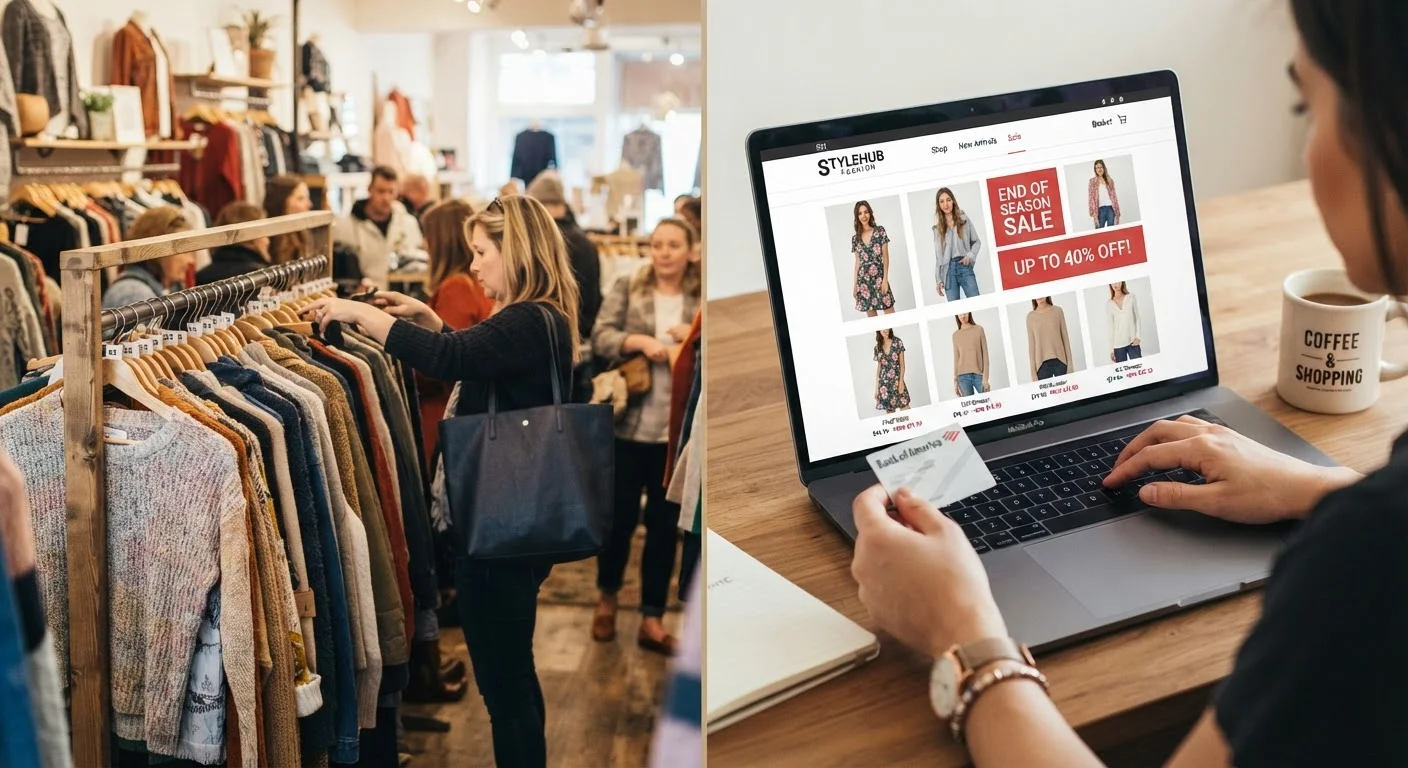
Photo: SaverSteals.com | Explore More. Shop Smarter. editorial
—— In This Article
Key Takeaways
- In-store sales let you inspect fit and quality before buying, reducing costly returns.
- Online discounts tend to offer broader selection and easier price comparison across retailers.
- Coupon and promo code rules often differ significantly between channels for the same retailer.
- End-of-season clearance can run deeper in physical stores, especially on remaining sizes.
- A hybrid approach - researching online and buying where the deal is clearest - often works best.
How Each Channel Actually Works for Clothing Discounts
In-store clothing sales typically follow a predictable rhythm: markdowns happen at the end of a season or during promotional holidays, and clearance racks accumulate unsold inventory over time. The deeper discounts usually appear on items in limited sizes. You're shopping what's physically available, which narrows your options but also means you can assess quality and fit on the spot.
Online discounts work differently. Retailers can adjust prices dynamically, run site-wide percentage-off promotions, and apply promo codes at checkout - sometimes stacking them. The trade-off is that you're relying on sizing charts and photos, and returns add friction if something doesn't work out. For context on how coupon rules vary between channels, see how coupon redemption differs by channel - the same logic applies to clothing retailers.
Where Each Channel Has a Practical Edge
| Criterion | In-Store Sales | Online Discounts | |
|---|---|---|---|
| Fit verification | Try before buying | Rely on size charts | |
| Price comparison ease | Limited to one location | Multiple retailers in minutes | |
| Clearance depth | Often deeper on final markdown | Varies; flash sales can match | |
| Selection breadth | Constrained by store stock | Full range, all sizes | |
| Return complexity | Usually simple, in-person | May involve return shipping costs | |
| Coupon/promo stacking | Often more restricted | Codes can sometimes stack | |
| Impulse-buy risk | Moderate (physical browsing) | Higher (countdown timers, pop-ups) |
In-store clearance often goes deeper on remaining inventory because retailers need to move physical stock. If you're flexible on size and style, digging through end-of-season racks can yield significant markdowns. You also avoid shipping costs and return hassles. Understand, though, that selection is limited by what's in that specific location.
Online shopping makes price comparison far easier - you can check multiple retailers in minutes and set up price alerts for specific items. Selection is broader, and flash sales or exclusive online codes can offer genuine savings not available in-store. The catch: you're absorbing return shipping costs if something doesn't fit, and heavily discounted online items sometimes have restocking fees or non-returnable terms.
Cross-Reference Prices Before You Commit
Whether you're standing in a store aisle or at an online checkout, a quick search on your phone can confirm whether the price you're seeing is genuinely competitive. Retailers sometimes run "sale" pricing that matches or even exceeds what other channels normally charge. Spending 60 seconds comparing can prevent paying more than necessary.
It's also worth understanding the sourcing behind discounted clothing. How outlet stores and clearance sections differ affects the actual value you're getting, whether shopping in-person or online.
Common Pitfalls to Watch For
Watch for Inflated 'Original' Price Tags
A 50% markdown is only meaningful if the starting price was accurate. Some retailers set high reference prices that rarely, if ever, apply in practice - a tactic sometimes called "reference pricing." When evaluating a markdown, check the item's typical selling price across other channels to gauge whether the discount reflects genuine savings.
In-store shoppers sometimes assume a high percentage markdown means a genuinely low price - but if the starting "original" price was inflated, the final number may not represent real savings. Always check what comparable items sell for elsewhere before assuming a rack price is a deal.
Online shoppers face a different problem: abandoned-cart discounts and countdown timers create urgency that can push impulsive purchases. Discount codes that appear substantial may apply only to non-sale items, making the effective savings smaller than they look. Read the terms on any promo carefully before checking out.
If your goal is to extend savings further, in-person thrifting versus online resale introduces an entirely different set of trade-offs worth weighing alongside traditional retail channels.
How to Decide Which Route to Take
The most efficient approach is matching the channel to the purchase type. For basics - t-shirts, socks, underwear - online is usually faster and easier to compare. For structured clothing like blazers, jeans, or shoes where fit matters, in-store allows you to avoid the return loop entirely.
Timing also matters. If you can wait, monitoring online prices over several weeks often yields a better deal than acting on the first in-store sale you see. If you need something immediately, in-store avoids shipping delays. Either way, having a clear budget ceiling before you browse - in either channel - is the most reliable way to avoid spending more than you planned.
The same logic that applies to clothing shopping translates to other categories. Online versus in-store home décor trade-offs covers parallel considerations if you're making decisions across multiple purchase categories at once.

Clothing Editorial Team
Clothing Editorial Team is the collective byline for our editorial team and contributor network. Articles published under this byline or an editorial pen name are researched, written, and reviewed according to our editorial standards for clarity, consistency, and independence before publication.
View author profile