
In-Person Thrifting vs. Online Resale: Which Channel Works Better for You?
Physical thrift stores and resale apps each have real strengths and trade-offs. Here's how to decide which suits your shopping style.
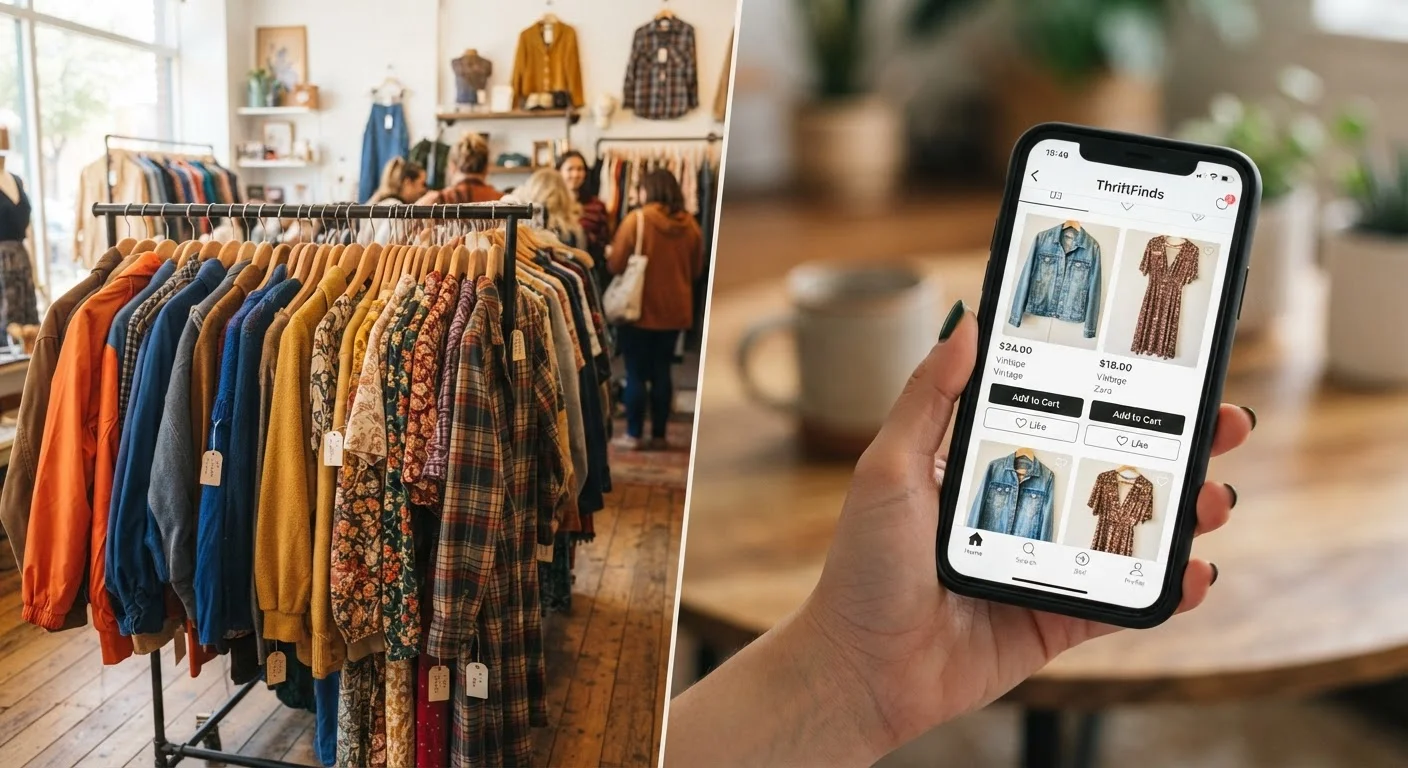
Photo: SaverSteals.com | Explore More. Shop Smarter. editorial
—— In This Article
Key Takeaways
- In-person thrifting lets you inspect condition and fit directly, reducing the risk of disappointment.
- Online resale platforms offer searchable inventory and broader geographic reach, but photos can mislead.
- Thrift stores typically have lower price points; resale apps often carry more curated, higher-value items.
- Shipping costs and return policies on resale apps vary widely and can erode apparent savings.
- Your best channel depends on what you're shopping for, how much time you have, and your risk tolerance.
How Each Channel Actually Works
In-person thrifting means visiting physical stores - charity-run shops, consignment stores, or salvage outlets - and sorting through whatever inventory happens to be on the floor that day. Stock is unpredictable, turnover is constant, and prices are set by the store rather than individual sellers. You leave with what you find, that day, no waiting.
Online resale platforms connect individual sellers directly with buyers through listings, photos, and seller-set prices. You search, message, purchase, and wait for shipping. Platforms vary considerably in their fee structures, buyer protections, and the types of clothing they attract - something worth understanding before you commit to one. See how the major resale platforms differ for clothing buyers for a breakdown of those specifics.
Both channels sell used clothing, but the shopping experience, risk profile, and likely price point differ enough that treating them as interchangeable leads to frustration.
Price, Selection, and the Condition Problem
Thrift stores generally carry lower sticker prices - often a few dollars per item - because they receive donated goods at no cost and operate at volume. The trade-off is selection: you're limited to what donors dropped off in your area, in your size, recently. For common casual items like jeans, t-shirts, and sweaters, this rarely matters. For specific brands or niche sizing, it can be a dead end.
Online resale tends to run higher on price because sellers research comparable listings and price accordingly. However, the searchable inventory is vastly larger. If you're after a particular jacket style or a hard-to-find size, the depth of online listings usually compensates for the price premium.
| Criterion | In-Person Thrifting | Online Resale |
|---|---|---|
| Typical price level | Lower; store-set, donation-based | Higher; seller-researched pricing |
| Condition inspection | Direct - touch, smell, try on | Photos and descriptions only |
| Selection breadth | Limited to local donations | National or global inventory |
| Search ability | Manual rack browsing only | Filtered by size, brand, color |
| Shipping costs | None | Variable; can add significantly |
| Return options | Usually short exchange window | Ranges from none to platform-managed |
| Time to receive item | Immediate | Days to over a week |
Condition assessment is where the channels diverge most sharply. In a thrift store, you hold the item, check the seams, smell the fabric, and try it on. Online, you're working from seller photos and written descriptions - which vary in accuracy and honesty. Most resale platforms offer some form of buyer protection for items that arrive significantly misrepresented, but disputes take time and aren't guaranteed to resolve in your favor.
~$0
Shipping cost at physical thrift stores
In-store purchases have no shipping fees, making the sticker price the true cost of the item.
Varies widely
Buyer protection coverage on resale apps
Platform policies differ significantly; some offer full purchase protection while others leave disputes to buyer and seller.
Millions
Active listings on major resale platforms
Large resale platforms aggregate inventory from individual sellers nationwide, far exceeding any single store's stock.
Practical Trade-Offs to Factor In
Shipping costs are an underappreciated factor in online resale math. A $12 shirt with $7 shipping is $19 - often more than you'd pay in a thrift store for a comparable piece. Some platforms build shipping into their pricing or offer flat-rate options, but always calculate the true delivered cost before assuming an online listing is a good deal.
Time investment differs too. Thrift shopping requires travel and physical browsing - rewarding when you find something, frustrating when you don't. Online browsing is flexible and can be done in short bursts, but searching, messaging sellers, and waiting for delivery adds its own friction. Neither channel is strictly faster; they trade one form of effort for another.
Return policies are generally more forgiving in thrift stores - most will allow exchanges within a short window - but resale app policies range from no-returns-accepted through seller-specific policies to platform-managed protections. Read the terms before you buy, especially for higher-value items.
If you're weighing secondhand clothing against brand sale events for savings, this comparison of resale apps and brand clearance events addresses that question directly.
Choosing the Right Channel for Your Situation
The clearest decision framework: if you know exactly what you want, use online resale - its search tools are built for that. If you're open to whatever you find and want to minimize financial risk, thrift stores offer the lowest-cost way to experiment with secondhand shopping.
Many experienced secondhand shoppers use both in parallel. They browse thrift stores regularly for everyday pieces and use resale apps for specific items they haven't been able to find locally. This approach captures the price advantages of in-person thrifting while using online platforms for their reach and searchability.
Geography matters too. Shoppers in dense urban areas often have access to well-stocked thrift stores with fast turnover. Those in rural or suburban areas may find online resale platforms fill gaps that local stores simply can't. If you're applying a similar channel-selection logic to other secondhand categories, the same principle holds - see how online vs. in-person trade-offs play out for used furniture for a parallel look at that decision.
Neither channel is universally superior. The better question is which one fits the specific item you're trying to find, the time you have, and how much condition uncertainty you're willing to accept.

Clothing Editorial Team
Clothing Editorial Team is the collective byline for our editorial team and contributor network. Articles published under this byline or an editorial pen name are researched, written, and reviewed according to our editorial standards for clarity, consistency, and independence before publication.
View author profile