

Key Takeaways
Skincare Ingredient Label Decoding
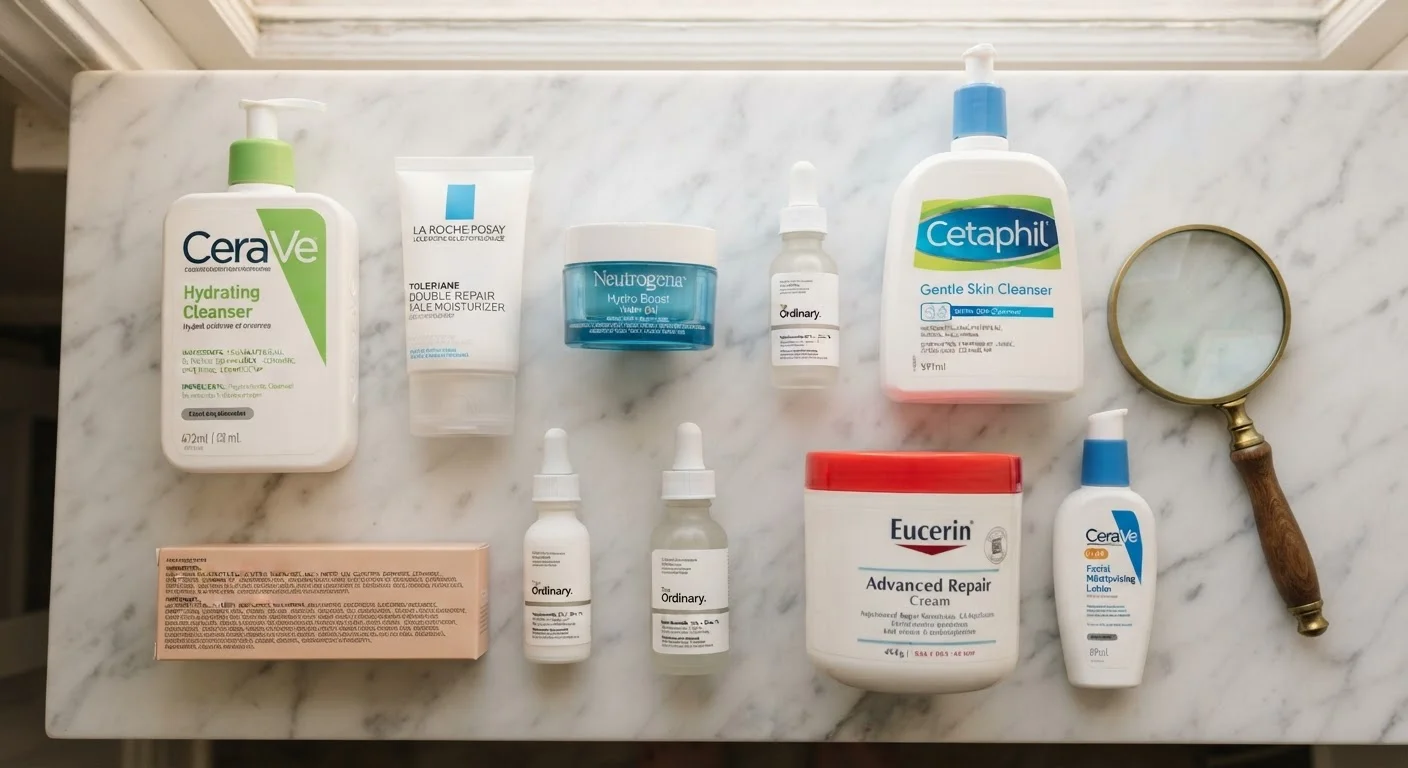
Skincare ingredient label decoding is the practice of reading and understanding the INCI (International Nomenclature of Cosmetic Ingredients) list on a product to identify its active and inactive components. Because cosmetics regulations require ingredients to be listed in descending order by concentration, learning to read these labels helps you determine whether a drugstore product contains the same effective actives as a luxury alternative. This skill empowers shoppers to make evidence-based decisions rather than paying for marketing and packaging.
Ingredients present at concentrations of 1% or less can be listed in any order after those above 1%, which is why some brands strategically place trending actives near the top even when they're present at trace amounts.
Why the Label Is the Most Powerful Tool in Your Beauty Bag
Let's be honest: the skincare aisle can feel overwhelming. There's a $14 CeraVe moisturizer right next to a $95 La Mer lookalike, and the packaging of the pricier one just feels more effective. That's exactly what the marketing department is counting on. The truth? Both products are required by the FDA to list every single ingredient - and if you know how to read that list, you can compare them on a completely level playing field.
Ingredient labels in the U.S. follow INCI standards, meaning every brand - from your local dollar store to a Paris-based luxury house - uses the same standardized Latin and English ingredient names. That's your secret weapon. Once you learn what a handful of key ingredient names look like on paper, you can spot a genuine dupe in seconds.
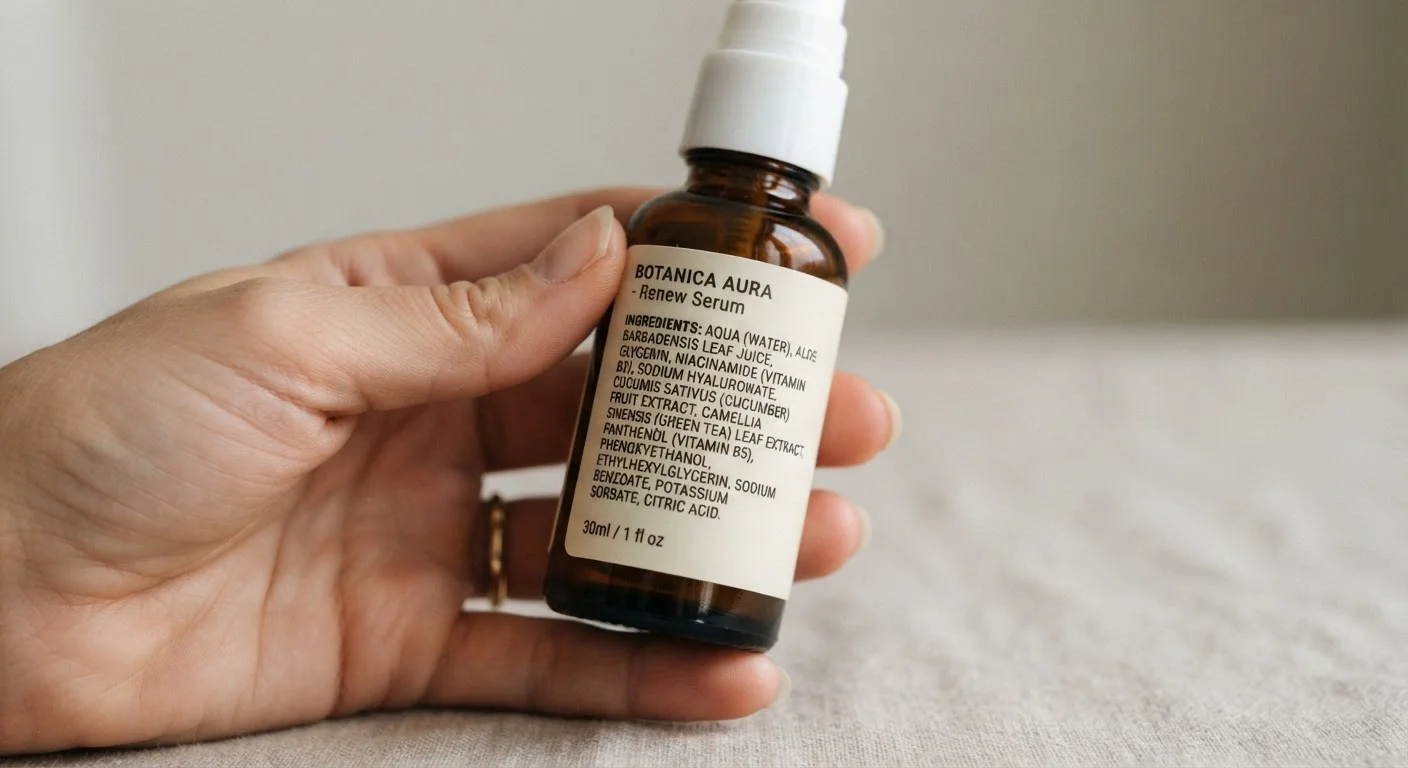
This isn't about being cheap - it's about being smart. When you understand what's actually driving results in a formula, you stop paying for a pretty jar and start investing in actives that genuinely move the needle for your skin. And for a lot of those actives, the drugstore version is sitting right next to the luxury one on a completely different shelf - at a fifth of the price.
Where you choose to splurge vs. save really matters depending on your skin type and concerns - but you can't make that call without first understanding what's actually inside the products you're comparing.
The Golden Rule: Concentration Order and the First-Five Principle
Here's the single most important thing to understand about any skincare ingredient list: ingredients are listed in descending order of concentration. The ingredient at the very top makes up the largest percentage of the formula. By the time you reach the middle of a long list, you're looking at ingredients present in very small amounts.
A practical rule of thumb called the First-Five Principle says that the first five ingredients typically account for 80-90% of the product's formula. These are your base ingredients - usually water (aqua), a humectant like glycerin, an emollient like a fatty alcohol or plant oil, and perhaps an emulsifier. If a luxury moisturizer and a drugstore alternative both open with Aqua, Glycerin, Cetearyl Alcohol, Caprylic/Capric Triglyceride, Niacinamide - they are, in practical terms, the same type of product delivering the same core experience.
80-90%
Of a formula covered by its top 5 ingredients
Cosmetic chemists widely cite this range as the approximate proportion of a formula represented by its first five listed ingredients.
1%
Threshold below which ingredient order is flexible
FDA cosmetic labeling rules allow ingredients present at 1% or less to be listed in any order after those above 1%, a loophole sometimes exploited by brands for marketing advantage.
Up to 5x
Price premium for luxury vs. drugstore actives
Consumer analysis comparing luxury and drugstore serums with identical key actives regularly finds price differences of 3-5x or more, with no corresponding difference in active ingredient concentration.
0.025-1%
Effective concentration range for retinol
Dermatological research supports this range as efficacious for retinol in over-the-counter cosmetic products, a range readily achievable in drugstore formulations.
The trickier part comes with the 1% rule. Ingredients present at 1% or less can legally be listed in any order after the ingredients above 1%. Some brands take advantage of this by placing flashy actives - say, peptides or exotic botanical extracts - in a position that makes them seem more prominent than they truly are. If you see a buzzy ingredient like bakuchiol or resveratrol listed after the preservatives (often parabens or phenoxyethanol), it's likely just a trace amount included for label appeal, not efficacy.
The 1% Rule and Label Positioning
Because ingredients at or below 1% concentration can be listed in any order, some brands strategically place expensive-sounding botanicals or peptides just below the 1% threshold to make them appear more prominent. A quick way to estimate the 1% 'cutoff point' in any ingredient list: look for the preservative - typically phenoxyethanol, sodium benzoate, or parabens. These are almost always used at 0.1%-1%, so anything listed after them is likely at trace concentrations.
Vitamin C Packaging Matters Too
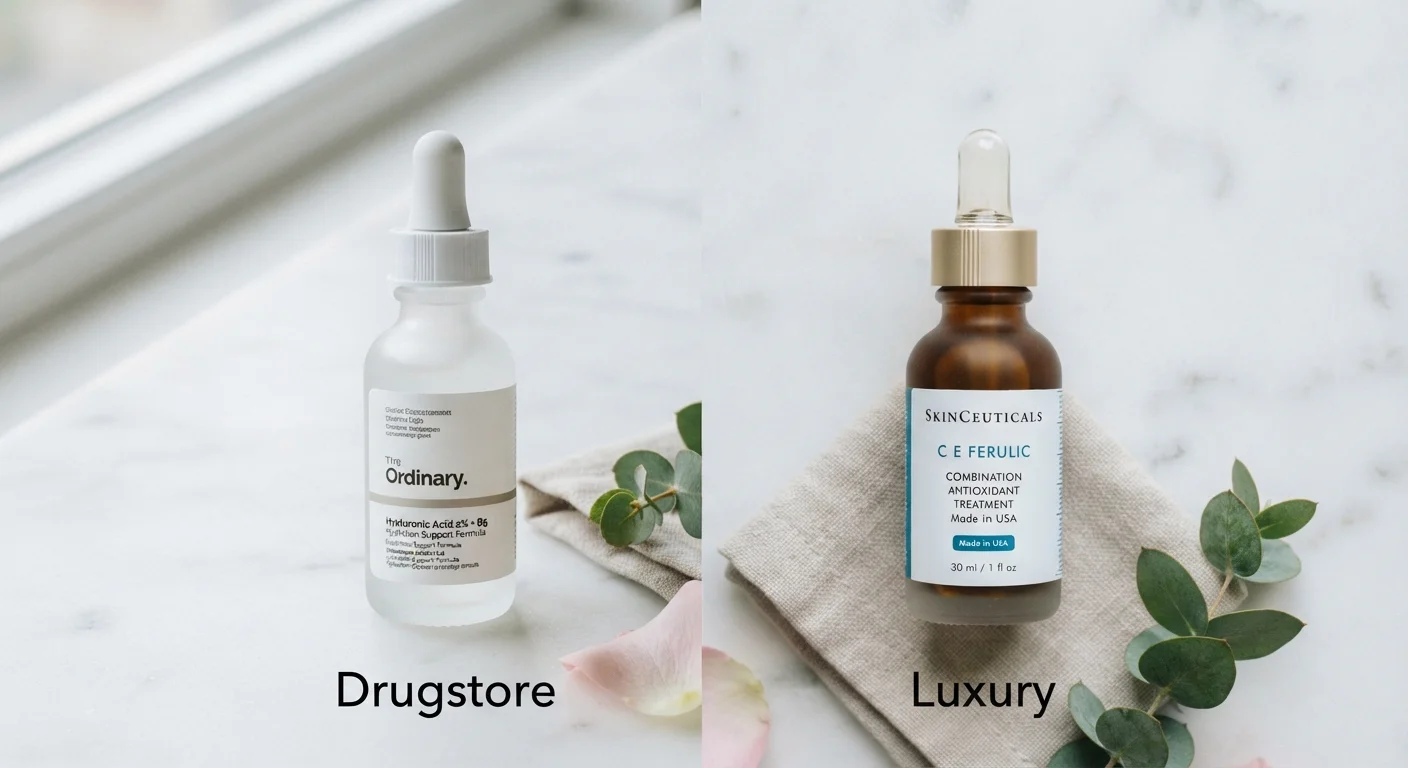
L-ascorbic acid is notoriously unstable and degrades quickly when exposed to light and air. When evaluating a vitamin C product - at any price point - look for opaque, airless, or dark-glass packaging. A luxury vitamin C serum in a clear glass dropper bottle may actually be less effective than a $15 drugstore option in an opaque, pump-top bottle, depending on how long both have been on the shelf.
The practical move: compare where a key active appears relative to the preservative system. If niacinamide shows up before phenoxyethanol in both a luxury serum and a drugstore one, both products are likely delivering meaningful amounts of the ingredient.
The Heavy Hitters: Actives Worth Hunting on Any Budget
Not all ingredients are created equal when it comes to delivering visible results. Below are the most well-researched, evidence-backed actives you should learn to spot on a label - because all of them are available in affordable formulas, and their effectiveness doesn't scale with price.
Retinol (Vitamin A)
Listed as retinol, retinyl palmitate, or retinal, this is the gold standard of anti-aging. Studies consistently show it boosts collagen production, increases cell turnover, and reduces fine lines. Luxury brands charge a premium for retinol serums, but brands like RoC, Neutrogena, and The Ordinary offer comparable percentages at under $20. Look for 0.025%-1% retinol for efficacy, and check that it's not buried below the preservatives.
Niacinamide (Vitamin B3)
Listed simply as niacinamide, this multitasking ingredient minimizes pores, brightens skin tone, reduces redness, and strengthens the moisture barrier. It's incredibly well-tolerated and works best at 2%-10%. The Inkey List and The Ordinary sell 10% niacinamide serums for under $10 - the same concentration used in luxury formulas costing four times as much.
Hyaluronic Acid
Listed as hyaluronic acid or sodium hyaluronate (the salt form, which has smaller molecules and penetrates more easily), this humectant draws moisture into the skin and holds up to 1,000 times its weight in water. Effective amounts vary, but its presence in the upper half of the ingredient list is a reliable signal. Plenty of drugstore serums and moisturizers nail the delivery.
AHAs and BHAs
Glycolic acid and lactic acid are the main alpha hydroxy acids that exfoliate the surface layer of skin. Salicylic acid is the workhorse BHA for oily and acne-prone skin, penetrating pores to clear congestion. These actives are regulated as cosmetic or over-the-counter drug ingredients, meaning their concentration limits are consistent across price points. A $9 salicylic acid cleanser from Neutrogena contains the same active ingredient as a $60 boutique version.
Vitamin C (L-Ascorbic Acid)
The most effective form is listed as L-ascorbic acid - it's potent but unstable, which is why packaging matters here. If a vitamin C product isn't in opaque, airless, or dark-glass packaging, the L-ascorbic acid may oxidize before it reaches your skin. Stable derivatives like ascorbyl glucoside or 3-O-ethyl ascorbic acid are more forgiving and common in drugstore formulas. Check the label and the packaging together for vitamin C products.
Use INCI Decoder Tools While You Shop
Apps and websites like INCI Decoder and CosDNA let you paste in a product's full ingredient list and get a plain-English breakdown of what each ingredient does. Use them in the drugstore aisle or before you add something to your cart online. They're free, fast, and will completely change how you shop for skincare.
Start Your Routine With One Swap at a Time
Don't overhaul your entire skincare routine at once. Swap one product at a time - your cleanser is the lowest-risk starting point since actives matter less there. Once you're confident in reading labels, move to serums where the ingredient-to-price ratio is most skewed. Gradual swaps also help you track what's actually working for your skin.
Decoding the 'Filler' Ingredients (That Aren't Really Fillers)
Here's a misconception worth busting: the non-active ingredients in your skincare aren't just cheap padding. Ingredients like dimethicone, glycerin, cetearyl alcohol, xanthan gum, and carbomer are what make a formula feel elegant, absorb well, and remain stable over time. A luxury moisturizer's silky finish often comes down to a particular ratio of these 'vehicle' ingredients - and skilled cosmetic chemists at drugstore brands have gotten very good at replicating these sensory experiences.
What truly separates a luxury formula's texture from a drugstore one isn't magic - it's formulation investment and sometimes a slightly different emollient or silicone blend. In terms of delivering actives to your skin? The mechanism is the same.
“Consumers consistently overestimate the performance gap between luxury and mass-market skincare. When formulas share the same actives at equivalent concentrations, clinical outcomes are indistinguishable - what differs is the sensory experience and the brand story.”
— Perry Romanowski, Cosmetic chemist and co-founder of Chemists Corner
One category where vehicle ingredients genuinely matter is sunscreen. The base formula affects how an SPF product applies, whether it leaves a white cast, and how comfortable it is to wear daily. That's where you might notice a real sensory difference between a $15 drugstore SPF and a $45 cosmetically elegant one. But for cleansers, toners, and many moisturizers? The actives are doing the work, not the brand name on the front of the bottle.
Comparing finish and formula side by side is a useful exercise across skincare and makeup alike - the methodology translates directly.
Red Flags on Labels: What to Watch Out For
Learning to spot a great dupe also means knowing when a product is using ingredient-list sleight of hand. Here are the most common warning signs:
- Trendy actives at the very bottom: If a product is marketed as a 'peptide-rich' serum but peptides appear after the fragrance and preservatives, their concentration is likely negligible. This is especially common with expensive-sounding extracts and plant stem cells.
- 'Fragrance' or 'parfum' in leave-on products: These are catch-all terms that can mask dozens of undisclosed chemical compounds. In rinse-off products it's less of a concern, but in serums and moisturizers, fragrance is one of the top skin sensitizers. Many affordable fragrance-free alternatives exist.
- Alcohol (denatured) listed high up: Alcohol denat. can be drying and irritating if it appears in the first few ingredients. It's sometimes used to create a fast-absorbing, matte finish, but at high concentrations it can disrupt the skin barrier over time.
- Misleading 'natural' labels: 'Natural' has no regulated definition in cosmetics. A product can be marketed as natural while containing synthetic preservatives and artificial fragrance. Read the list, not the front-of-pack claim.
The more you read labels, the faster your eye catches these patterns. Give yourself a few weeks of comparing products while you're in the aisle and you'll develop an instinct for what's genuinely formulated to deliver versus what's priced on prestige alone. What makes any dupe actually worth it comes down to the same fundamental question: does it contain the right ingredients at the right concentration?
Building Your Budget Skincare Routine Using Label Intelligence
Armed with label-reading skills, building an effective routine on a budget becomes a genuinely fun puzzle rather than a guessing game. Here's a practical framework:
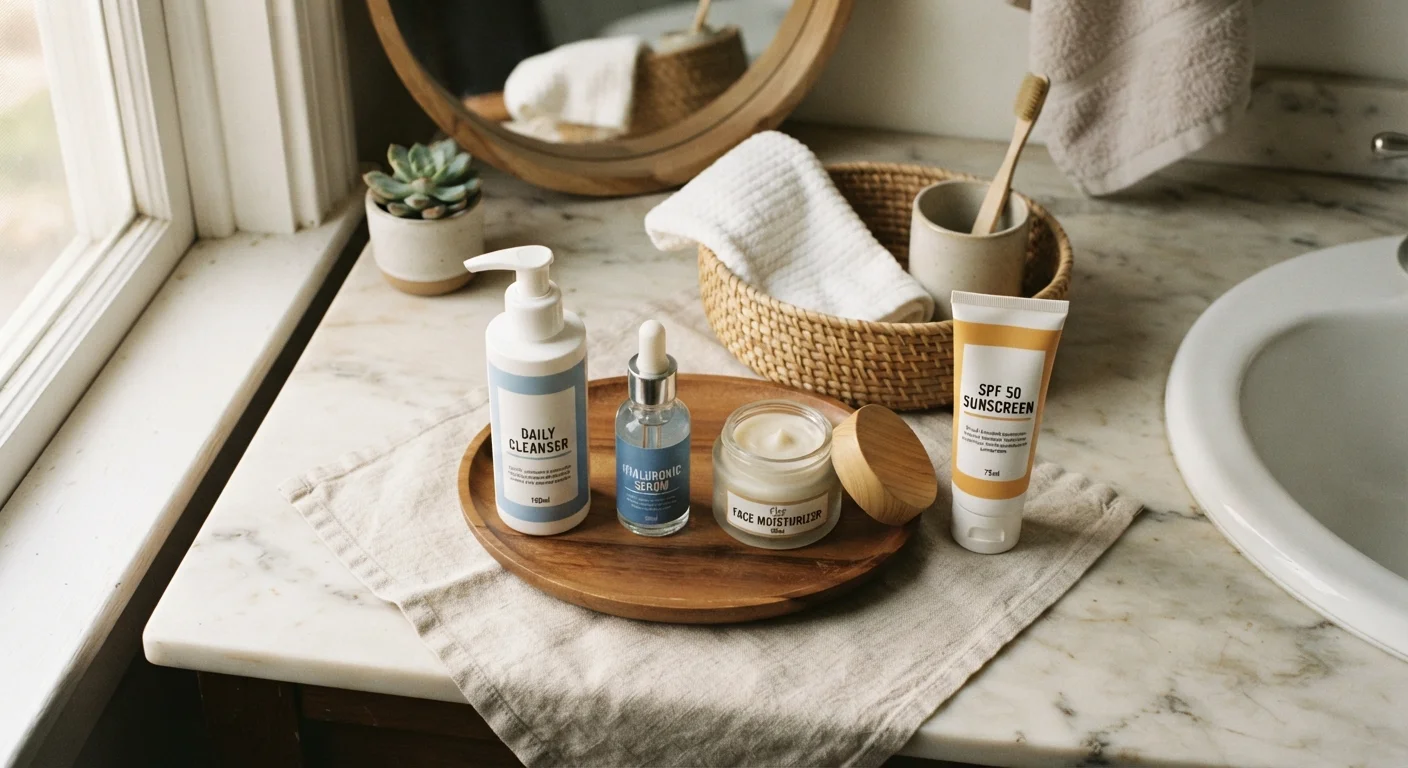
- Cleanse: Actives don't matter much in a rinse-off cleanser - it's on your face for 30 seconds. Prioritize a gentle pH-balanced formula (look for water and glycerin near the top) and skip the premium price entirely. CeraVe Hydrating Cleanser ($14) is a classic for good reason.
- Treat (serums): This is where actives do their heavy lifting. Match the active you need to your concern, confirm it appears in the upper half of the ingredient list, and compare drugstore and luxury versions side by side. Serums are where label literacy saves you the most money.
- Moisturize: Look for humectants (glycerin, hyaluronic acid), emollients (fatty alcohols, plant oils, squalane), and occlusives (petrolatum, dimethicone) working together. Many drugstore moisturizers nail this trifecta.
- SPF: Non-negotiable. This is one area where spending a little more for a formula you'll actually enjoy wearing daily is worth it. But there are excellent budget SPFs too - look for at least SPF 30 and broad-spectrum coverage.
For a deeper look at which steps are genuinely worth a premium investment and where you can reliably swap to drugstore, the splurge vs. save breakdown for skincare gives you the full category-by-category picture.
And if you want to extend this label-reading skill into your makeup bag, the makeup dupes hub is exactly where to take your newfound knowledge next. The same ingredient-first thinking applies - and the savings stack up even faster across foundation, concealer, and serum territories.
Use INCI Decoder Tools While You Shop
Apps and websites like INCI Decoder and CosDNA let you paste in a product's full ingredient list and get a plain-English breakdown of what each ingredient does. Use them in the drugstore aisle or before you add something to your cart online. They're free, fast, and will completely change how you shop for skincare.
Start Your Routine With One Swap at a Time
Don't overhaul your entire skincare routine at once. Swap one product at a time - your cleanser is the lowest-risk starting point since actives matter less there. Once you're confident in reading labels, move to serums where the ingredient-to-price ratio is most skewed. Gradual swaps also help you track what's actually working for your skin.