
Thrift Store Books: What Makes a Good Find and What to Pass On
Thrift stores can offer brilliant finds or costly disappointments. Learn how to assess condition, edition, and value before you buy.
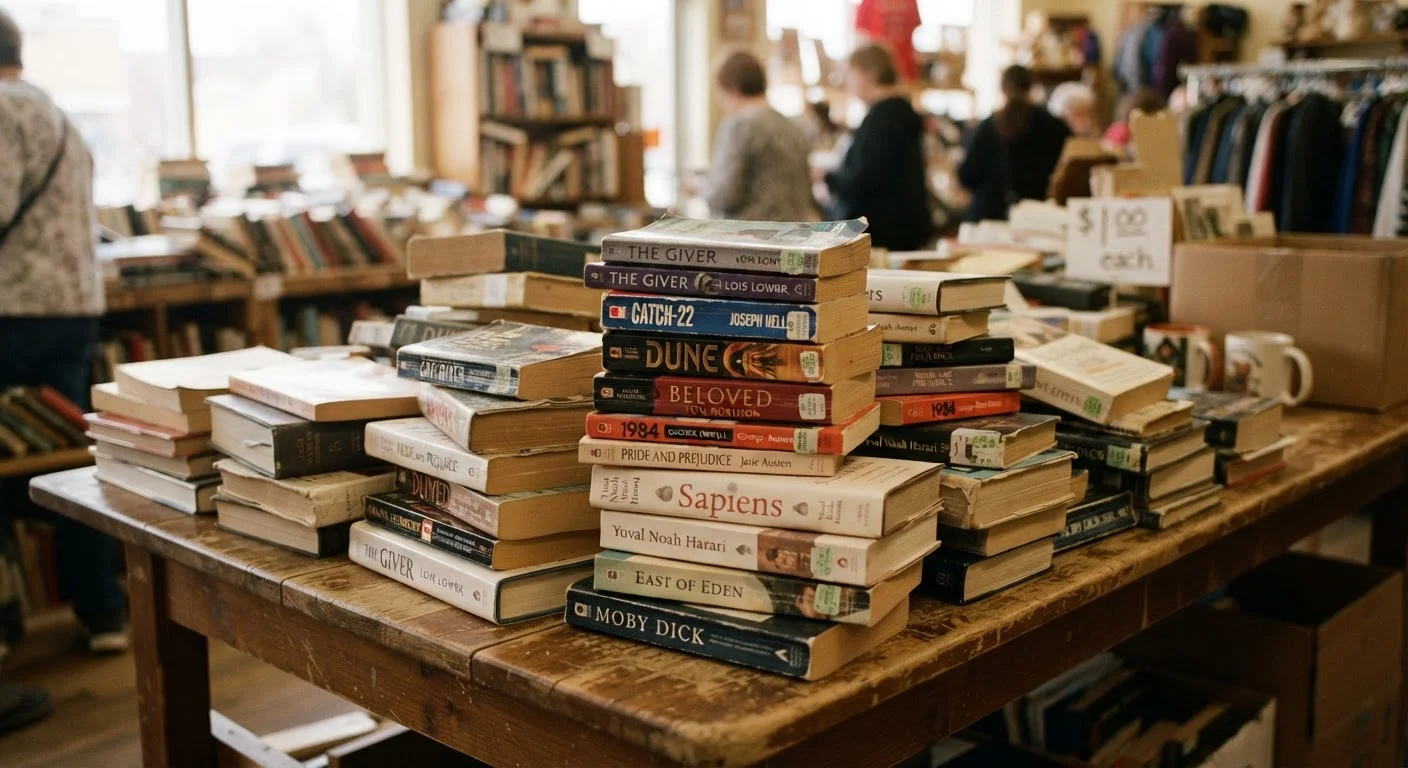
Photo: SaverSteals.com | Explore More. Shop Smarter. editorial
—— In This Article
Key Takeaways
- Condition is the single most important factor when evaluating a thrift store book purchase.
- Not every low-priced book is a deal - check resale value and edition before buying.
- Musty odors, mold, or severe highlighting are often deal-breakers that no bargain justifies.
- Hardcovers in good condition typically offer better long-term value than damaged paperbacks.
- A quick phone search can reveal whether a book is readily available elsewhere for less.
Why Thrift Store Books Deserve a Second Look
Thrift store book sections can feel like a gamble. Titles are unpredictable, condition is uneven, and the pricing logic isn't always obvious. But for readers who know what they're looking for, these shelves represent one of the most accessible sources of deeply discounted books available. If you're just starting to build a cheap-reads strategy, thrift stores are worth putting near the top of your list - with some caveats.
The key distinction between a good thrift find and a waste of money usually comes down to condition and context. A $1 book in poor shape isn't a bargain; a $3 hardcover in excellent condition might be a genuine score. Developing a quick but reliable assessment process is what separates buyers who leave satisfied from those who get home and regret the impulse.
How to Quickly Assess a Book's Condition
You don't need to spend five minutes on every book - most condition checks take under 30 seconds once you know the sequence. Work through these steps in order, and you'll catch the most common problems before you commit.
Check the spine and binding before anything else.
A broken spine or detached pages makes a book difficult or unpleasant to read, and the damage is irreversible. Structural integrity is a baseline requirement - cosmetic flaws are forgivable, but a book that won't stay together isn't worth shelf space.
Smell the book before you buy it.
Musty or mildewy odor is a sign of water damage or mold, neither of which improves with airing out. Mold can spread to other books and may cause allergic reactions. A faint old-paper scent is normal; a damp or sour smell is not.
Assess highlighting and margin notes realistically.
Light pencil notes can be erased; heavy pen markup or fluorescent highlighting on every page is genuinely distracting for most readers. Be honest about your own tolerance - what looks minor in the store often becomes irritating over 300 pages.
Look up the edition before purchasing nonfiction or academic titles.
An outdated edition of a medical reference, legal guide, or textbook can contain information that has since changed or been superseded. For fiction and literary classics, edition usually doesn't matter; for practical or technical books, it often does.
Do a quick price check on your phone before buying anything above a few dollars.
Thrift stores occasionally price common titles higher than their actual market value, especially for popular genres. A 30-second search on a used-book platform reveals whether you're getting a genuine deal or paying a convenience premium.
Prioritize clean hardcovers over battered paperbacks at similar prices.
Paperbacks degrade faster and are more vulnerable to damage during shelf life. A hardcover in good condition will outlast a well-read paperback significantly, making it better value if the price difference is small.
When to Walk Away Without Regret
If a book has more than three of the following - musty smell, broken spine, heavy highlighting, missing pages, or water staining - pass on it even if the price is very low. Filling your shelf with low-quality copies creates clutter, not value. Your time spent reading a difficult copy counts too.
For a broader look at navigating thrift stores in general - not just the book section - this walkthrough for first-time thrift shoppers covers the full environment and how to avoid overwhelm.
What to Skip and When Price Isn't the Point
Certain categories of thrift store books are almost never worth buying regardless of condition. Outdated travel guides, superseded technical manuals, and heavily localized reference books (phone directories, regional event guides) have essentially no practical value. Similarly, incomplete sets - a single volume from a multi-volume encyclopedia, for example - are rarely useful on their own.
Thrift Pricing Varies Widely by Location
Thrift store book prices aren't standardized. A chain location in one city may charge twice what an independent shop asks for the same title. Understanding how donation cycles and tag-rotation systems affect pricing helps you calibrate expectations. See how thrift store pricing actually works for a fuller breakdown.
It's also worth checking whether a book you're eyeing is available free through your public library's digital lending platform before paying anything. If it is, the thrift copy only makes sense if you specifically prefer owning it. Library book sales are another channel worth comparing - pricing there is often lower and selection more curated than typical thrift shelves.
Finally, keep an eye on pricing relative to the broader secondhand market. Overpaying at thrift stores is more common than most shoppers realize, and books are no exception.

Books Editorial Team
Books Editorial Team is the collective byline for our editorial team and contributor network. Articles published under this byline or an editorial pen name are researched, written, and reviewed according to our editorial standards for clarity, consistency, and independence before publication.
View author profile