
Library Book Sales: What to Expect and How to Work the Room
Library sales can yield incredible prices, but timing and preparation matter. Here's how to navigate them effectively.
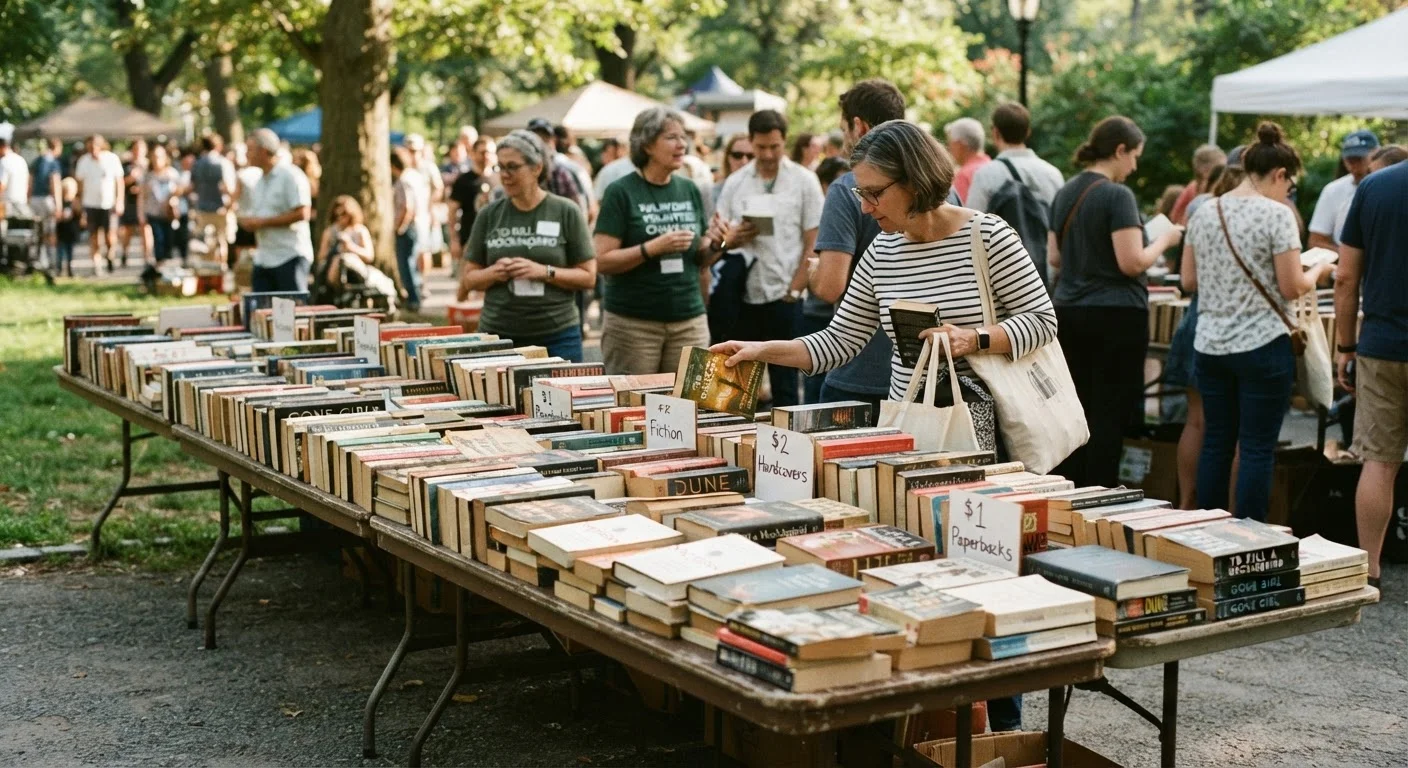
Photo: SaverSteals.com | Explore More. Shop Smarter. editorial
—— In This Article
Key Takeaways
- Library book sales are organized by local Friends of the Library groups and follow predictable pricing structures.
- Timing your visit - opening day or final bag-sale day - determines what you find and what you pay.
- Arriving with a want list and a tote bag significantly improves your results.
- Condition varies widely; checking each book before buying saves post-sale regret.
- Bag sales on the final day often offer the steepest prices on remaining stock.
What Library Book Sales Actually Are
Library book sales are fundraising events run primarily by Friends of the Library organizations - volunteer groups that support their local branch. Books come from two main sources: donated volumes from community members and items weeded from the library's own collection because they're outdated, duplicated, or no longer circulating. The proceeds typically fund library programming, equipment, or materials the public budget doesn't cover.
Sales range from small one-day events in a library meeting room to multi-day warehouse-scale operations drawing thousands of visitors. Either way, the inventory is donated and the pricing is intentionally low - the goal is to move volume, not maximize revenue per title. That's what makes them genuinely useful for budget readers, not just deal-hunters.
If you're new to finding affordable books in general, the overview of buying books on a tight budget covers the full landscape of options, from digital libraries to physical discount channels.
Reusable tote bag or cardboard box
Carries your selections hands-free so you can browse more efficiently.
Want list (written or on your phone)
Keeps you focused on genuine needs and prevents impulse overbuying.
Cash (small bills)
Many library sales are cash-only or strongly prefer it for fast transactions.
Smartphone with a book-scanning app
Lets you quickly check editions, print dates, or resale value of unfamiliar titles.
How to Prepare and What to Bring
The difference between a frustrating library sale experience and a productive one usually comes down to preparation. These events can be crowded, fast-moving, and disorganized - especially in the first couple of hours on opening day. Going in with a clear sense of what you need and how the sale works removes most of the friction.
What you will need
One thing worth noting: library sales are a physical experience, not a filtered search. You won't find every title you want, and that's fine. The readers who do best are those who treat it as a curated browse rather than a shopping list exercise. Keep your expectations calibrated and you're less likely to leave disappointed.
Step-by-Step: Working the Sale
Find upcoming sales in your area
Most library sales are run by Friends of the Library volunteer groups. Check your local library branch's website, its newsletter, or its social media accounts for upcoming dates. National aggregators like the Book Sale Finder website also list events by zip code. Sign up for email alerts where available - popular sales often fill up or sell out key categories within the first hour.
Understand the pricing structure before you go
Library sales typically price books by category rather than by title. Hardcovers might be a flat rate, paperbacks another, and children's books yet another. Some sales use color-coded stickers that change price as the event progresses. Knowing this in advance helps you set a realistic budget and decide which day to attend.
Decide whether to go early or late
Opening day gives you the widest selection, which matters most if you're hunting specific titles or pristine condition copies. The final day - often called a bag sale or fill-a-bag day - offers the lowest prices on whatever remains, which suits readers who are flexible about what they find. Both strategies are legitimate; just be clear on your goal before you go.
Work the room systematically
Resist the urge to grab randomly. Walk the entire layout once before picking anything up, so you understand where categories are located. Then work section by section. Pull candidates and carry them in your bag as you go - you can always return items to a discard pile before checkout. This approach prevents you from missing a whole table because you got absorbed in the first one.
Assess condition before committing
Flip the book open to check the spine for cracking, look for water damage on page edges (brown staining or wavy pages), and confirm that any maps or plates are intact in illustrated titles. Musty odors can be difficult to eliminate at home. For paperbacks, check that the cover is firmly attached. The guide to evaluating thrift store books covers condition checks in more depth if you want a fuller checklist.
Check out and keep a running total
Most sales price by simple category counts, so tally your items as you go rather than at the register. Have your cash ready and separated into expected denominations. Volunteers run these events and long lines build fast near closing - paying quickly is courteous and practical.
Bag Sales Reward Flexibility
On final-day bag sales, the tables are whatever's left - which often means an unpredictable mix. Readers with a loose agenda do best here. If you're open to discovering something new rather than hunting a specific title, this is genuinely one of the most cost-effective ways to build a reading backlog.
Don't Overbuy Because Prices Are Low
The low per-unit cost at library sales makes it easy to leave with far more books than you'll realistically read. Before checkout, edit your pile ruthlessly: if you wouldn't pick it up at a bookstore for a few dollars, put it back. The same discipline that applies to buying clothing during sales applies here - a great price on something you won't use is still wasted money.
After the Sale: Making the Most of What You Found
Once you're home, take a few minutes to sort your haul. Books you're confident you'll read can go straight to your shelf. Any duplicates or impulse picks that don't look as appealing in daylight can be donated back - many libraries accept donations year-round for their next sale.
If you're interested in digital reading options alongside your physical finds, it's worth knowing that library ebooks come with their own quirks. Why library ebook waitlists exist and how to navigate them explains the licensing system behind those frustrating holds queues and what you can do to reduce wait times.
Cash Is Often Non-Negotiable
Many library sales, especially smaller branch events, operate entirely on cash. Card readers require volunteer training and equipment the group may not have. Check the sale's listing before you go and bring more cash than you think you'll need - ATMs near library branches aren't always convenient or functional.
Library sales reward preparation, patience, and a realistic mindset. Show up knowing how they work, bring what you need, and make deliberate choices - and they're one of the most straightforward ways to fill your shelves without spending much at all.

Books Editorial Team
Books Editorial Team is the collective byline for our editorial team and contributor network. Articles published under this byline or an editorial pen name are researched, written, and reviewed according to our editorial standards for clarity, consistency, and independence before publication.
View author profile