
Drugstore Dupes Explained: What They Are and How They Actually Work
Curious what a 'dupe' really means in beauty? Learn how drugstore alternatives are formulated and what makes them worth trying.
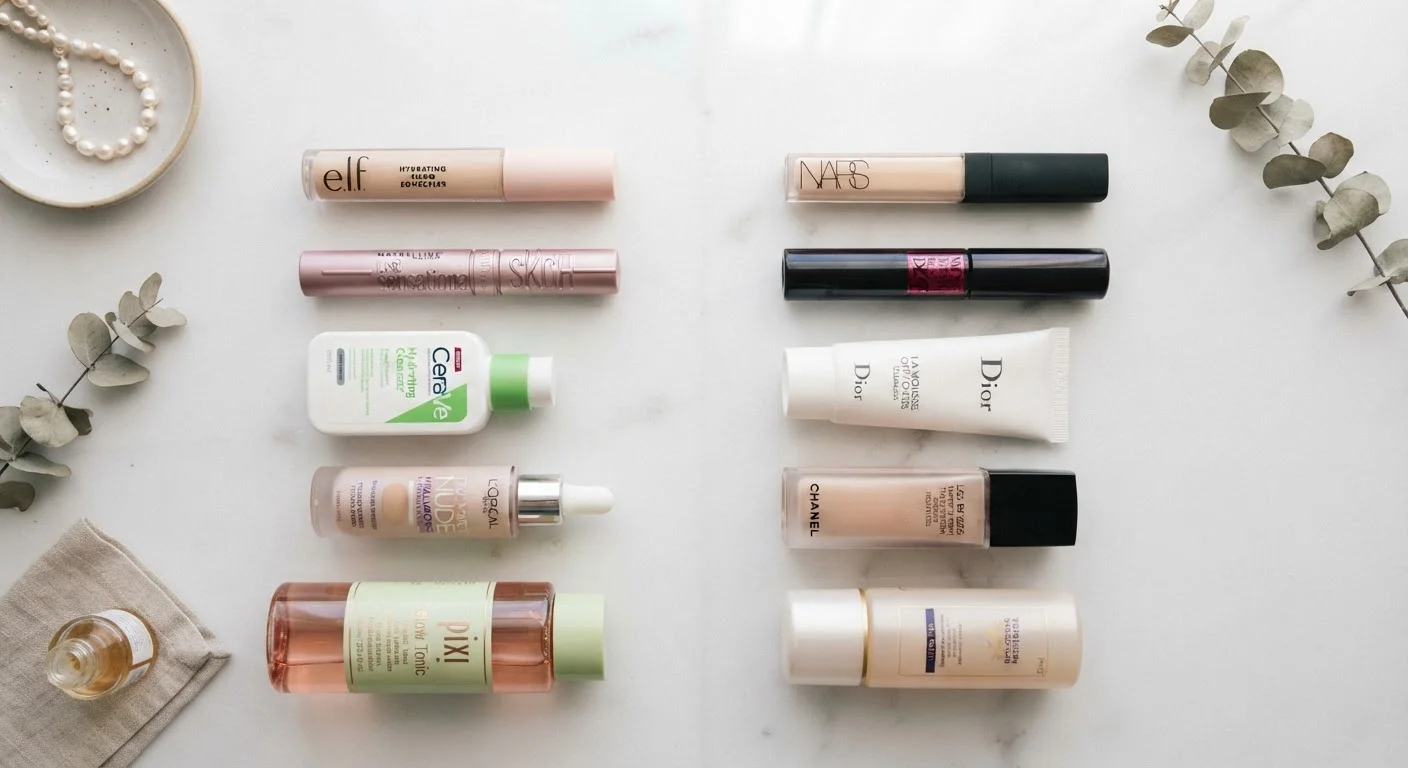
Photo: SaverSteals.com | Explore More. Shop Smarter. editorial
—— In This Article
Key Takeaways
- A dupe is a lower-cost product that mimics the results of a pricier one - not a counterfeit.
- Shared key ingredients are the most reliable indicator that a dupe may perform similarly.
- Packaging, fragrance, and texture can differ significantly even when core formulas overlap.
- Dupes work best for straightforward formulas; complex or patented technology is harder to replicate.
- Testing a dupe yourself remains the most reliable way to judge whether it works for your skin.
What "Dupe" Actually Means in Beauty
The word "dupe" entered mainstream beauty vocabulary through online communities where shoppers began cataloging affordable alternatives to products they loved but couldn't justify buying regularly. It's short for duplicate, but the term is used loosely - a dupe doesn't have to be a formula clone. It just needs to achieve a result close enough that most users wouldn't feel they were missing out.
Dupes can emerge in any category: foundation, mascara, serum, lip color, skincare. What makes something a dupe isn't the price alone, but the intent - it's positioned to deliver a comparable experience to a higher-cost product. For a deeper grounding in the vocabulary that surrounds this space, the budget beauty glossary covers related terms in plain language.
Dupes Are Not Counterfeits
A dupe is a legally sold product formulated independently to achieve similar results - it is not a counterfeit or fake. Counterfeits illegally replicate packaging, logos, and trade dress to deceive consumers. If a product claims to be a luxury brand but is sold at a steep discount through unofficial channels, treat that as a red flag for counterfeiting, not duping.
How Drugstore Formulas Actually Get Made
Cosmetic chemists working for mass-market brands don't start with a luxury product and try to reverse-engineer it. Instead, they often work within similar ingredient pools - because the functional building blocks of beauty formulas (emollients, humectants, film-formers, pigments) are largely standardized across the industry. Two very different price-point products can end up with overlapping ingredient profiles simply because the same raw materials are available to everyone.
Where formulas genuinely diverge is in concentration, processing, proprietary delivery systems, and the quality or source of specific raw materials. A high-end retinol serum might use a more stable encapsulated retinol form; a drugstore alternative might use a different retinol variant at a lower percentage. The overlap between drugstore and high-end formulas explores exactly where those lines get blurry.
~80%
Beauty ingredient overlap across price tiers
Industry formulation analyses suggest the majority of core cosmetic ingredients are sourced from a shared global supplier pool, regardless of product price point.
2-10x
Typical price difference between dupes and originals
Consumer pricing data consistently shows drugstore alternatives priced between two and ten times less than their prestige counterparts for similar product categories.
#1
Most-duped category: complexion products
Foundation and concealer consistently represent the highest volume of dupe comparisons in beauty communities, likely because the category is high-use and the price gap is significant.
What Makes a Dupe Worth Trying - and What Doesn't Transfer
The strongest signal that a dupe might perform comparably is ingredient alignment. If the first five ingredients on both products are the same, and the key actives appear in similar positions on the list, the functional similarity is likely meaningful. Secondary factors - fragrance, pigment depth, texture, wear time - are harder to assess without testing.
Some things simply don't transfer well. Patented technologies, unique delivery systems, and finely milled pigments developed through years of proprietary research are difficult to approximate. A dupe for a long-wear lip product might match the color but not the longevity. A moisturizer dupe might share the same base but feel different on the skin due to different emulsifier ratios.
Compare Ingredient Lists Side by Side
Before purchasing a dupe, pull up the full ingredient list for both products and compare the first five to seven ingredients. These make up the largest percentage of the formula by weight and most directly determine how the product performs. Many retailer websites and third-party apps display this information without requiring you to buy first.
It's also worth noting that "dupe culture" can sometimes oversimplify. Not every affordable product that resembles a luxury one was designed as a dupe - the similarity may be coincidental. And personal skin chemistry means results will vary. For a fuller picture of how to navigate affordability without lowering expectations, see the full picture on budget beauty.
How to Evaluate a Dupe Before You Buy
Start with the ingredient list, not the packaging or marketing. Match the key functional ingredients between the original and the proposed dupe. Note where those ingredients appear - earlier in the list generally means higher concentration. Look for independent reviews that compare performance rather than just aesthetics.
Consider the format and finish you actually need. If you're duping a dewy foundation, check whether the dupe also has a dewy finish or whether it pulls matte. Small formulation differences can mean a product that looks similar in the tube performs very differently on skin.
Finally, think about how you plan to shop. Drugstore dupes are most budget-friendly when combined with store loyalty programs and coupons. Understanding how those savings mechanisms work - particularly the difference between manufacturer and store coupons - can meaningfully extend your budget. The beauty coupons hub is a good starting point for understanding those options.
Frequently Asked Questions

Beauty Editorial Team
Beauty Editorial Team is the collective byline for our editorial team and contributor network. Articles published under this byline or an editorial pen name are researched, written, and reviewed according to our editorial standards for clarity, consistency, and independence before publication.
View author profile