
Why Your Beauty Coupons Keep Getting Rejected at Checkout
Expired dates, exclusion clauses, and misread fine print are common culprits. Find out what goes wrong and how to avoid it.
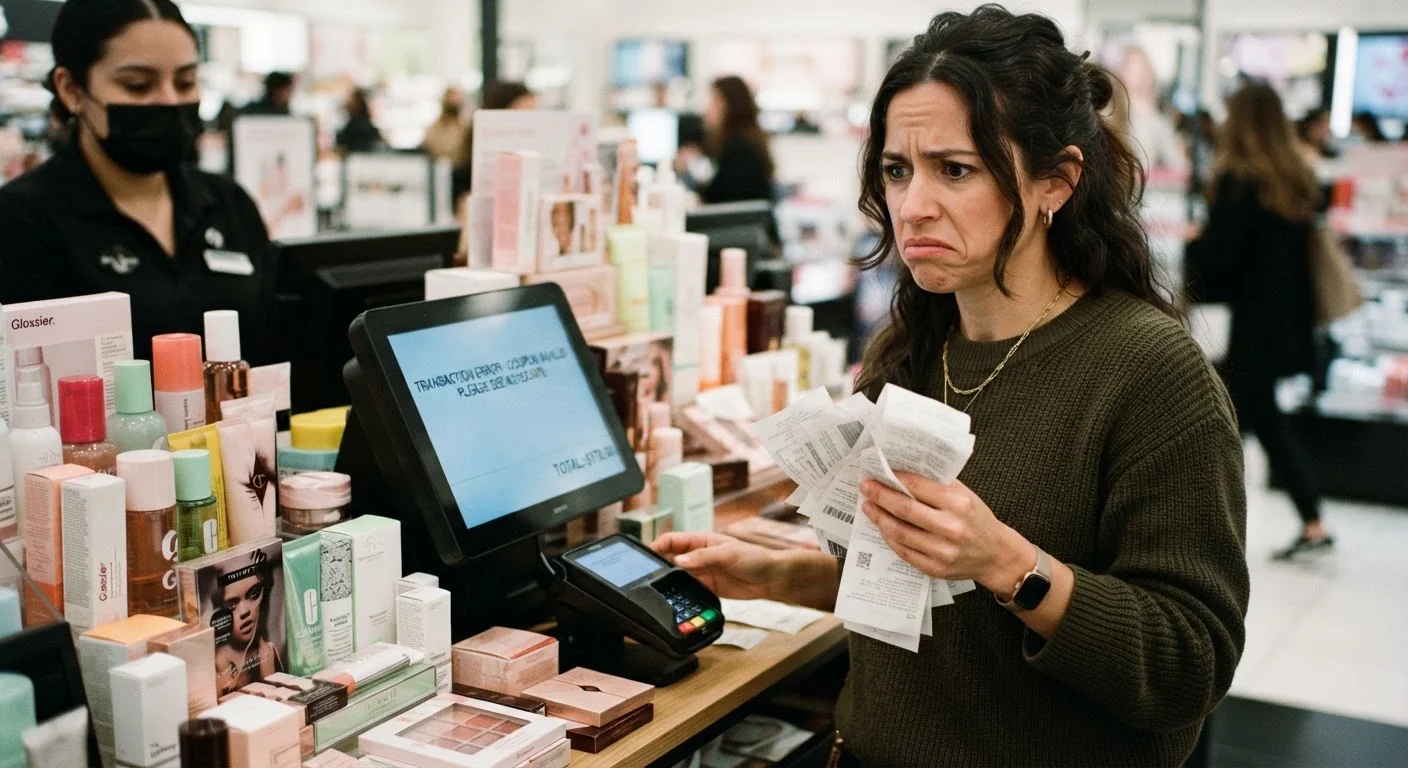
Photo: SaverSteals.com | Explore More. Shop Smarter. editorial
—— In This Article
Key Takeaways
- Most coupon rejections trace back to expiry dates, exclusion clauses, or minimum purchase requirements.
- Stackability rules and channel restrictions determine whether multiple offers can be combined.
- Reading the fine print before checkout - not after - prevents most redemption failures.
- Loyalty points and promo codes often carry separate terms that differ from printed coupons.
- Organizing coupons by expiry date reduces the risk of using them past their valid window.
Why Beauty Coupon Rejections Are So Common
Beauty retail runs on promotions - loyalty programs, manufacturer offers, seasonal events, digital codes - and the more complex the ecosystem, the more opportunities there are for a coupon to fail at checkout. Most rejections are not random glitches; they are the predictable result of fine print that goes unread and terms that get misapplied.
Understanding why coupons get rejected is more useful than simply knowing that they do. Each failure mode has a specific cause and a specific fix. The mistakes outlined below cover the most frequent reasons beauty coupons are declined, why they trip up even experienced shoppers, and what to do differently next time.
For a structured approach before you ever reach the checkout screen, the coupon redemption checklist is a useful companion to this guide.
55%
Coupons rejected due to exclusion violations
Industry surveys of coupon-processing data consistently identify exclusion-clause violations as the leading reason beauty coupons fail at the point of sale.
1 in 3
Shoppers unaware of minimum spend thresholds
Consumer research in the retail sector suggests a significant portion of shoppers attempt to redeem coupons without meeting the minimum purchase requirement printed in the fine print.
The Most Common Mistakes - and How to Avoid Them
The following errors account for the overwhelming majority of beauty coupon rejections across both in-store and online channels. Each one is avoidable with a small amount of preparation done before checkout rather than during it.
Attempting to redeem an expired coupon without checking the end date first.
Why it happens: Shoppers often clip or screenshot coupons and store them for weeks, forgetting that beauty promotions frequently run for seven to fourteen days or less.
Ignoring the product exclusion list and adding ineligible items to the cart.
Why it happens: Exclusion clauses are often printed in small type or buried in a linked terms page, making it easy to assume a broad offer applies to everything in the store.
Falling short of the minimum purchase threshold required to trigger the discount.
Why it happens: The threshold amount is sometimes displayed in smaller font than the discount value, and shoppers focus on the savings figure rather than the qualifying spend.
Trying to stack offers that are not compatible with each other.
Why it happens: Coupon terminology like 'combinable' and 'stackable' sounds interchangeable but carries distinct meanings across different retailers and programs.
Redeeming a coupon in the wrong channel - using an in-store barcode online, or vice versa.
Why it happens: Many shoppers assume a retailer's coupon works identically whether scanned at a register or entered as a code at an online checkout, but channel restrictions are common.
Applying a loyalty reward or promo code to a cart that doesn't meet that program's separate eligibility rules.
Why it happens: Shoppers treat loyalty points and promo codes as equivalent to coupons, not realizing they operate under distinct terms - including their own exclusion lists, expiry windows, and minimum balances.
Exclusions Can Void an Entire Cart
Many beauty coupons explicitly exclude sale items, gift sets, or entire product categories. If even one excluded item is in your cart, some retailers will reject the coupon for the whole transaction rather than applying it to eligible items only. Always review the exclusion list before you add anything to your cart - not as an afterthought at checkout.
If fine-print language is the recurring sticking point, a close read of what beauty coupon terms and conditions actually mean can help you interpret offers more accurately going forward.
Don't Assume 'Stackable' Means Unlimited
A coupon labeled 'stackable' typically means it can be combined with one other specific offer type - not that it works with every active promotion. Retailers define stacking terms narrowly, and combining a manufacturer coupon with a store coupon may still be blocked by a loyalty-program promo running simultaneously. Verify the stacking rules for each individual offer before checkout.
Keeping offers organized and tracking their terms over time also reduces checkout friction considerably. Explore habits for staying organized throughout the year to build a system that prevents wasted savings. And if you shop across both channels, understanding in-store vs. online redemption differences is essential reading before your next purchase.

Beauty Editorial Team
Beauty Editorial Team is the collective byline for our editorial team and contributor network. Articles published under this byline or an editorial pen name are researched, written, and reviewed according to our editorial standards for clarity, consistency, and independence before publication.
View author profile