
Reading Beauty Coupon Fine Print: What the Terms and Conditions Actually Mean
Exclusion lists, minimum purchase thresholds, and one-per-transaction rules explained in plain language.
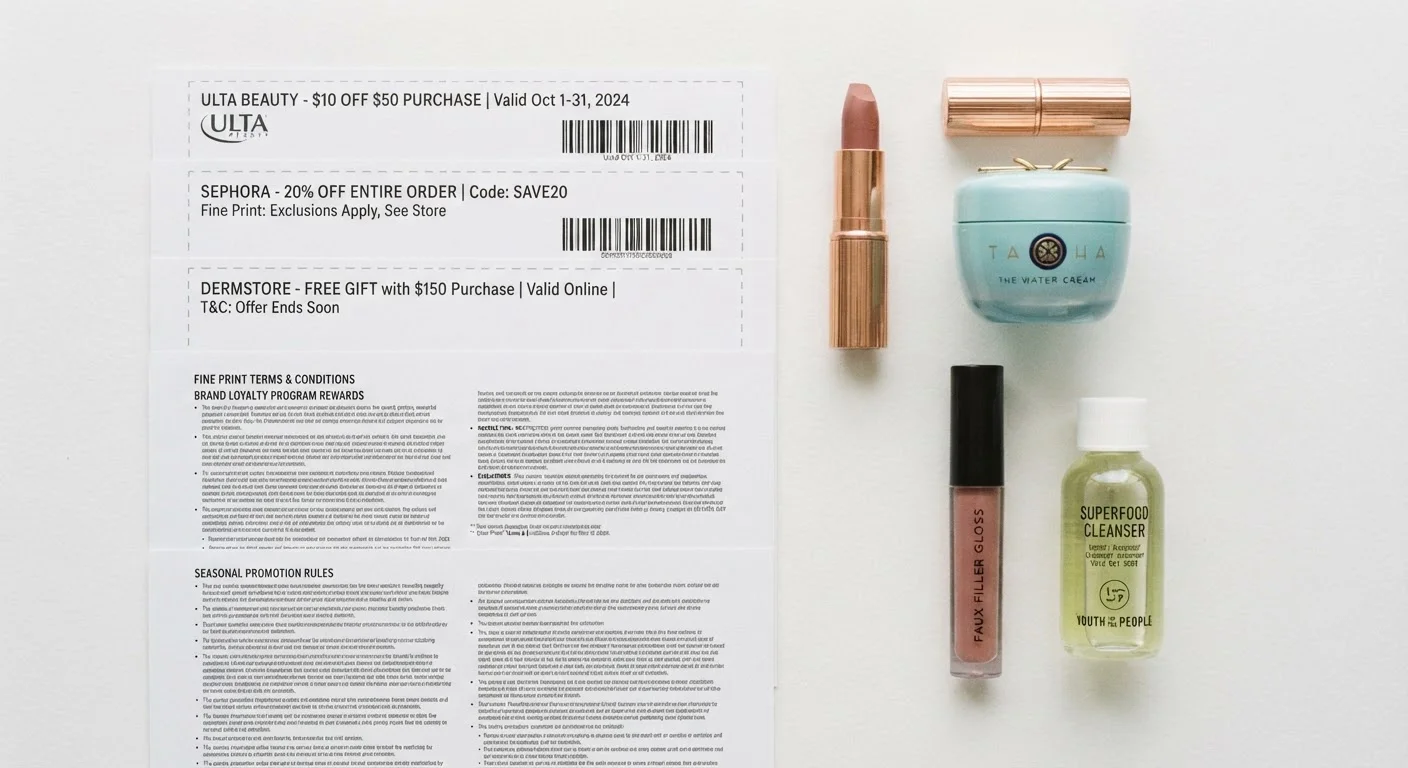
Photo: SaverSteals.com | Explore More. Shop Smarter. editorial
—— In This Article
Key Takeaways
- Exclusion lists specify which product categories, brands, or SKUs are ineligible for a discount.
- Minimum purchase thresholds require your cart to reach a set dollar amount before a coupon activates.
- One-per-transaction rules limit how many coupons or offer types can be combined in a single purchase.
- Loyalty reward coupons often have separate stacking rules from manufacturer or retailer coupons.
- Expiration dates and channel restrictions (in-store vs. online) are enforced automatically by most retailers.
- Understanding key coupon vocabulary helps you predict how a discount will behave before you reach checkout.
Why Fine Print Exists - and Why It Matters
Beauty coupons and promotional offers are valuable tools for stretching a budget, but they are also legal instruments with binding terms. Retailers and manufacturers write exclusions, thresholds, and usage limits into every offer to control costs, protect brand agreements, and comply with promotional regulations. Understanding this context makes the fine print feel less like an obstacle and more like a map.
The language used in coupon terms is standardized across much of US retail, which means once you learn the vocabulary, you can apply that knowledge across drugstores, department stores, and beauty specialty retailers alike. For a full glossary of the terms you'll encounter, see The Beauty Coupon Glossary.
Coupon Terms Are Legally Binding
In the US, promotional coupon terms constitute a contractual offer, and retailers are generally not obligated to honor a coupon outside its stated conditions. A store associate can choose to override a rejection as a courtesy, but this is discretionary, not guaranteed. Approaching these situations politely - and armed with a clear understanding of the terms - produces better outcomes than disputing the fine print at the register.
Exclusion Lists: What's Actually Being Excluded
An exclusion list is the most important section of any beauty coupon's fine print. It tells you which products, brands, or categories the discount cannot be applied to, even if those items are sold by the same retailer offering the coupon.
Common exclusion categories in beauty retail include:
- Prestige or luxury brands - Higher-margin lines that operate under separate brand agreements with the retailer
- Professional or salon-exclusive products - Items sold under professional licensing restrictions
- Trial, travel, and bonus sizes - Alternate pack sizes that carry different UPCs and may not be encoded as eligible
- Already-reduced or clearance items - Products already marked down, often excluded to prevent double discounting
- Gift sets and bundles - Specially packaged combinations treated as separate SKUs
If a specific brand or product isn't named in the exclusion list, it's generally eligible - but when in doubt, verify with a store associate before you reach the register.
Photograph the Fine Print Before Shopping
If you're using a paper coupon or a printed offer, photograph the terms before heading into the store. When you're in the aisle comparing products, you can quickly cross-reference the exclusion list without hunting for the original coupon. For digital coupons, screenshot the full terms panel before clipping - app displays sometimes truncate them.
Minimum Purchase Thresholds Explained
A minimum purchase threshold is a dollar amount your cart must reach before the coupon discount activates. For example, a coupon offering $5 off may require a qualifying purchase of $25 or more. This threshold applies specifically to eligible items - products on the exclusion list don't count toward the total.
A subtlety worth noting: many retailer systems calculate the threshold against the regular or sale price of qualifying items, not the final price after other adjustments. If you're uncertain, the coupon terms will usually state 'before discounts' or 'on qualifying purchases of $X.' If that language is absent, the retailer's general coupon policy - usually available on their website - is the next place to look.
Splitting a large purchase into smaller transactions to circumvent a threshold is generally ineffective, since the threshold applies per transaction and the coupon is typically single-use.
One-Per-Transaction and Stacking Rules
Stacking refers to combining multiple discount instruments in a single checkout - for example, applying a retailer loyalty coupon, a manufacturer coupon, and a promotional sale price to the same item. Whether this is allowed depends entirely on the specific terms of each offer involved.
Key phrases to look for:
- One coupon per transaction
- Only one coupon of this type may be applied to the entire purchase, not per item.
- One coupon per item
- One coupon of this type may be applied for each qualifying unit in the cart - more permissive than per-transaction limits.
- Not valid with any other offer
- This coupon cannot be combined with any other discount, including store sales, loyalty rewards, or other coupons. This is the most restrictive language you'll encounter.
- Manufacturer coupon
- Issued by the product's manufacturer rather than the retailer; many stores accept one manufacturer coupon alongside one store coupon for the same item, but always confirm the store's policy.
For a detailed look at how redemption rules differ depending on where you shop, see In-Store vs. Online Beauty Coupon Redemption.
Applying This Knowledge Before You Clip
Reading fine print doesn't require a legal background - it requires a consistent habit. Before redeeming any beauty coupon, identify the three key terms: what's excluded, what's the minimum, and how many can you use. Those three answers resolve the vast majority of checkout conflicts.
Part of spending smarter on beauty is also knowing what questions to ask before you add items to your cart. The Before You Clip checklist walks through a practical pre-redemption review that applies these principles step by step. And if you're approaching beauty savings more broadly, the Beauty on a Budget hub covers the wider landscape of affordable alternatives and savings strategies.
This article is for informational purposes only. Coupon terms vary by retailer and are subject to change. Always verify current terms directly with the issuing retailer or manufacturer before making a purchase decision.
Frequently Asked Questions

Beauty Editorial Team
Beauty Editorial Team is the collective byline for our editorial team and contributor network. Articles published under this byline or an editorial pen name are researched, written, and reviewed according to our editorial standards for clarity, consistency, and independence before publication.
View author profile