
Making a Toy Budget That Actually Holds Up Through Gift-Giving Season
Step-by-step guidance on building a realistic toy budget, tracking spend, and avoiding the impulse purchases that derail plans during peak seasons.
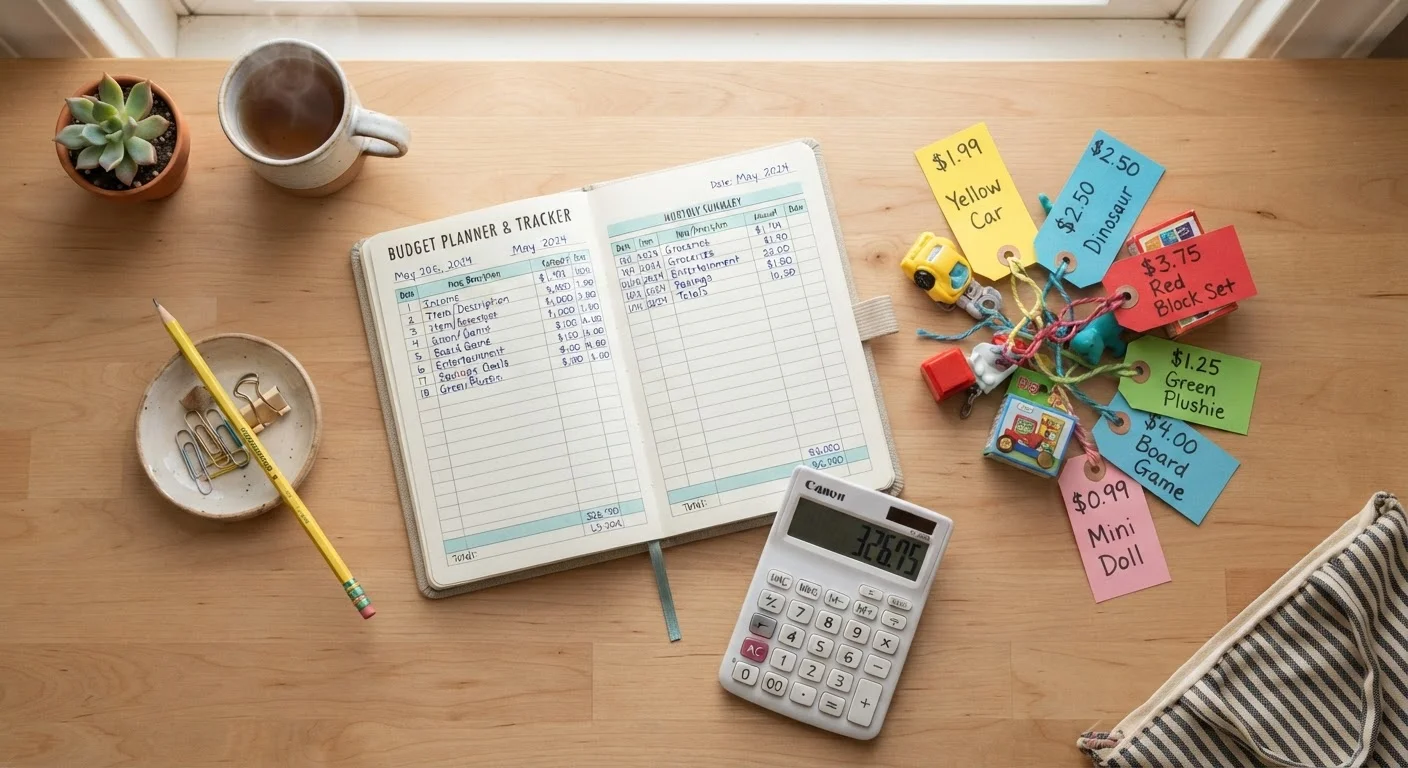
Photo: SaverSteals.com | Explore More. Shop Smarter. editorial
—— In This Article
Key Takeaways
- Setting a firm per-child and per-occasion cap before shopping season starts prevents scope creep.
- Tracking prices 6–8 weeks before major holidays reveals whether advertised discounts are genuine.
- Reserving a small buffer within your total budget absorbs last-minute additions without busting the plan.
- Secondhand and off-peak purchases can significantly extend what your budget covers.
- A written wish list reviewed weekly reduces impulse purchases driven by promotional pressure.
Why Toy Budgets Collapse During Peak Seasons
Most toy budgets don't fail because families spend carelessly — they fail because the plan was built around a single number with no structure beneath it. When a holiday sale launches, a child updates their wish list, or a new release generates excitement, that single number bends quickly. The result is a familiar pattern: overspend in November and December, guilt in January.
The fix isn't more willpower. It's a budget with enough internal logic that it can absorb real-world pressure. That means assigning dollars to specific occasions and recipients before you browse a single product page, then building in deliberate safeguards against the timing and psychological triggers that drive unplanned spending. This guide walks through that process step by step. If you're newer to discount strategies, this practical starting point covers the foundational habits worth pairing with a solid budget.
Start Before You Feel Urgency
The best time to build your toy budget is when you feel no pressure to spend — typically 8 to 10 weeks before your main gift-giving date. Decisions made before promotional season begins are almost always more deliberate and better aligned with your actual priorities.
How to Build and Protect Your Toy Budget
Follow these steps before gift-giving season reaches full intensity. The earlier you start — ideally 8–10 weeks out — the more pricing data you can gather and the less reactive your decisions will be.
List every gift occasion and recipient for the season
Write out every occasion — holidays, birthdays, school exchanges, teacher gifts — and every child or recipient you're buying toys for. Include fringe obligations you often remember at the last minute. This complete picture prevents the most common form of budget blowout: the gifts you forgot to plan for.
Assign a firm dollar cap to each occasion and recipient
Take your total available toy budget and divide it explicitly across your list. Resist the urge to leave it as one lump sum — the moment a compelling item appears, a lump sum becomes elastic. Per-recipient caps create a hard stop that's much easier to respect in the moment.
Build a 10–15% buffer into the total
Reserve a small portion of your total budget — roughly 10 to 15 percent — as an untouchable buffer. This absorbs genuine surprises: a broken item that needs replacing, a wish-list update that actually matters, or a shipping delay that forces a backup purchase. Without a buffer, any surprise forces overspending.
Start tracking prices on wish-list items 6–8 weeks out
Before peak sales begin, note the current price of each item on your list. Use a simple spreadsheet, a notes app, or a price-tracking browser extension. When promotional events arrive, you'll have a baseline that tells you whether the advertised deal is real or inflated from a temporarily raised reference price.
Set a weekly budget check-in date
Pick a specific day each week to review what you've spent against each recipient's cap, update your wish list, and note any purchases still outstanding. This regular audit catches drift early — a $10 overspend on one recipient is easy to absorb; a pattern of $10 overages across six recipients is not.
Finalize purchases before the final two weeks of peak season
Aim to complete the majority of planned toy purchases at least two weeks before your key gift-giving date. Late-season shopping happens under maximum promotional pressure and with fewer good options remaining. Finishing early eliminates the decision fatigue and urgency that drive the most expensive impulse purchases.
For a broader view of how sale timing, retailer behavior, and secondhand channels fit together, the complete guide to finding legitimate toy discounts is a useful companion resource.
Staying on Track When Promotions Peak
The weeks between late October and late December generate more promotional noise than any other period. Flash sales, countdown timers, and bundle offers are specifically designed to compress your decision-making window. A few structural habits counteract this pressure reliably.
Freeze your list before peak sales begin. Once your list is written and your per-recipient caps are set, treat additions as replacements, not expansions. If something new goes on the list, something else comes off.
Verify prices before assuming a discount is real. Retailers sometimes raise baseline prices before marking them down. If you've been tracking a price for 6–8 weeks, you'll know immediately whether a "40% off" claim reflects a genuine reduction.
Consider secondhand and off-peak channels. Well-maintained used toys from reputable sources — resale platforms, local buy-sell groups, consignment stores — can cover wish-list items at a fraction of the new price. The secondhand toys hub covers how to evaluate condition and safety before buying. For additional approaches to reducing toy spend without cutting quality, see ways to cut toy spending without compromising on quality or safety.
Bundle Deals Can Disguise Poor Value
Promotional bundles that group multiple toys at a single price can appear to offer strong savings but often include items the recipient wouldn't want individually. Before purchasing a bundle, check whether the individual items are available separately at comparable prices, and only count items your recipient actually wants toward the value calculation.

Toys Editorial Team
Toys Editorial Team is the collective byline for our editorial team and contributor network. Articles published under this byline or an editorial pen name are researched, written, and reviewed according to our editorial standards for clarity, consistency, and independence before publication.
View author profile