
Pre-Purchase Inspection: What to Check Before Buying a Used Hand Tool
Run through this checklist before any secondhand hand tool purchase to spot hidden damage, worn parts, and safety hazards.
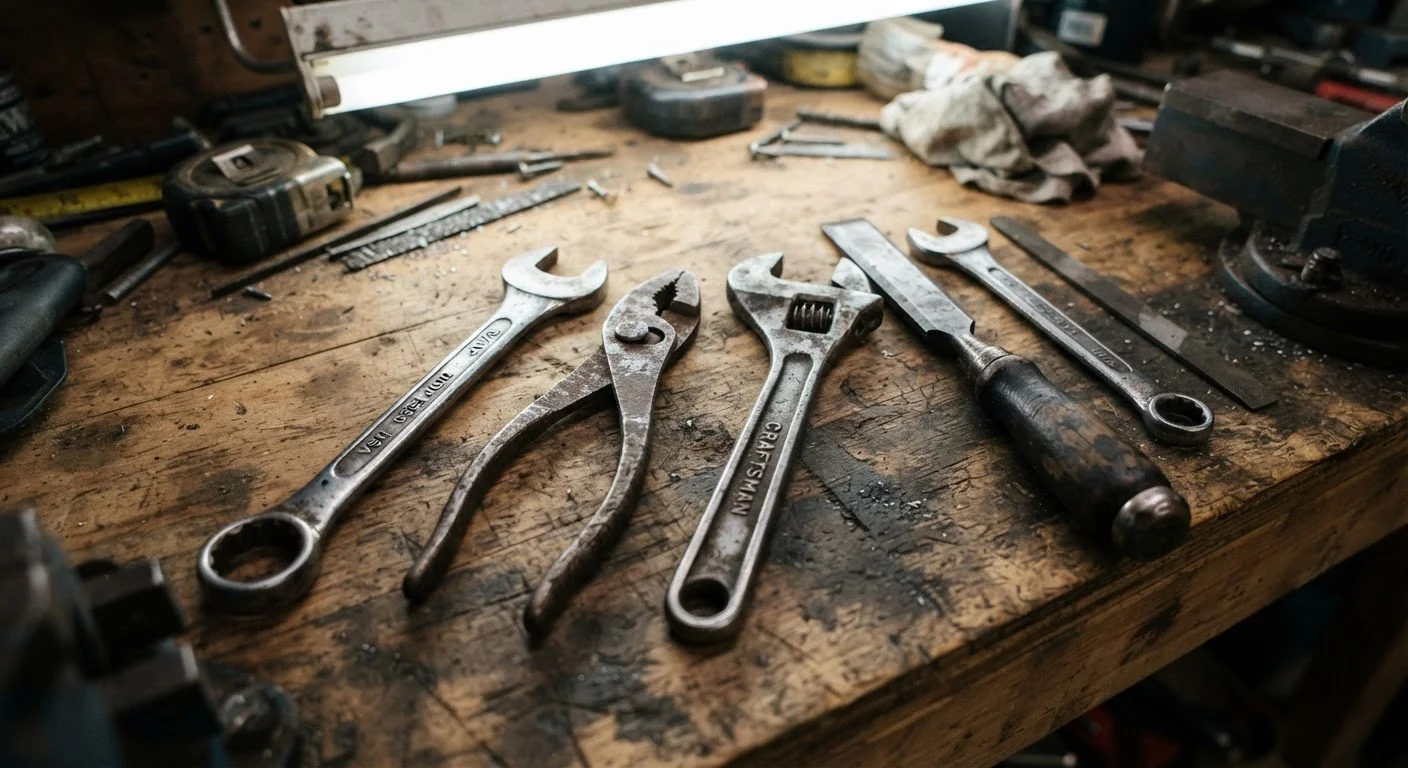
Photo: SaverSteals.com | Explore More. Shop Smarter. editorial
—— In This Article
Key Takeaways
- Structural cracks, deep pitting rust, and loose joints disqualify most hand tools from safe use.
- Handle condition matters as much as the working end — splits, rot, or loose ferrules create grip and control hazards.
- Cutting edges and measuring tools need specific checks that go beyond simple visual inspection.
- Online auction listings require extra scrutiny because you cannot physically handle the tool before bidding.
- A quick test with simple reference tools — a square, a flat surface — reveals calibration problems that photos hide.
Why Hands-On Inspection Is Non-Negotiable
Secondhand hand tools represent genuine value — lower price, often solid construction from an era when overbuilding was standard. But that value evaporates the moment a cracked socket wrench slips under torque or a mushroomed chisel sends a steel chip toward your eye. The inspection process described here is not about being overly cautious; it is about identifying specific, verifiable defects before money changes hands.
If you are shopping in person — at an estate sale, a flea market, or through a private seller — you can run through the full checklist before committing. If you are bidding through an online resale platform or auction site, use this checklist as a framework for what to demand from the seller in photos and written condition disclosures. For a broader orientation to the secondhand tool market, see our practical starter's roadmap for buying used tools.
This checklist covers unpowered hand tools: wrenches, pliers, screwdrivers, chisels, saws, hammers, planes, measuring and layout tools. For power tools, a separate inspection protocol applies — the pre-purchase checklist for power tools covers that ground.
Steel machinist's square
Used to verify that squares, planes, and saw guides are still true during inspection.
Bright flashlight or headlamp
Illuminates cracks, pitting, and surface defects that are invisible under ambient light.
Known flat reference surface (granite plate or thick glass)
Used to check plane soles and chisel backs for warping that would prevent effective use.
Rust indicator solution or vinegar
Helps distinguish surface oxidation from deep pitting corrosion when visual inspection is ambiguous.
Running the Inspection
Work through the groups below in order. Start with safety-critical structural checks; if a tool fails those, stop — no amount of cosmetic appeal justifies continuing. Move to functional checks only once the tool clears structural review.
Structural Integrity
Handle Condition
Working Edges and Surfaces
Measuring and Layout Tools
Online Auction and Remote Purchase Checks
Do Not Overlook Mushroomed Striking Tools
Chisels and punches with mushroomed heads — where repeated strikes have caused the metal to flare out beyond the original diameter — present a specific hazard. The overhanging material can fracture and project at high velocity. Grinding mushrooming back is straightforward with the right equipment, but factor that work and its associated risk into your purchase decision, and never use a mushroomed tool as-is.
Even a tool that passes every item here may benefit from cleaning, sharpening, or light restoration before use. That follow-up work is expected with secondhand tools and should factor into what you are willing to pay.
The same methodical approach applies across secondhand categories. Our guide to inspecting used garden tools uses a similar framework for bladed and handled outdoor equipment, and the power tool safety audit details what to check after you bring a corded or battery tool home.
No Inspection Fully Replaces Manufacturer Recall Checks
Some hand tools — particularly those manufactured before current safety standards — may be subject to recalls or known safety advisories that physical inspection will not reveal. Before using any secondhand tool in a professional or production setting, verify the make and model against the U.S. Consumer Product Safety Commission (CPSC) recall database. This step takes under five minutes and covers a failure mode that visual inspection simply cannot detect.

Tools Editorial Team
Tools Editorial Team is the collective byline for our editorial team and contributor network. Articles published under this byline or an editorial pen name are researched, written, and reviewed according to our editorial standards for clarity, consistency, and independence before publication.
View author profile