
Contractor Accounts vs. Standard Retail: What Savings Look Like for Non-Professionals
Trade accounts offer bulk discounts, but eligibility and minimum spend rules often exclude casual buyers. Find out where the boundaries are.
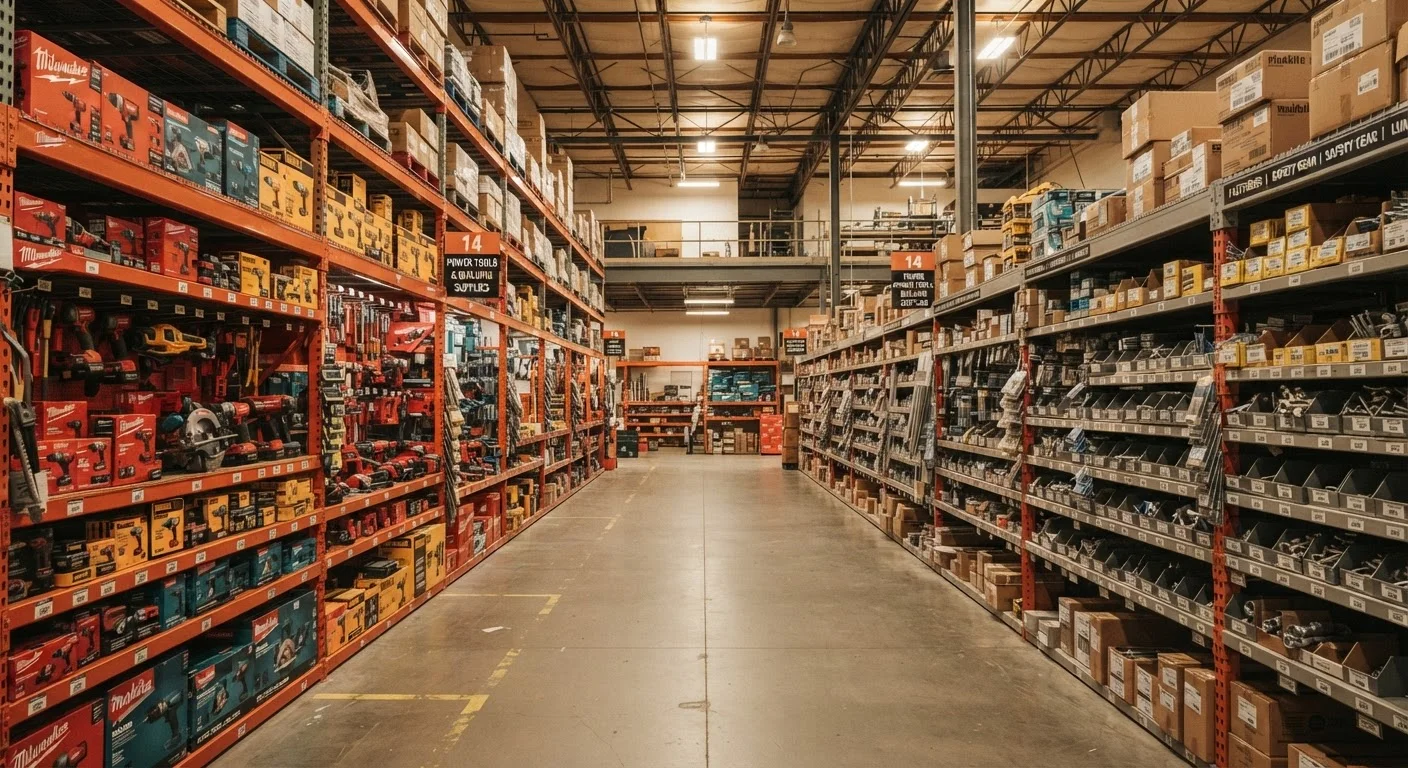
Photo: SaverSteals.com | Explore More. Shop Smarter. editorial
—— In This Article
Key Takeaways
- Trade accounts typically require proof of business or contractor status and may carry minimum spend thresholds.
- Standard retail prices are higher per unit, but publicly available coupons, loyalty programs, and sale cycles can meaningfully close the gap.
- Contractor pricing advantages are most pronounced on consumables and bulk material orders, less so on individual power tools.
- Non-professionals often have access to loyalty card discounts, seasonal sales, and clearance pricing that don't require any account status.
- Understanding both pricing tiers helps you decide when applying for a trade account is actually worth the effort.
How Trade Account Pricing Actually Works
Contractor or trade accounts are pricing arrangements offered by hardware retailers and wholesale suppliers to verified business buyers. Eligibility generally requires documentation — a contractor's license, business registration, or tax ID — and some programs impose a minimum annual or per-order spend to maintain discounted pricing. The discount structure varies by retailer: some apply a flat percentage off standard retail across all categories, others negotiate category-specific pricing based on projected volume.
The savings are most significant on high-turnover items. Consumables such as fasteners, abrasives, blades, and adhesives show the clearest price gap between trade and retail tiers. On premium power tools, the trade discount can be narrower than shoppers expect — manufacturers sometimes restrict how deeply retailers can discount tool categories, making the trade advantage less dramatic than it appears on paper.
One nuance worth noting: some large-format hardware retailers offer what they call "pro" or "commercial" accounts that sit between a standard loyalty card and a true contractor account. These may not require a business license, but they often do require consistent purchasing history and a linked payment method. Reading the fine print on eligibility is essential before assuming you qualify.
| Criterion | Contractor Trade Accounts | Standard Retail |
|---|---|---|
| Eligibility | Business license or trade credentials required | Open to all — no documentation needed |
| Minimum Spend | Often required (varies by retailer) | None — buy what you need |
| Discount Depth on Consumables | Significant — especially at volume | Moderate — dependent on sales and coupons |
| Discount Depth on Power Tools | Narrower than expected due to MAP pricing | Comparable during promotional events |
| Access to Loyalty Rewards | Often separate from trade pricing | Full access with standard loyalty card |
| Clearance & Outlet Access | Available to all regardless of account | Available to all regardless of account |
| Payment Terms | Net-30 or credit terms often available | Pay at point of purchase |
What Standard Retail Shoppers Can Actually Access
Standard retail pricing is the starting point for everyone, but calling it a flat, non-negotiable number misses the full picture. Hardware retailers run structured promotional cycles — major holiday weekends, end-of-season clearances, and spring project-season sales are predictable enough that patient buyers can plan around them. For a broader framework on timing purchases strategically, see the year-round tool savings strategy guide.
Beyond sale timing, standard retail shoppers have access to loyalty reward programs, manufacturer rebates, and occasional coupon stacks. These mechanisms don't require business credentials and can collectively shave 10–20% off list price on specific items, though that range varies considerably by retailer, category, and timing. Paid membership programs at some hardware retailers add another layer — understanding how hardware store memberships actually pay off depends heavily on how often you shop there.
Clearance and outlet channels are another avenue worth separating from trade pricing entirely. Discontinued SKUs, overstock, and open-box items are available to any customer without trade credentials. The distinction between outlet stock and true clearance items matters here — they're not the same thing, and outlet sections versus clearance aisles covers where the deeper discounts tend to sit.
10–20%
Typical loyalty and coupon savings range for retail hardware shoppers
Industry observers estimate stacked loyalty rewards, manufacturer rebates, and sale pricing can reduce list price by this range on eligible items — though results vary by retailer and category.
3–5x
Volume threshold where trade pricing often becomes financially meaningful
Trade pricing structures are generally designed to reward buyers purchasing three to five times the quantity of a typical retail transaction, making the economics less favorable for occasional buyers.
Where the Gap Narrows — and Where It Doesn't
The honest answer is that for non-professionals buying tools infrequently, the gap between trade account pricing and well-timed standard retail purchases is smaller than trade account marketing suggests. A contractor buying 50 boxes of deck screws monthly will see meaningful savings per unit. A homeowner buying one box twice a year is unlikely to close that gap through any realistic account arrangement.
The categories where trade pricing holds a durable advantage are bulk materials, specialty fasteners, and job-lot quantities of consumables — items where volume purchasing is structurally built into the pricing model. Individual cordless tool kits, hand tools, and hardware accessories are areas where standard retail promotions, particularly manufacturer-funded rebates and seasonal discounts, can approach trade pricing without any account requirement.
For non-professionals, the practical takeaway is straightforward: evaluate whether you meet eligibility requirements before spending time on a trade account application, calculate your realistic annual spend against any minimum thresholds, and in the meantime build familiarity with the promotional calendar and loyalty program of your primary retailer. The tools discount landscape rewards planning over impulse, regardless of which pricing tier you access.

Tools Editorial Team
Tools Editorial Team is the collective byline for our editorial team and contributor network. Articles published under this byline or an editorial pen name are researched, written, and reviewed according to our editorial standards for clarity, consistency, and independence before publication.
View author profile