
Strategies for Sourcing Free or Low-Cost Plants in Your Local Area
Plant swaps, community gardens, local libraries, and online groups are among the legitimate ways to acquire plants without paying nursery prices.
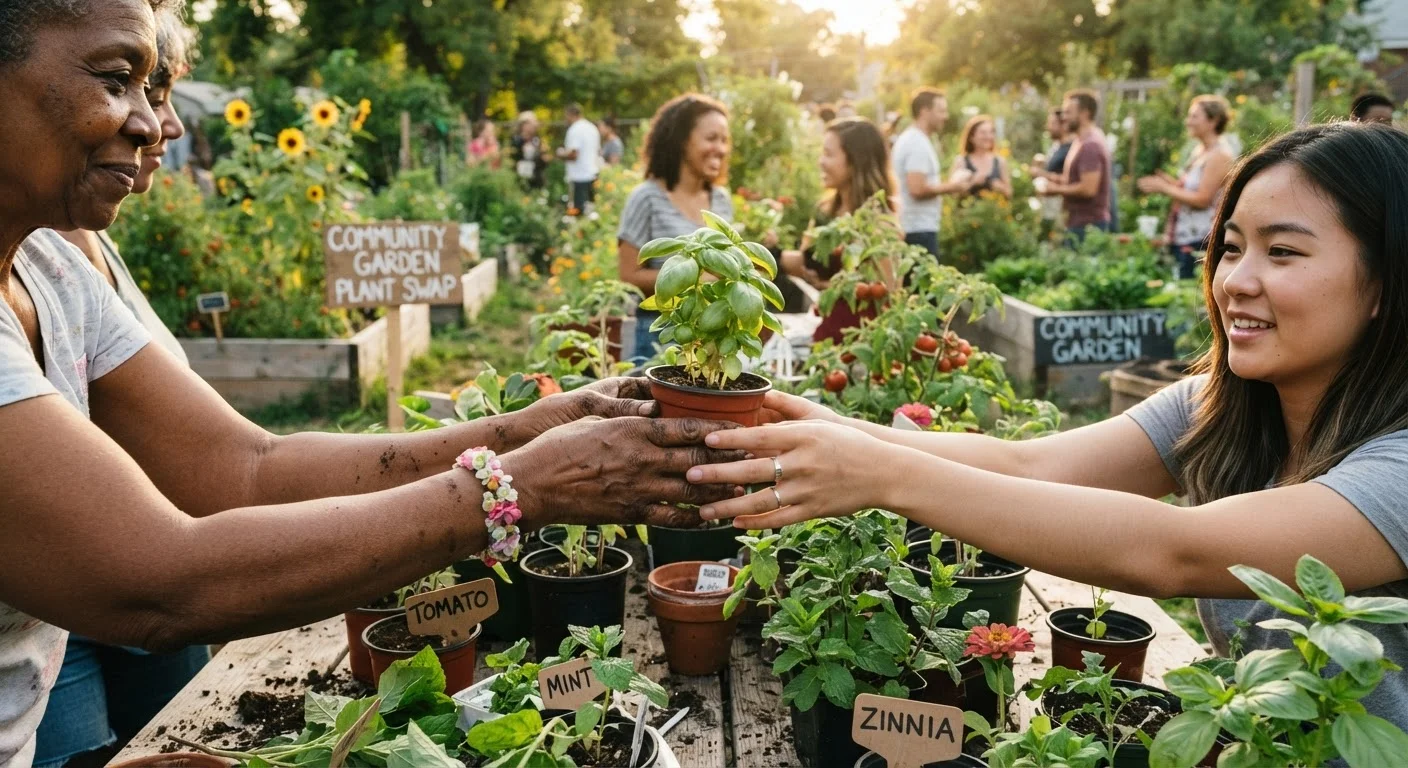
Photo: SaverSteals.com | Explore More. Shop Smarter. editorial
—— In This Article
Key Takeaways
- Plant swaps, seed libraries, and community gardens can supply a wide variety of plants at little or no cost.
- Online neighborhood platforms and local social media groups frequently list free plants from people thinning their gardens.
- Propagating your own plants from cuttings or divisions is one of the most reliable long-term sources of free stock.
- Timing requests and participation around spring and fall increases your chances of finding desirable plants.
- Building relationships within local gardening communities multiplies sourcing opportunities over time.
Why Nursery Prices Aren't Your Only Option
A single trip to a garden center can put a dent in a household budget — especially when you're trying to fill beds, establish borders, or experiment with new varieties. Fortunately, a thriving informal economy of plant sharing exists in most communities, and tapping into it requires more social effort than financial outlay.
The strategies below cover both digital and in-person channels. Some require nothing more than showing up; others reward regular participation. Used together, they can meaningfully reduce what you spend on plants year over year. For context on how seasonal timing affects availability and value, see our garden pricing calendar.
Attend or organize a local plant swap
Plant swaps — events where gardeners bring divisions, seedlings, or rooted cuttings to exchange — are held by garden clubs, community centers, places of worship, and neighborhood associations throughout the growing season. Spring and fall are the most common times, aligning with when gardeners are dividing overgrown perennials or clearing out annuals.
To find one, search community bulletin boards, local Facebook groups, or Nextdoor. If none exist near you, organizing a small swap requires little more than a date, a location, and a post in a neighborhood group. Even a gathering of six households can yield a meaningful variety of plants.
A swap of just six households can produce a surprisingly wide variety of plants for everyone involved.
Check your public library's seed library
Many public library systems across the United States now operate seed libraries alongside their book collections. Patrons can borrow packets of vegetable, herb, and flower seeds, grow them out, and return seeds from the harvest at season's end — though returning is typically encouraged rather than required.
Seed library inventories vary widely. Some focus on open-pollinated vegetables suited to the local climate; others include native wildflowers and ornamentals. Call your branch or check the library's website to confirm availability and any checkout policies before visiting.
Seed libraries let you start plants from scratch at no cost, with varieties often selected for local growing conditions.
Monitor online neighborhood platforms for free plant listings
Platforms like Nextdoor, local Facebook groups, and Craigslist's free section regularly feature listings from gardeners who have more plants than space — surplus tomato seedlings, divided hostas, self-seeded herbs, or shrubs dug up during landscaping changes. These listings often disappear within hours, so checking frequently or enabling notifications pays off.
When responding, be prompt, specific about what you want, and reliable about pickup times. Gardeners who have a good experience giving plants away are more likely to post again and to prioritize known contacts.
Reliable, prompt pickup behavior earns you a reputation that gets you first access to future free-plant listings.
Get involved with a community garden
Community gardens are not just places to rent a plot — they are active networks of experienced growers who regularly share seeds, divisions, and knowledge. Members frequently bring extras to common areas, and coordinators sometimes organize group seed orders or propagation sessions that reduce individual costs substantially.
Even if you don't need a plot, volunteering at a community garden on work days can build relationships that translate into plant access. Many gardens also have dedicated areas for native plants or demonstration beds that generate regular divisions available to members.
Volunteering at a community garden builds plant-sharing relationships that pay off well beyond any single transaction.
Ask neighbors and local gardeners directly
Some of the most straightforward sourcing happens simply by asking. If you notice a neighbor's garden overflowing with a particular perennial, a polite inquiry about whether they divide it — and whether you could have a portion — is often welcomed. Many gardeners find themselves with more divisions than they can use and are happy to pass them along rather than compost them.
Framing the conversation as curiosity about their gardening rather than a direct request tends to work well. This approach also applies to community events, farmers markets, or garden tours where you can talk directly with growers.
Many gardeners have more divisions than they can use and welcome a polite request to take some off their hands.
Propagate what you already have
Once you have any established plants, propagation turns one plant into many at essentially no cost. Taking stem cuttings from herbs, dividing clumping perennials, or collecting and stratifying seeds from your own garden are all techniques that can rapidly expand your plant inventory without any nursery visit.
This strategy compounds: the plants you received for free at a swap become the source material for future swaps or gifts, which deepens your community relationships and sourcing network. Our detailed guide on propagation mechanics covers which methods suit which plant types.
Propagating free plants you already own is a self-reinforcing cycle that keeps expanding your garden at no extra cost.
Look for end-of-season municipal giveaways
Some municipalities, parks departments, and botanical gardens hold end-of-season plant giveaways when they are clearing display beds, rotating stock, or have overproduced seedlings for civic planting programs. These events are often announced through city newsletters, parks department social media accounts, or local horticultural society mailing lists.
Signing up for communications from your city's parks department or local botanical garden is a low-effort way to stay informed. Availability tends to be first-come, first-served, and events may not recur on a predictable schedule, so acting quickly when announcements appear matters.
Municipal plant giveaways are underused by home gardeners despite regularly offering healthy, locally adapted stock at no cost.
Building a Long-Term Free-Plant Network
The most effective sourcing strategies compound over time. A neighbor you helped with a division this spring may offer you extras from a prolific perennial next fall. A regular plant swap participant builds a reputation that earns first access to desirable species before they run out.
Make reciprocity part of your approach
The free-plant economy works best when participants contribute as well as receive. Bring divisions, seedlings, or seeds to swaps even when you have plenty. Offer extras on neighborhood platforms before composting them. Gardeners who are known givers tend to attract more opportunities than those who only receive, and the relationships built through sharing often yield plants you couldn't find through any other channel.
If you want to deepen your sourcing options further, learning to propagate your own plants is a natural next step. Our guide on dividing and propagating plants explains the mechanics behind cuttings, layering, and division in practical detail. For a broader look at keeping gardening costs low from the ground up, the budget gardening guide is a useful companion resource.

Home & Garden Editorial Team
Home & Garden Editorial Team is the collective byline for our editorial team and contributor network. Articles published under this byline or an editorial pen name are researched, written, and reviewed according to our editorial standards for clarity, consistency, and independence before publication.
View author profile