
Outlet Stores vs. Retail Showrooms for Furniture: A Practical Comparison
Outlet stores and main showrooms serve different purposes. Compare selection, pricing structures, and return policies side by side.
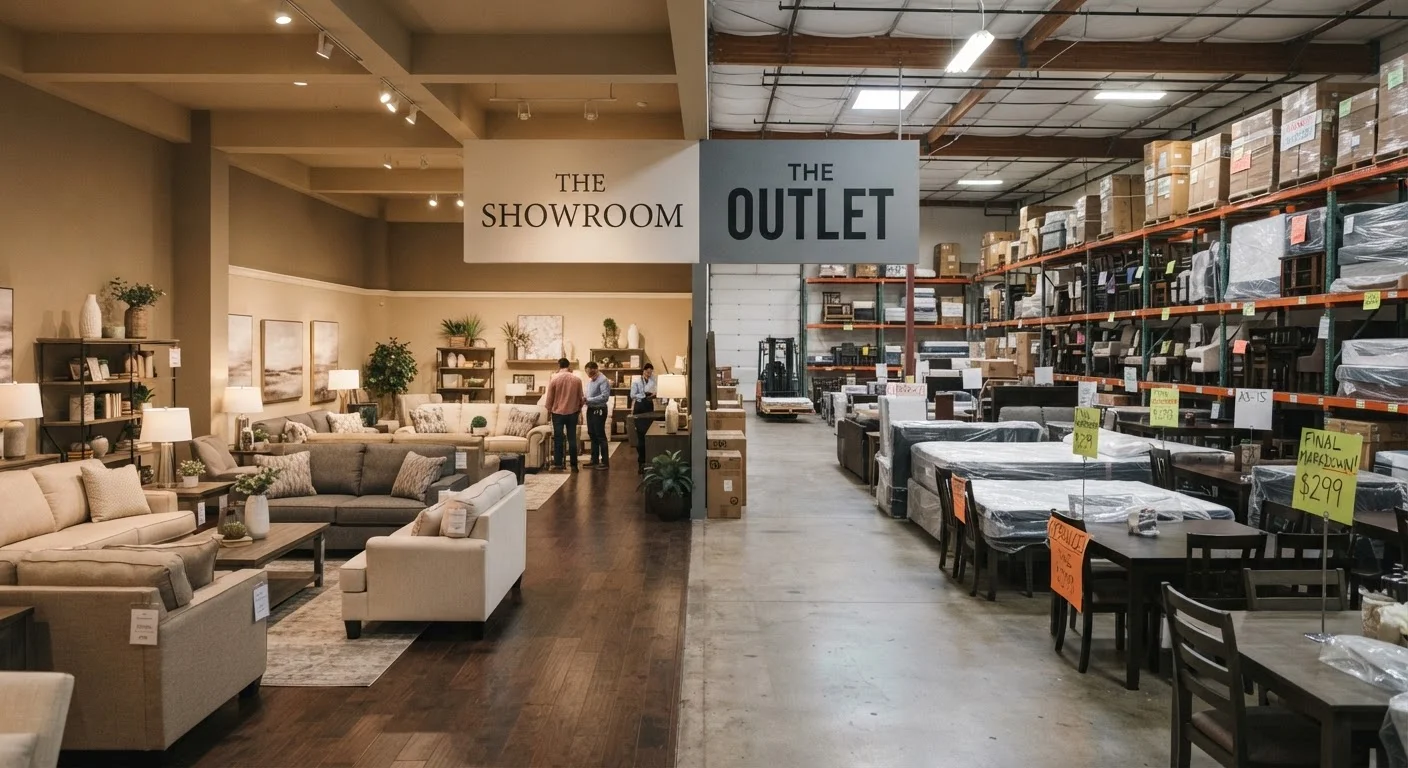
Photo: SaverSteals.com | Explore More. Shop Smarter. editorial
—— In This Article
Key Takeaways
- Outlet stores typically carry discontinued lines, overstock, and lightly used floor models at reduced prices.
- Retail showrooms offer full selection, customization options, and standard return policies that outlets rarely match.
- Return and warranty terms differ significantly - always read the fine print before purchasing from an outlet.
- Timing your visit to either channel around major sale periods can compound savings meaningfully.
- Neither option is universally superior - the right choice depends on your flexibility, timeline, and priorities.
What Each Channel Actually Sells
The product mix at an outlet store and a retail showroom looks similar on the surface but comes from very different sources. Understanding this distinction is the starting point for any meaningful comparison.
Retail showrooms carry current-season inventory ordered directly from manufacturers. You can typically choose from multiple configurations, fabric options, and finishes. Stock is replenished regularly, and sales staff can place special orders if what you need isn't on the floor.
Outlet stores exist to move product that doesn't fit the regular sales cycle. That includes discontinued models, overproduced inventory, customer returns, and pieces pulled from showroom floors after extended display. The selection is whatever happens to be available that week - there's no guarantee a piece you saw during a previous visit will still be there.
If you're open to exploring used furniture options, it's worth knowing that some outlet merchandise is functionally similar to secondhand - particularly floor samples and customer returns that have seen real use.
Pricing Structures: How Discounts Are Built
Outlet pricing is only meaningful when you know what you're comparing it against. Outlets often display a "compare at" or original retail price alongside the outlet price, but that reference number may come from a full-price showroom, a manufacturer's suggested price, or an internal valuation - and those figures aren't always straightforward to verify.
That said, legitimate outlet discounts on furniture are real. Discontinued upholstery lines and overproduced case goods (dressers, tables, bookcases) frequently carry genuine reductions because the retailer needs to free up warehouse space. The discount tends to be deepest on pieces that have been in the outlet the longest.
| Outlet Store | Retail Showroom | |
|---|---|---|
| Selection | Limited, whatever's in stock | Full current inventory, custom orders available |
| Pricing | Often reduced; verify reference prices | Full retail; discounts during sale events |
| Return Policy | Frequently as-is, no returns | Standard return window (30-90 days typical) |
| Warranty Coverage | May be voided or limited | Full manufacturer warranty standard |
| Inventory Predictability | Changes weekly, no restocking | Consistent, replenished regularly |
| Best Timing Strategy | Visit often; act when right piece appears | Wait for Labor Day, Memorial Day, January sales |
Retail showrooms mark down inventory too, but on a predictable schedule. The most reliable sale windows in the furniture industry have historically clustered around:
- Labor Day and Memorial Day weekends - historically among the highest-volume furniture sale periods in the US
- Post-holiday January - retailers clear inventory after the holiday season
- Fourth of July weekend - a secondary but consistent sale window
Shopping a showroom during these periods sometimes produces comparable savings to outlet pricing, with the added benefit of full inventory access.
Return Policies, Warranties, and Risk
This is where outlets and showrooms diverge most sharply, and it's the dimension shoppers most often overlook until it matters.
Outlet 'As-Is' Terms Can Be Costly
Many outlet purchases are final sale - meaning no returns, no exchanges, and no recourse if a piece arrives with damage not noticed in-store. Before buying, inspect every surface, joint, and mechanism in person. If you're ordering for delivery rather than taking the item home yourself, get written confirmation of the condition at time of sale and ask about damage claims procedures.
Retail showrooms generally offer standard return windows (commonly 30-90 days, depending on the retailer), manufacturer warranties, and in some cases white-glove delivery with damage protection. If a piece arrives broken or defective, there's a clear remediation path.
Outlet stores frequently sell items as-is, with limited or no return rights. Warranties may be voided if the piece was a floor sample or customer return. Some outlets do offer limited coverage, but the terms are narrower than what you'd get buying the same piece new from a showroom.
Before purchasing from an outlet, ask explicitly: Is this piece eligible for return? Does any manufacturer warranty still apply? Is delivery included or an add-on cost? Getting clear answers to those three questions prevents most post-purchase surprises.
For a closer look at a specific outlet-adjacent scenario, see our piece on floor model furniture trade-offs - many of the same caveats apply.
When to Use Each Channel
Use a retail showroom when you have a specific need - a sectional that must fit a particular wall, a dining table in a finish that matches existing pieces, or a mattress that requires a specific firmness. Showrooms also make more sense when your timeline is flexible enough to wait for a scheduled sale event, or when you're making a high-value purchase where return protection matters.
Use an outlet store when your requirements are flexible - you're furnishing a rental, replacing a piece you don't care deeply about, or you're willing to work with whatever's available. Going to an outlet with a rigid checklist usually leads to disappointment. Going with rough parameters (approximately the right size, open to a few color options) gives the outlet's irregular inventory a real chance to work in your favor.
The same logic that separates outlet and clearance shopping in other categories - covered in depth for apparel in our outlet vs. clearance breakdown - applies here: the discount is only real if you actually needed the item and verified the reference price.

Furniture Editorial Team
Furniture Editorial Team is the collective byline for our editorial team and contributor network. Articles published under this byline or an editorial pen name are researched, written, and reviewed according to our editorial standards for clarity, consistency, and independence before publication.
View author profile