
Floor Model Furniture: The Trade-Offs Worth Knowing Before You Commit
Floor models are often priced well below retail, but come with conditions. Weigh the real advantages and drawbacks before deciding.
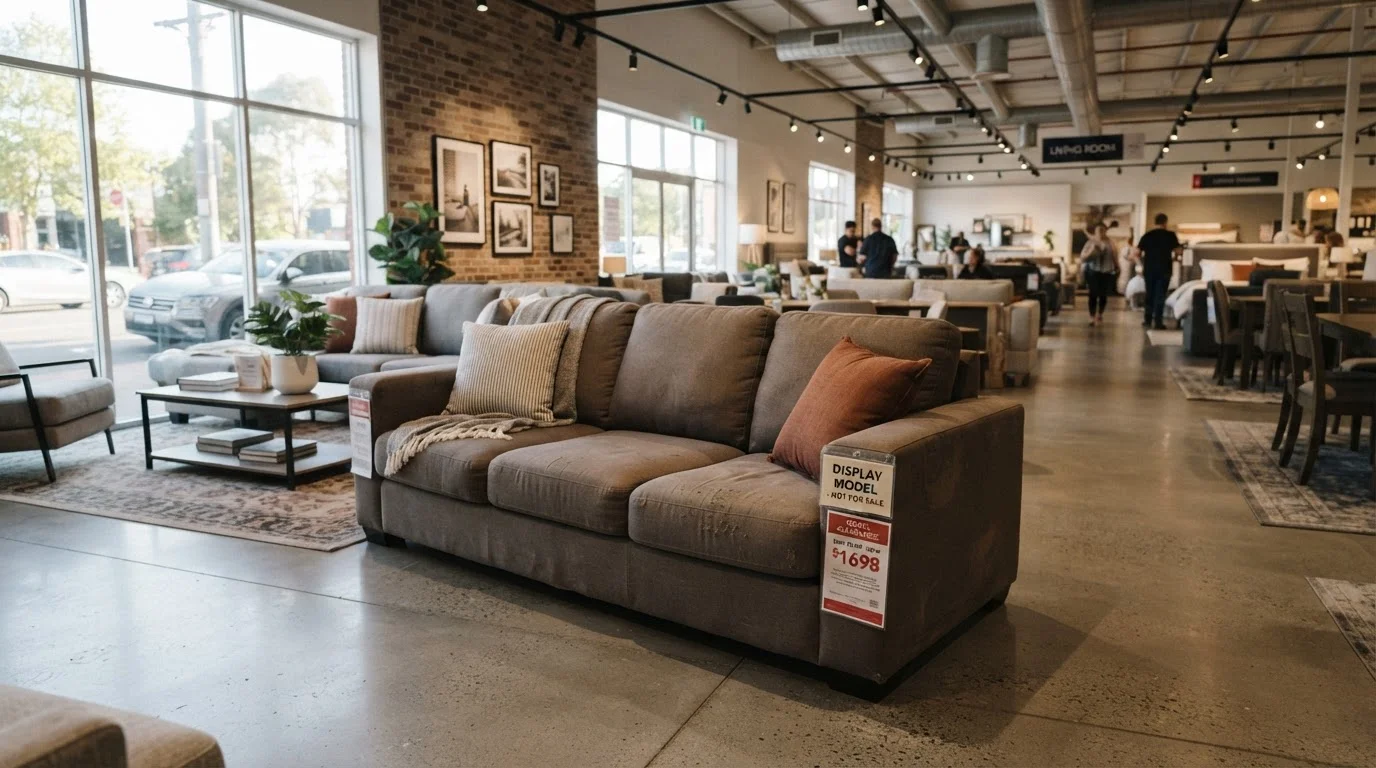
Photo: SaverSteals.com | Explore More. Shop Smarter. editorial
—— In This Article
Key Takeaways
- Floor model discounts typically range from 20% to 50% off original retail prices.
- Most floor models are sold as-is, meaning no manufacturer warranty and limited return rights.
- Visible wear, missing hardware, and structural damage are the most common issues to inspect for.
- Negotiating beyond the sticker price is often possible, especially when a model is being discontinued.
- Delivery logistics and disassembly requirements are frequently overlooked costs that can narrow the savings gap.
Significant discount off original retail price
Floor models are typically marked down 20-50% from their original price, sometimes more when a retailer is clearing space for new inventory. This discount often applies to mid-to-high-range pieces that wouldn't otherwise fit a tight budget.
You can inspect the piece in person
Unlike ordering new furniture from a catalog or website, you can sit on it, open every drawer, test every mechanism, and examine the upholstery up close before agreeing to buy.
Immediate availability with no lead time
Custom or in-demand furniture can involve waits of 8-16 weeks. Floor models are available as soon as the transaction is complete, making them practical when timing matters.
Room to negotiate beyond the marked price
Retailers clearing display stock are often motivated sellers. Documented flaws or a same-day cash transaction can open the door to a price below the already-reduced tag.
Environmentally lower-impact choice
Purchasing a floor model keeps a piece in circulation rather than sending it to a clearance liquidator or landfill, which aligns with a lower-waste approach to furnishing a home.
Sold as-is with no manufacturer warranty
Most floor models are excluded from standard warranty coverage. Any defect that emerges after purchase - even a structural one - is typically the buyer's responsibility to repair or replace at their own cost.
Visible wear and cosmetic damage are common
Armrests, seat cushions, and tabletops absorb heavy handling in showrooms. Stains, fading, scuff marks, and minor tears are typical, and some may be difficult or expensive to remediate.
Limited or no return policy
Retailers generally don't accept returns on floor models, which eliminates the safety net that usually applies to new purchases. What you see in the store is what you're committing to permanently.
Missing parts or hardware are a real risk
Display pieces are sometimes assembled and reassembled repeatedly, and small components - screws, glides, drawer stops - can go missing. Sourcing proprietary hardware after the fact can be difficult.
Delivery logistics can be complicated and costly
Retailers may not offer standard delivery for floor models, or may charge a premium for it. If the piece requires disassembly to move, that may be your responsibility to arrange.
What Makes a Floor Model Different from Standard Inventory
A floor model - sometimes called a display piece or showroom sample - is furniture that has been on the retail sales floor, used as a hands-on example for customers. It's not new-in-box inventory. When a retailer discontinues a line, resets a showroom layout, or makes room for updated stock, these pieces get marked down and sold off, usually with a special tag indicating their status.
Unlike clearance items (which may simply be overstocked new goods), floor models have been sat on, touched repeatedly, and sometimes adjusted or partially disassembled for display purposes. That distinction matters when you're evaluating what you're actually getting. For a broader look at how clearance and sale labels work in furniture retail, see furniture pricing myths that cost shoppers money.
Significant discount off original retail price
Floor models are typically marked down 20-50% from their original price, sometimes more when a retailer is clearing space for new inventory. This discount often applies to mid-to-high-range pieces that wouldn't otherwise fit a tight budget.
You can inspect the piece in person
Unlike ordering new furniture from a catalog or website, you can sit on it, open every drawer, test every mechanism, and examine the upholstery up close before agreeing to buy.
Immediate availability with no lead time
Custom or in-demand furniture can involve waits of 8-16 weeks. Floor models are available as soon as the transaction is complete, making them practical when timing matters.
Room to negotiate beyond the marked price
Retailers clearing display stock are often motivated sellers. Documented flaws or a same-day cash transaction can open the door to a price below the already-reduced tag.
Environmentally lower-impact choice
Purchasing a floor model keeps a piece in circulation rather than sending it to a clearance liquidator or landfill, which aligns with a lower-waste approach to furnishing a home.
The Real Drawbacks: What the Discount Doesn't Cover
The price reduction is usually the most visible feature of a floor model listing. The conditions attached to it are often buried in fine print or explained only when you ask. Before committing, these are the areas that deserve hard scrutiny.
Sold as-is with no manufacturer warranty
Most floor models are excluded from standard warranty coverage. Any defect that emerges after purchase - even a structural one - is typically the buyer's responsibility to repair or replace at their own cost.
Visible wear and cosmetic damage are common
Armrests, seat cushions, and tabletops absorb heavy handling in showrooms. Stains, fading, scuff marks, and minor tears are typical, and some may be difficult or expensive to remediate.
Limited or no return policy
Retailers generally don't accept returns on floor models, which eliminates the safety net that usually applies to new purchases. What you see in the store is what you're committing to permanently.
Missing parts or hardware are a real risk
Display pieces are sometimes assembled and reassembled repeatedly, and small components - screws, glides, drawer stops - can go missing. Sourcing proprietary hardware after the fact can be difficult.
Delivery logistics can be complicated and costly
Retailers may not offer standard delivery for floor models, or may charge a premium for it. If the piece requires disassembly to move, that may be your responsibility to arrange.
Warranty coverage is the most consequential issue. Most manufacturers' warranties apply only to goods purchased new from authorized retailers - a floor model sold as-is typically falls outside that protection. If a mechanism fails six months after purchase, the repair cost is yours.
Delivery is another overlooked variable. Retailers may not offer white-glove or standard delivery for floor models, or may charge separately. Factor in whether you can arrange transport yourself, and what disassembly - if any - is required to get the piece out of the store.
How to Inspect a Floor Model Before You Agree to Anything
An in-person inspection is non-negotiable. Unlike buying from a warehouse, you have direct access to the piece - use that advantage fully.
Bring a Checklist - and Take Your Time
Showroom environments are designed to present furniture favorably - lighting is warm, displays are arranged to minimize flaws. Give yourself adequate time to inspect away from the main traffic flow. If staff pressure you to decide quickly, treat that as a reason to slow down, not speed up. A short written checklist covering frame, upholstery, hardware, and base condition keeps the inspection systematic and helps you compare multiple pieces objectively.
- Frame integrity: Sit on sofas and chairs with full body weight. Rock slightly side to side. Any creaking or lateral give suggests joint stress.
- Upholstery condition: Look at armrests, seat cushion edges, and the back panel - these take the most showroom traffic. Minor fading may be acceptable; fraying or pilling on structural seams is a red flag.
- Hardware and mechanisms: Open drawers, extend recliners, unfold sofa beds. Count the screws. Ask staff whether any parts have been replaced or repaired.
- Legs and base: Flip cushions and crouch down. Scuffs on legs are cosmetic; cracks or uneven leg height indicate structural risk.
- Odors: Showrooms can mask smells. Spend a minute close to the upholstery - pet odors and cleaning-product residue can be difficult to remove.
For comparison, the same inspection logic applies when buying secondhand furniture through private or resale channels.
Negotiating the Price Further - and When It's Worth Trying
The marked-down sticker price is often a starting point, not a ceiling. Retailers motivated to clear floor space - particularly when a model is being discontinued - tend to have more flexibility than their tags suggest. If you've identified real cosmetic flaws during your inspection, document them and raise them directly with the salesperson or a manager.
The strongest negotiating positions are: the piece has visible wear that requires remediation, you're paying cash or can take it same-day, or the item has been sitting unsold for an extended period. Negotiating furniture prices in-store covers the specific approaches that tend to open room for movement on price.
20-50%
Typical floor model discount range
Industry observers generally report floor model markdowns in this range, though individual retailers set their own pricing policies and discounts vary by piece and timing.
8-16 weeks
Average lead time for custom furniture orders
Specialty and semi-custom furniture orders commonly carry multi-month lead times, making in-stock floor models a practical alternative when timing is a constraint.
Also ask about add-ons the retailer might include at no extra charge - furniture protector, an extra throw cushion, or a small delivery discount. These won't show up on the receipt as savings, but they have tangible value.
When Floor Models Make Sense - and When They Don't
A floor model purchase works best under specific conditions: you need the piece relatively soon, you can verify its structural soundness in person, and the cosmetic imperfections fall within what you're willing to accept long-term. Pieces like solid-wood dining tables, metal-frame shelving, or simple upholstered ottomans tend to age well in showroom environments and hold up post-purchase.
Where floor models carry more risk: complex mechanisms (power recliners, sofa beds with innerspring mattresses), pieces with intricate upholstery detailing, and any item where warranty coverage is central to your peace of mind. If you're weighing floor models against outlet store inventory, this comparison of outlet stores and retail showrooms lays out the structural differences in pricing and policy.
For shoppers building out a full room on a limited budget, floor models are one tool among several. Buying furniture on a budget without compromising on quality puts floor models in context alongside other strategies worth considering.

Furniture Editorial Team
Furniture Editorial Team is the collective byline for our editorial team and contributor network. Articles published under this byline or an editorial pen name are researched, written, and reviewed according to our editorial standards for clarity, consistency, and independence before publication.
View author profile