
Refurbished Electronics from Start to Finish: A Buyer's Complete Reference
Key terms, grading scales, warranty types, and return policies — everything you need in one quick-lookup resource.
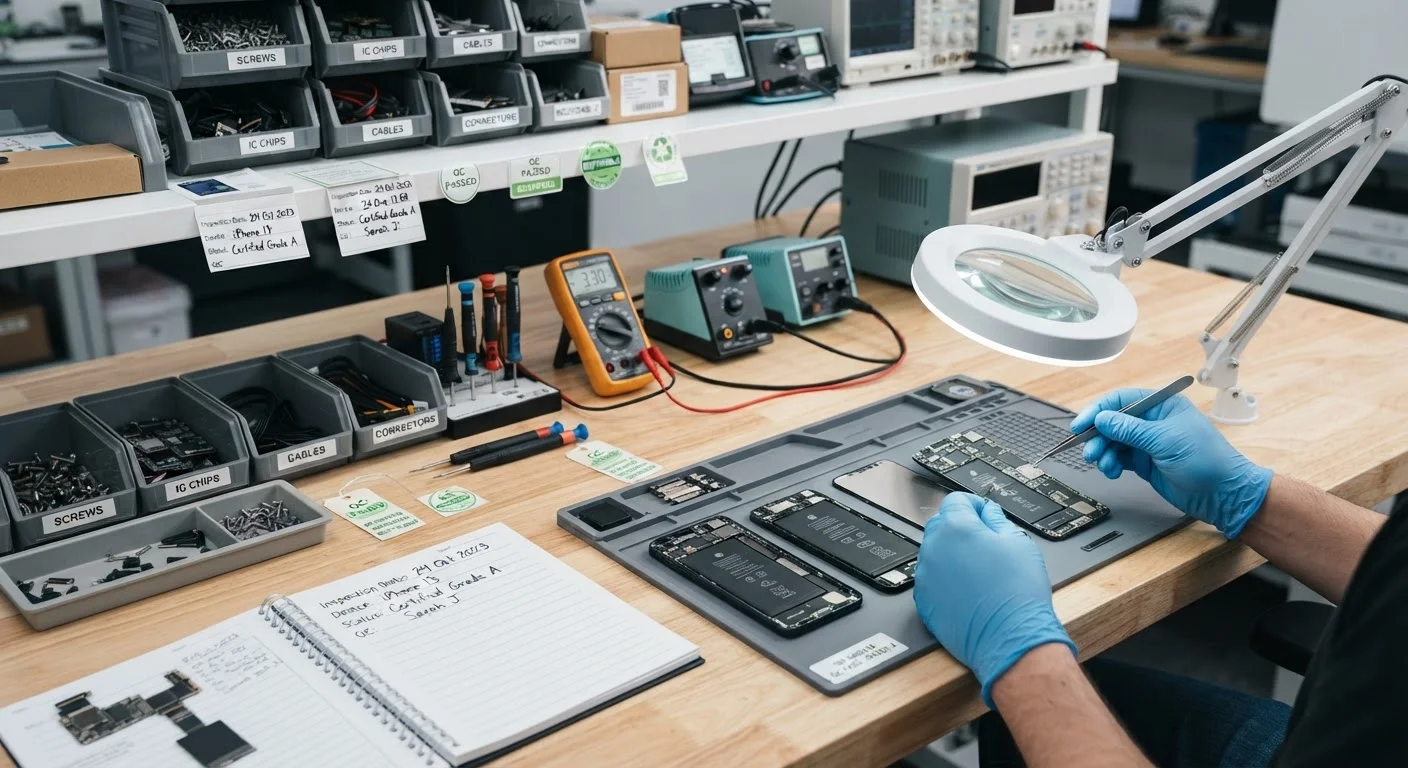
Photo: SaverSteals.com | Explore More. Shop Smarter. editorial
—— In This Article
Condition Grades Explained
Condition grading is the single most important factor when evaluating a refurbished device, yet no universal standard exists across retailers. Labels like Grade A, Grade B, or Grade C - and marketing terms like Excellent, Good, or Fair - carry different meanings depending on who is doing the grading. Always read the individual seller's grade definitions before purchasing.
| Common grade labels | A/B/C or Excellent/Good/Fair - definitions vary by seller |
| Manufacturer-certified warranty length | Typically 90 days to 1 year, depending on the program |
| Typical return window | 14 to 90 days (confirm restocking fees) |
| Battery health threshold | 80% or above generally considered acceptable |
| Grade standardization | No universal grading standard exists across the refurbished market |
| Accessories included | Varies - original, equivalent, or none; always check listing details |
As a general framework, most reputable grading schemes follow this pattern:
- Grade A / Like New: Minimal to no cosmetic wear; all functions tested and operational. Often sold with original or equivalent accessories.
- Grade B / Good: Light scratches or scuffs visible at close inspection; fully functional. A reliable middle tier for most buyers.
- Grade C / Fair: Noticeable cosmetic damage - deeper scratches, possible dents - but passes functional testing. Suitable when appearance is secondary to budget.
- Parts / Spares: Not guaranteed to function. Sold for component harvesting only.
For a thorough walkthrough of grading systems alongside practical inspection checklists, see our end-to-end refurbished tech guide. If you are purchasing a laptop specifically, the refurbished laptop walkthrough covers grade-specific testing steps in detail.
Key Terms Every Buyer Should Know
The refurbished market has its own vocabulary. Misreading a single term can mean the difference between a device with a full warranty and one sold entirely as-is. Use the definitions below as your reference.
Certified Refurbished
A device that has been inspected, repaired, and tested by the original manufacturer or an authorized partner. Certification implies a defined quality standard and typically includes a manufacturer-backed warranty.
Refurbished
A broad term indicating that a used device has been inspected and, where necessary, repaired before resale. The depth of testing and the quality of any warranty depends entirely on who performed the refurbishment.
Open Box
A product whose original retail packaging has been opened, often because it was returned by a customer after minimal or no use. Open-box items may or may not have been inspected before resale.
Reconditioned
Functionally equivalent to refurbished; used primarily by certain retailers and tool manufacturers to describe a used product that has been cleaned, tested, and restored to working order.
Unlocked (device)
A mobile device not restricted to a single carrier's network. Unlocked status is especially relevant for refurbished phones, where carrier locks may survive the refurbishment process.
Battery Health
A percentage figure representing a battery's current maximum charge capacity relative to its original design capacity. A score below 80% is generally considered degraded and may signal the need for replacement.
Restocking Fee
A charge deducted from a refund when a buyer returns a product. Common among third-party refurbished sellers; typically ranges from 10% to 20% of the purchase price.
Cosmetic Grade
A sub-classification describing the physical appearance of a device - scratches, dents, screen condition - independent of its functional performance.
Understanding device history is equally important. Returns, trade-ins, open-box units, and display models each enter the refurbishment pipeline differently, and that history affects how thoroughly a device was tested. The article Where Refurbished Electronics Actually Come From explains each origin type in plain language.
Warranty and Return Policy Reference
Warranty terms vary dramatically across refurbished sellers. Knowing the standard categories protects you from purchasing a device with no recourse if something fails.
80%+
Recommended minimum battery health
Industry convention, widely cited by consumer electronics refurbishers, for acceptable battery capacity in a refurbished device.
14-90 days
Typical refurbished return window
Return periods across major refurbished electronics sellers vary widely; always confirm the exact window and any associated restocking fees before purchase.
3 tiers
Standard condition grade structure
Most seller grading systems converge on three broad tiers - high, mid, and lower condition - though naming conventions differ significantly by retailer.
- Manufacturer-certified warranty
- Issued directly by the original manufacturer through its own certified refurbishment program. Typically the strongest protection available on a refurbished unit, sometimes matching new-device coverage.
- Seller/third-party warranty
- Issued by the reseller, not the manufacturer. Coverage periods and repair options vary; read the fine print on what is and is not covered (e.g., accidental damage is usually excluded).
- No warranty / as-is
- The seller accepts no liability for defects discovered after purchase. Acceptable only if you are technically capable of diagnosing and repairing the device yourself.
- Return window
- The number of days within which you can return the device for a refund or exchange. Ranges from 14 to 90 days among common refurbished retailers. Confirm whether restocking fees apply.
For a plain-language breakdown of your legal and contractual rights - including what protections apply even when a seller's warranty is thin - see Warranty and Return Rights When Buying Refurbished Electronics.
The same grading and warranty logic extends beyond consumer electronics. If you are evaluating open-box or reconditioned tools, the Open-Box and Reconditioned Tools framework explains how retailer grades differ in that category.
This article is for informational purposes only. Warranty terms, return policies, and grading definitions differ by seller and are subject to change. Always verify current terms directly with the seller before purchasing.

Electronics Editorial Team
Electronics Editorial Team is the collective byline for our editorial team and contributor network. Articles published under this byline or an editorial pen name are researched, written, and reviewed according to our editorial standards for clarity, consistency, and independence before publication.
View author profile