
Second-Hand Clothing Platforms vs. Brand Sale Events: What Each Does Well
Resale apps and brand clearance events both promise savings, but they serve different needs. Here's a balanced look at the trade-offs of each approach.
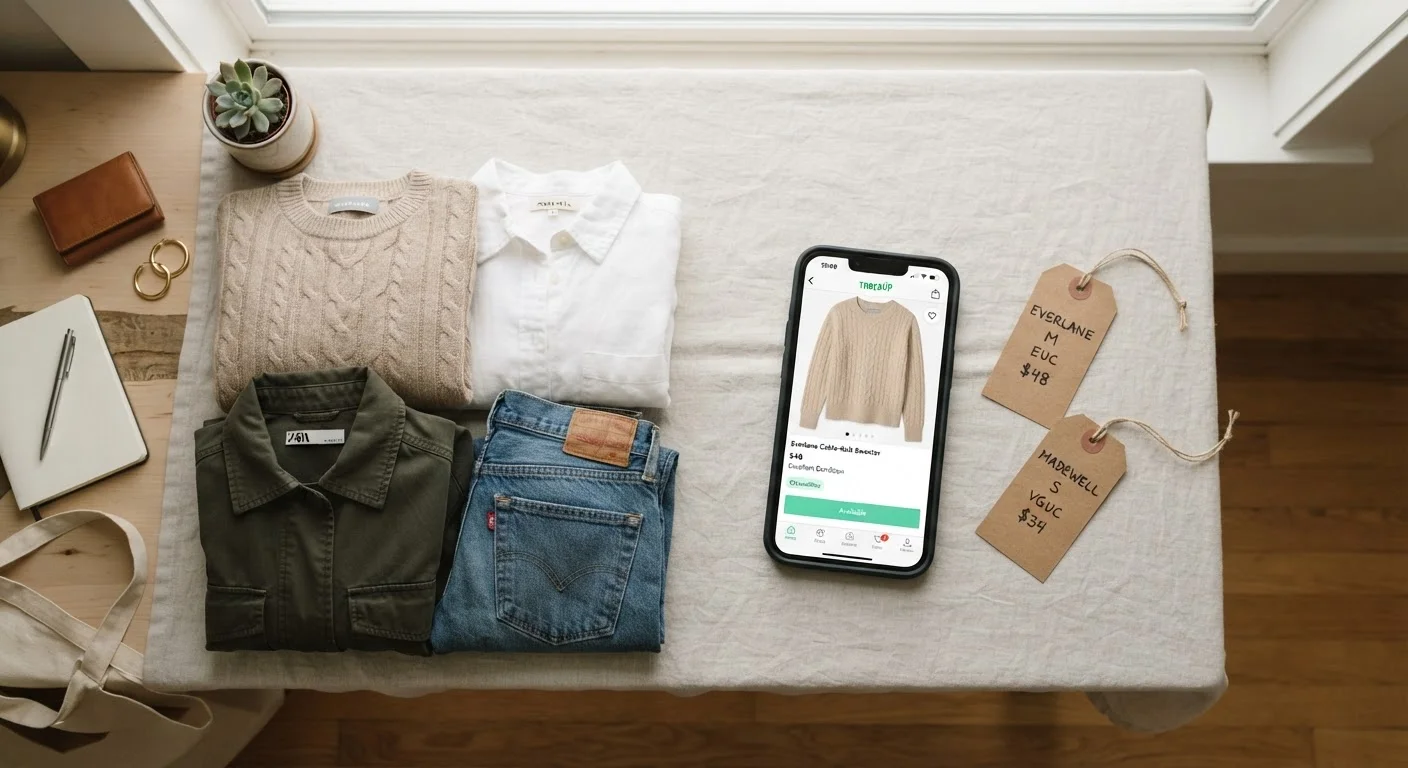
Photo: SaverSteals.com | Explore More. Shop Smarter. editorial
—— In This Article
Key Takeaways
- Second-hand platforms offer wider variety and potentially deeper discounts, but require more search time.
- Brand sale events offer predictability and new-condition items, but discounts are usually shallower.
- Neither channel is universally better - the right choice depends on what you're looking for and how flexible you are on condition.
- Combining both approaches across different shopping goals tends to produce the most consistent savings.
Much wider selection across brands and price points
Resale platforms aggregate inventory from thousands of individual sellers, making it possible to find discontinued styles, niche labels, and vintage pieces that no retailer currently stocks.
Deeper discounts on higher-end items
Premium and designer clothing depreciates significantly in the resale market, often allowing buyers to find quality pieces at 50-80% below original retail - discounts rarely matched by brand sale events on comparable items.
No artificial time pressure from the retailer
Listings stay active until sold, and buyers can set alerts for specific items. This allows a patient approach rather than the rush of a limited sale window.
Environmentally lower-impact purchasing
Buying pre-owned clothing extends the life of existing garments and reduces demand for new production, which may matter to shoppers weighing the environmental dimension of their purchases.
Condition varies and is hard to verify remotely
Seller descriptions and photos are inconsistent in quality, and what counts as 'good condition' differs between sellers. Buyer protections exist on most platforms but dispute resolution can be time-consuming.
Shipping fees and platform charges erode savings
Resale platforms typically charge buyers a transaction or processing fee, and shipping costs can add $5-$15 to lower-priced items, narrowing the actual saving versus buying new on sale.
Sizing is less reliable than buying new
Vintage and older garments may use different sizing conventions, and wear or washing can alter fit. Shoppers who need precise sizing fits are at higher risk of disappointment.
Significant time investment to find the right item
Browsing resale platforms effectively requires regular checking, search refinement, and sometimes ongoing negotiation with sellers - a real time cost compared to a straightforward sale-event purchase.
What Each Channel Actually Offers
Second-hand clothing platforms - resale apps and peer-to-peer marketplaces - let buyers purchase pre-owned items directly from other individuals or through curated resellers. Brand sale events, by contrast, are time-limited promotions run by retailers themselves: clearance periods, seasonal markdowns, and outlet-style events where new-condition merchandise is discounted.
Both promise savings compared to full retail prices, but the mechanics are quite different. On resale platforms, prices are set by individual sellers and reflect supply, demand, and the item's condition. At brand sale events, discounts are applied by the retailer to move specific inventory. Understanding those structural differences helps you use each channel more effectively. For a closer look at how the major peer-to-peer platforms compare to each other, see how the leading secondhand clothing platforms compare.
Where Second-Hand Platforms Have an Edge
Much wider selection across brands and price points
Resale platforms aggregate inventory from thousands of individual sellers, making it possible to find discontinued styles, niche labels, and vintage pieces that no retailer currently stocks.
Deeper discounts on higher-end items
Premium and designer clothing depreciates significantly in the resale market, often allowing buyers to find quality pieces at 50-80% below original retail - discounts rarely matched by brand sale events on comparable items.
No artificial time pressure from the retailer
Listings stay active until sold, and buyers can set alerts for specific items. This allows a patient approach rather than the rush of a limited sale window.
Environmentally lower-impact purchasing
Buying pre-owned clothing extends the life of existing garments and reduces demand for new production, which may matter to shoppers weighing the environmental dimension of their purchases.
Resale platforms carry an enormous range of items across brands, eras, and price points that no single retailer could replicate. If you're looking for a specific vintage silhouette, a discontinued style, or a premium label at a fraction of its original price, resale is often the only realistic option.
Price ceilings also tend to be lower on resale for higher-end items. A wool coat that originally retailed at $300 might appear on a resale app for $60-$90 in good condition - a discount that brand sale events rarely approach on comparable quality. Sellers are motivated to move items, and patient buyers willing to set up alerts can benefit from this dynamic. The secondhand clothing hub covers more strategies for making the most of resale channels.
Where Brand Sale Events Have an Edge
Condition varies and is hard to verify remotely
Seller descriptions and photos are inconsistent in quality, and what counts as 'good condition' differs between sellers. Buyer protections exist on most platforms but dispute resolution can be time-consuming.
Shipping fees and platform charges erode savings
Resale platforms typically charge buyers a transaction or processing fee, and shipping costs can add $5-$15 to lower-priced items, narrowing the actual saving versus buying new on sale.
Sizing is less reliable than buying new
Vintage and older garments may use different sizing conventions, and wear or washing can alter fit. Shoppers who need precise sizing fits are at higher risk of disappointment.
Significant time investment to find the right item
Browsing resale platforms effectively requires regular checking, search refinement, and sometimes ongoing negotiation with sellers - a real time cost compared to a straightforward sale-event purchase.
Brand sale events offer something resale platforms generally can't: certainty. Items are new, sizing is standardized and accurate, and return policies are typically more straightforward. If you're buying basics - underwear, socks, activewear - or need a specific size in a specific cut, a brand's clearance event is usually more efficient than combing through listings.
Predictability is another genuine advantage. Many retailers run recurring sale periods at the same points each year. If you know roughly when a retailer clears its seasonal inventory, you can plan purchases around those windows rather than waiting for the right resale listing to appear.
~2x per year
Typical frequency of major seasonal clearance cycles
Most apparel retailers run two primary inventory clearance periods annually - end of winter and end of summer - making it possible to anticipate markdown timing with reasonable accuracy.
50-80%
Typical resale discount range on premium clothing
Higher-end clothing categories such as outerwear, denim, and knitwear commonly appear on resale platforms at 50-80% below their original retail prices, particularly for items a few seasons old.
The Real Trade-Offs to Weigh
Time is the most significant hidden cost in both channels. Resale platforms require active searching, condition assessment, and sometimes negotiation. Brand sale events require timing - showing up (or logging on) at the right moment before popular sizes sell out.
Condition risk is real in resale. Most platforms provide seller ratings and photos, but descriptions vary in accuracy and buyer protections differ. In-person thrifting vs. online resale covers how physical inspection changes that equation. Brand sale events eliminate condition uncertainty but narrow your options to whatever that retailer happens to be discounting.
Buyer Protection Varies by Platform
Most major resale apps offer some form of buyer protection - typically a window in which you can dispute a item that doesn't match its description. However, the specifics vary significantly between platforms, including what qualifies as a valid dispute and how refunds are processed. Always review a platform's buyer protection policy before committing to a purchase, especially for higher-value items.
Shipping costs and platform fees also affect the final price on resale transactions in ways that aren't always obvious when you're looking at a listing. Always factor those in before assuming a resale price represents a clear saving over a sale-event equivalent.
How to Use Both Channels Together
The most practical approach is to match the channel to the purchase type. Use resale platforms for higher-value items where the gap between original retail and resale price is widest - outerwear, denim, leather goods, and premium knitwear tend to offer the most room. Use brand sale events for replenishment purchases: staples you need in reliable sizing, in new condition, where consistency matters more than finding a bargain on a unique piece.
If you're also looking to offset what you spend, selling clothes you no longer wear through the same resale platforms can generate credit toward future purchases. Turning wardrobe clutter into credit walks through how to approach that process efficiently.

Clothing Editorial Team
Clothing Editorial Team is the collective byline for our editorial team and contributor network. Articles published under this byline or an editorial pen name are researched, written, and reviewed according to our editorial standards for clarity, consistency, and independence before publication.
View author profile