

Key Takeaways
Pantry-Based Homemade Cleaners
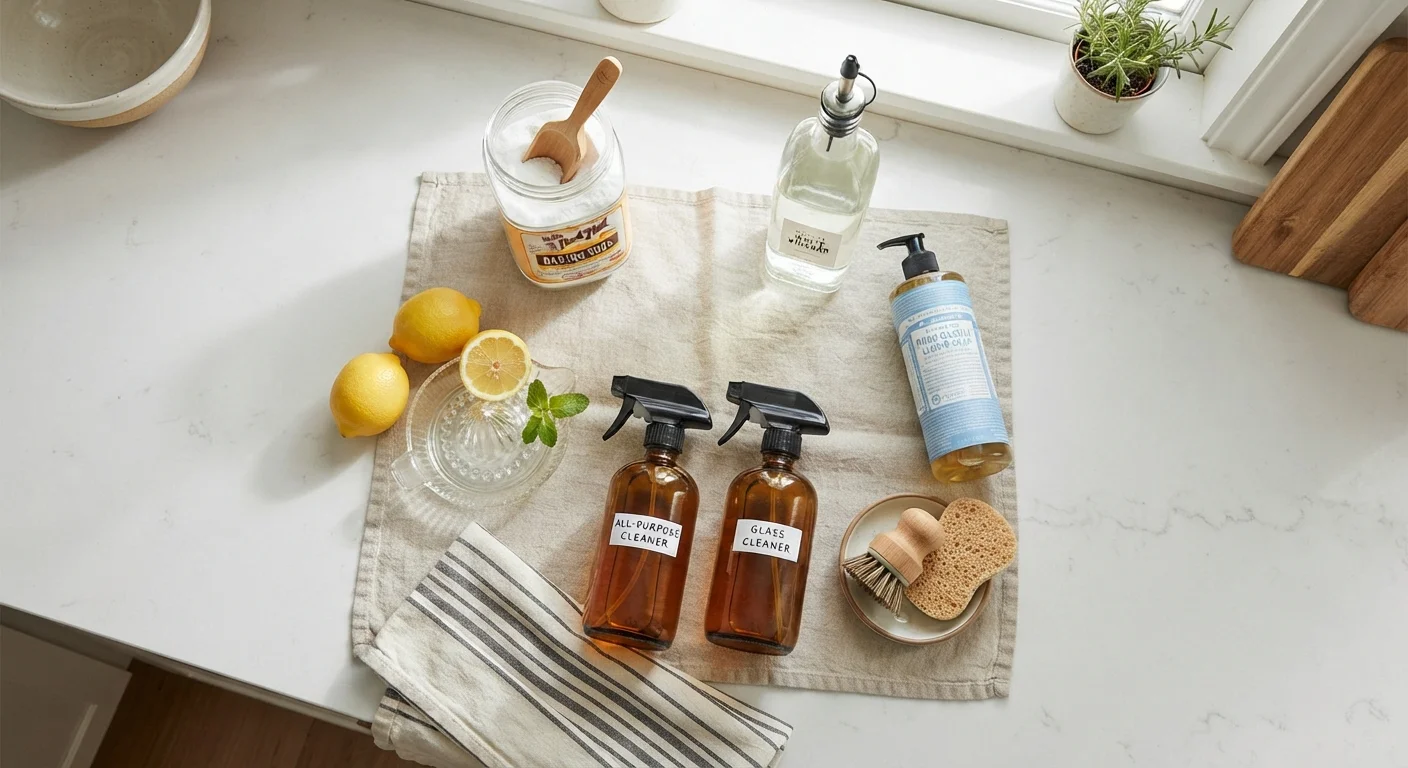
Pantry-based homemade cleaners are household cleaning solutions made entirely from common kitchen or grocery-store ingredients like baking soda, white vinegar, castile soap, and lemon juice. Instead of buying specialized commercial products, you mix these everyday staples into effective sprays, scrubs, and washes. They work through basic chemistry - acids cut grease, bases neutralize odors, and surfactants lift dirt - and they do it without the synthetic fragrances and harsh chemicals found in most store-bought options.
The cleaning power of these ingredients is rooted in pH chemistry: white vinegar (pH ~2.5) and lemon juice are acids that dissolve mineral deposits and cut through soap scum, while baking soda (pH ~8.3) is a mild alkali that neutralizes odors and acts as a gentle abrasive.
Why Your Pantry Is Already a Cleaning Supply Store
Here's the thing nobody tells you when you're staring down a $12 bottle of bathroom spray at the store: the ingredients doing the heavy lifting are almost certainly things you already own. The commercial cleaning industry is brilliant at packaging chemistry you could mix at home, adding a pine-fresh scent, and charging you a premium for the privilege.
The truth is that cleaning is chemistry - and kitchen pantries have been stocked with the right chemicals for centuries. Before the age of branded cleaning products, households used vinegar to cut grease, salt to scrub, and soap to lift dirt. We haven't changed; the marketing just got louder.
This guide breaks down the five pantry staples that do the most cleaning work, explains why they work (so you know when and how to use each one), and gives you the confidence to reach past the expensive spray bottles next time you're at the store.
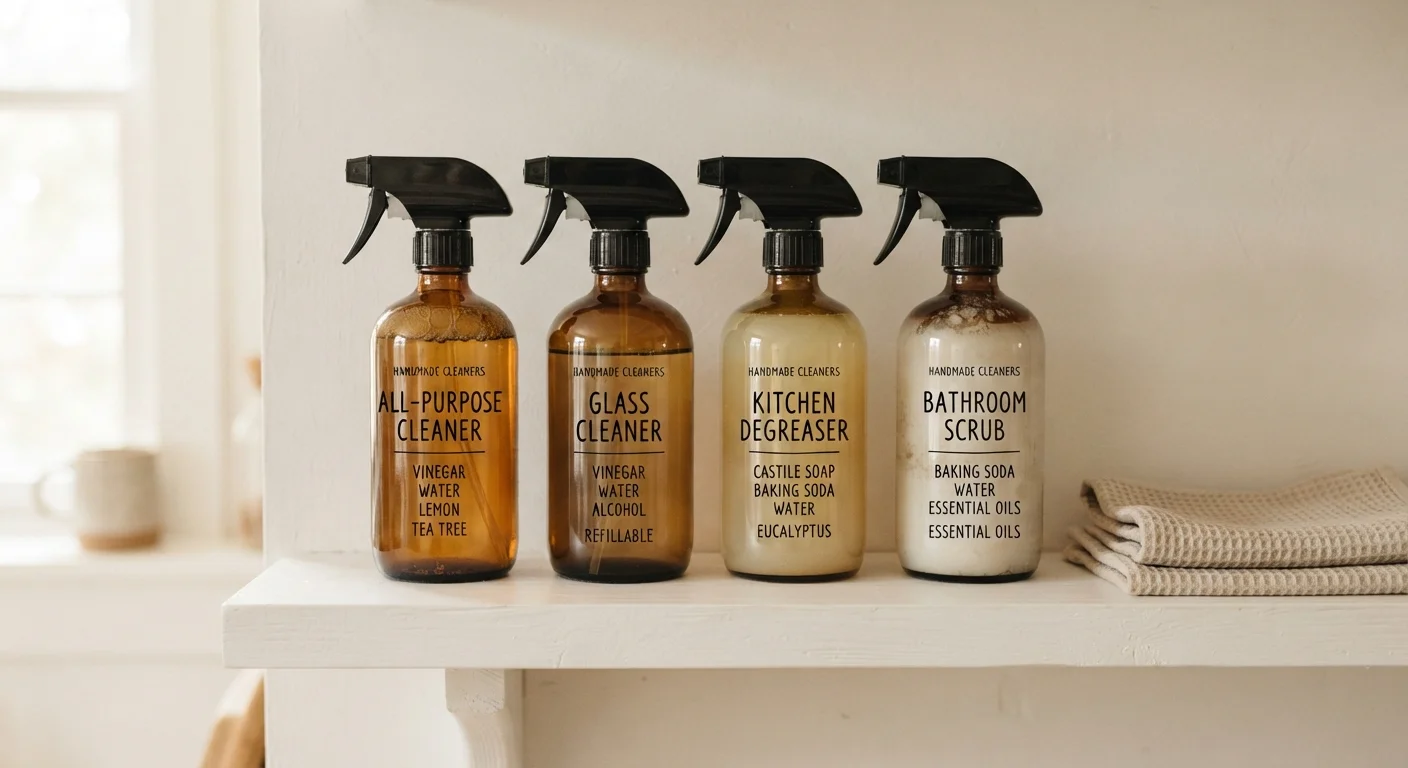
If you're ready to take it further, the homemade cleaner recipes guide lays out exact formulas that go head-to-head with commercial brands - with cost-per-use breakdowns that'll genuinely shock you.
Not All DIY Cleaners Disinfect
It's important to distinguish between cleaning (removing dirt and grease) and disinfecting (killing pathogens). White vinegar and castile soap are excellent cleaners but are not EPA-registered disinfectants. For surfaces that need true disinfection - like areas that have contacted raw meat or been exposed to illness - a diluted isopropyl alcohol solution (70% concentration) or hydrogen peroxide is more appropriate than a vinegar spray.
Hard Water Can Affect Castile Soap Performance
In areas with very hard tap water, castile soap can react with calcium and magnesium minerals to leave a white, waxy film on surfaces. This isn't harmful, but it can look like residue. Adding a splash of white vinegar to your rinse water (separately from the soap) neutralizes this effect. Alternatively, use distilled water to mix your castile soap solutions.
Baking Soda: The Gentle Powerhouse
Baking soda (sodium bicarbonate) is the workhorse of DIY cleaning, and it earns that title on three fronts: it's mildly alkaline, it's a gentle physical abrasive, and it's a serious odor neutralizer. That triple threat makes it useful in more situations than almost any other single ingredient.
What it cleans best
- Sinks and tubs: Sprinkle it dry and scrub with a damp sponge. It scours without scratching porcelain or acrylic.
- Stovetops and oven interiors: Mix with just enough water to make a paste, spread over baked-on grime, and leave for 20 minutes before wiping.
- Refrigerator odors: An open box absorbs refrigerator smells for up to three months - no spraying required.
- Carpet deodorizing: Sprinkle liberally, let sit 15 minutes, vacuum. That's it. Works on pet odors especially well.
- Laundry booster: Add half a cup to your wash cycle to brighten whites and cut odors without a separate product.
~$0.05
Cost per use of DIY all-purpose spray
Based on a formula of castile soap and water, versus $0.35-0.60 per use for comparable commercial sprays.
$600+
Average annual household spending on cleaning products
According to the American Cleaning Institute, U.S. households spend over $600 per year on cleaning and household care products.
80-90%
Potential savings with DIY cleaners
Switching core household cleaners to pantry-based formulas can reduce per-use cleaning costs by 80-90% compared to name-brand alternatives.
pH 2.5
Acidity level of white vinegar
White distilled vinegar's low pH makes it effective at dissolving alkaline mineral deposits, soap scum, and hard water stains on contact.
600+
Cleaning doses per 30ml bottle of tea tree oil
At 15-20 drops per quart spray bottle, a single small bottle of tea tree essential oil makes dozens of batches of antimicrobial cleaner.
One critical rule
Don't mix baking soda and vinegar hoping to create a super-cleaner. The fizzing looks impressive but it's just an acid-base reaction that neutralizes both ingredients. You're left with water, a little salt, and CO2. Use them separately - baking soda first to scrub, then a vinegar spray to disinfect and shine - and you get two cleaners' worth of work from the same surface.
Label Your Spray Bottles Every Time
It takes ten seconds and saves you a lot of confusion. Use a permanent marker or a strip of masking tape on every homemade spray bottle - write the ingredients and the date mixed. Vinegar and water look exactly like plain water, and a castile soap solution looks nearly identical to your vinegar glass cleaner. Mislabeling is the most common source of DIY cleaner frustration.
Start With One Recipe and Master It
The temptation is to overhaul your entire cleaning cabinet at once, but the better approach is to make one replacement at a time. Start with the glass cleaner (vinegar + water) - it's the easiest win. Once you're confident in that result, move to an all-purpose spray, then a scrub. You'll build trust in the process without wasting ingredients on experimental batches.
Buy Castile Soap in the Largest Size You'll Use
Castile soap has a shelf life of around three years, so buying a 32oz or 64oz bottle is almost always worth it. The per-ounce price drops significantly with size - often by 40-50% compared to small bottles. Just make sure you'll actually use it within a year or two; olive oil-based soaps can go rancid if left for very long periods.
White Vinegar: The Acid That Does Everything
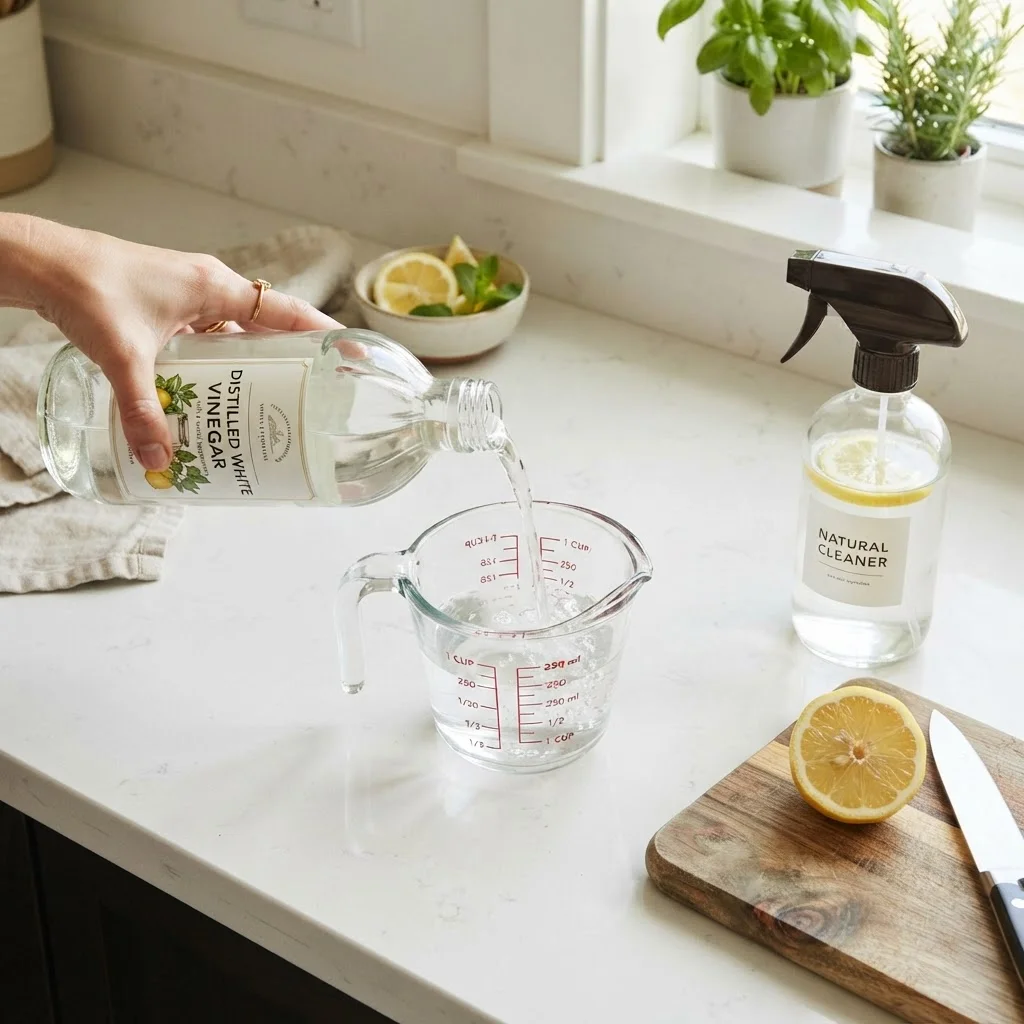
If baking soda is the scrubber, white distilled vinegar is the dissolver. Its acidity (around pH 2.5) makes it exceptionally good at breaking down mineral deposits, soap scum, hard water stains, and grease - all of which are alkaline, so the acid cuts right through them.
What it cleans best
- Glass and mirrors: Mix one part vinegar with one part water in a spray bottle. Streak-free results every time, no paper towels required.
- Showerheads and faucets: Fill a plastic bag with undiluted vinegar, secure it around the showerhead with a rubber band, and leave overnight. Mineral buildup dissolves completely.
- Coffee makers and kettles: Run a cycle with half vinegar, half water, then two full cycles of plain water. Limescale gone.
- Dishwasher deodorizer: Place a cup of vinegar on the top rack and run a hot cycle - neutralizes odors and loosens residue from the interior walls.
- Fabric softener substitute: Half a cup in the rinse cycle softens clothes and removes detergent buildup without any scent residue.
Where not to use it
Vinegar's acidity is its superpower and its one limitation. Keep it away from natural stone surfaces (marble counters, slate tiles), cast iron pans, and waxed hardwood floors. The acid etches stone finishes and strips protective coatings over time. On those surfaces, diluted castile soap is your safer choice.
“The chemistry of cleaning hasn't changed - what's changed is how much we've been convinced to pay for it. Acids dissolve mineral scale, alkalis cut grease, and surfactants lift dirt. Everything else is fragrance and marketing.”
— Dr. Anne Helmenstine, Chemistry educator and science writer
Castile Soap: The Most Versatile Ingredient in the Pantry
Castile soap is the ingredient that quietly replaces the most products on your cleaning shelf. Made from plant oils (originally olive oil from the Castile region of Spain), it's a true soap - not a synthetic detergent - which means it biodegrades cleanly and is safe for almost every surface, every family member, and every pet.
The secret to castile soap's versatility is that it's a surfactant: a molecule that's attracted to both water and oil at the same time. One end grabs onto oily dirt and grease; the other end bonds with water and carries the grime away when you rinse. That's the mechanism behind virtually every cleaning product on the market - castile soap just does it with plant-derived ingredients instead of petroleum-based ones.
What it cleans best
- All-purpose spray: 1 tablespoon castile soap + 1 quart warm water in a spray bottle. Wipe counters, appliance exteriors, cabinet fronts - all of it.
- Dish soap: Use it straight from the bottle, or diluted 1:1 with water if you want to stretch it further.
- Mopping solution: Half a cup per bucket of hot water. Leaves floors clean without a soapy residue if you don't over-use it.
- Bathroom cleaner: Mix with baking soda into a paste for toilet bowls and tile grout.
- Hand soap dispenser refill: Dilute 1 part castile soap with 3 parts water and pump into your existing dispenser.
One note: castile soap reacts with hard water to leave a white film. If your tap water is very hard, add a splash of white vinegar to your rinse water (separately - not mixed directly into the castile solution) to cut through it.
Lemon Juice and Salt: The Dynamic Scrubbing Duo
Lemon juice and salt might sound like a cocktail rim ingredient, but together they form one of the most effective natural scrubs you can make. Lemon juice is acidic like vinegar but also contains limonene, a natural solvent found in citrus peels that cuts through grease and leaves an actual clean scent (not a chemical approximation of one).
What the combination does
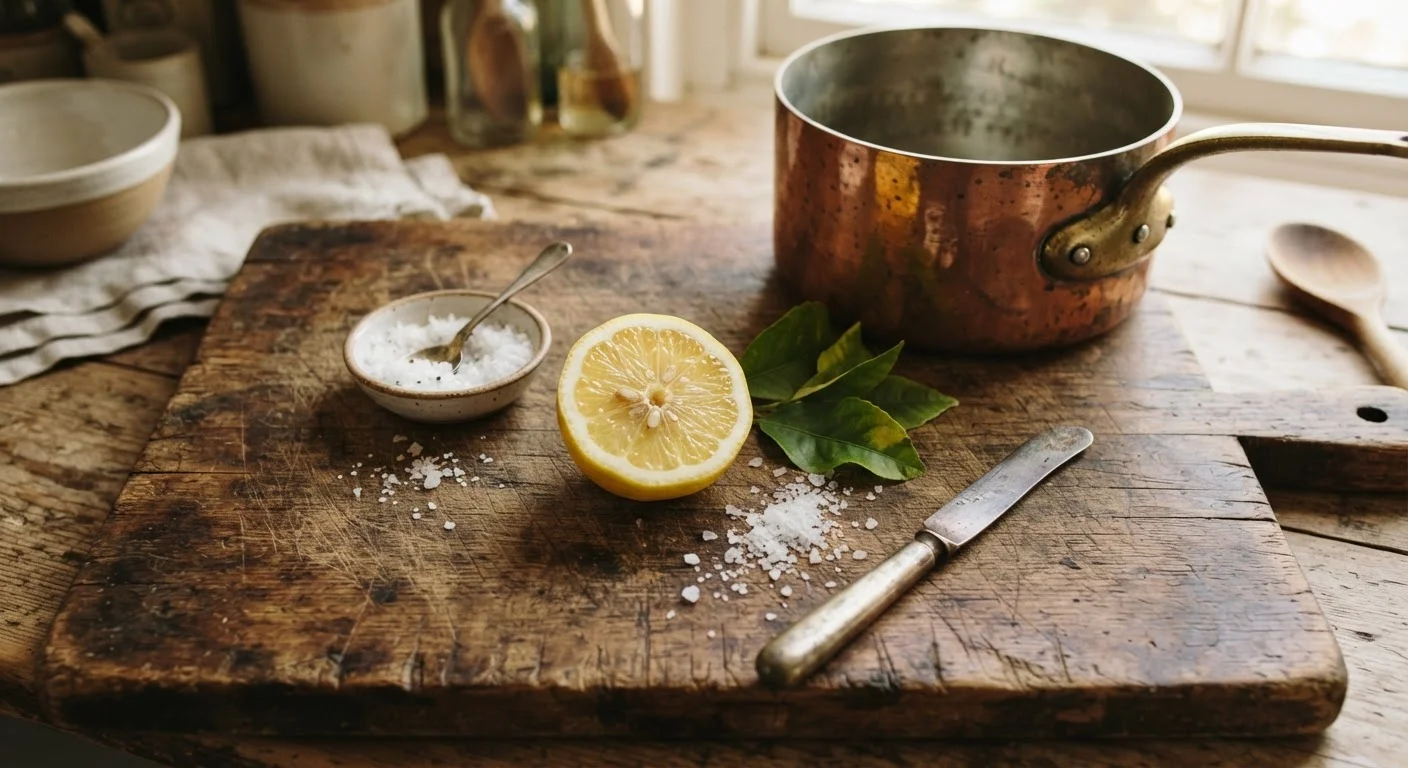
- Copper and brass polishing: Cut a lemon in half, dip it in salt, and scrub directly on tarnished copper pots or brass fixtures. The acid dissolves the oxidation; the salt acts as a gentle abrasive. Rinse well and dry immediately.
- Cutting board deep clean: Sprinkle coarse salt on a wooden cutting board, cut a lemon in half, and use the cut side to scrub the surface. It deodorizes, disinfects, and lifts stains without soaking the wood like water would.
- Stainless steel sink: Same method - salt + lemon half, scrub in the direction of the grain, rinse clean. Removes water spots and restores shine.
- Microwave steam-clean: Place a bowl with half a cup of water and the juice of one lemon in the microwave. Run on high for three minutes, then let sit for five minutes. The steam loosens splattered food; the lemon neutralizes odors. Wipe clean with a damp cloth - no scrubbing needed.
Fresh lemon juice works best, but bottled 100% lemon juice is a perfectly effective substitute for cleaning purposes. The citric acid concentration is what matters, and most bottled versions deliver it reliably.
Essential Oils: The Optional Upgrade That Actually Earns Its Place
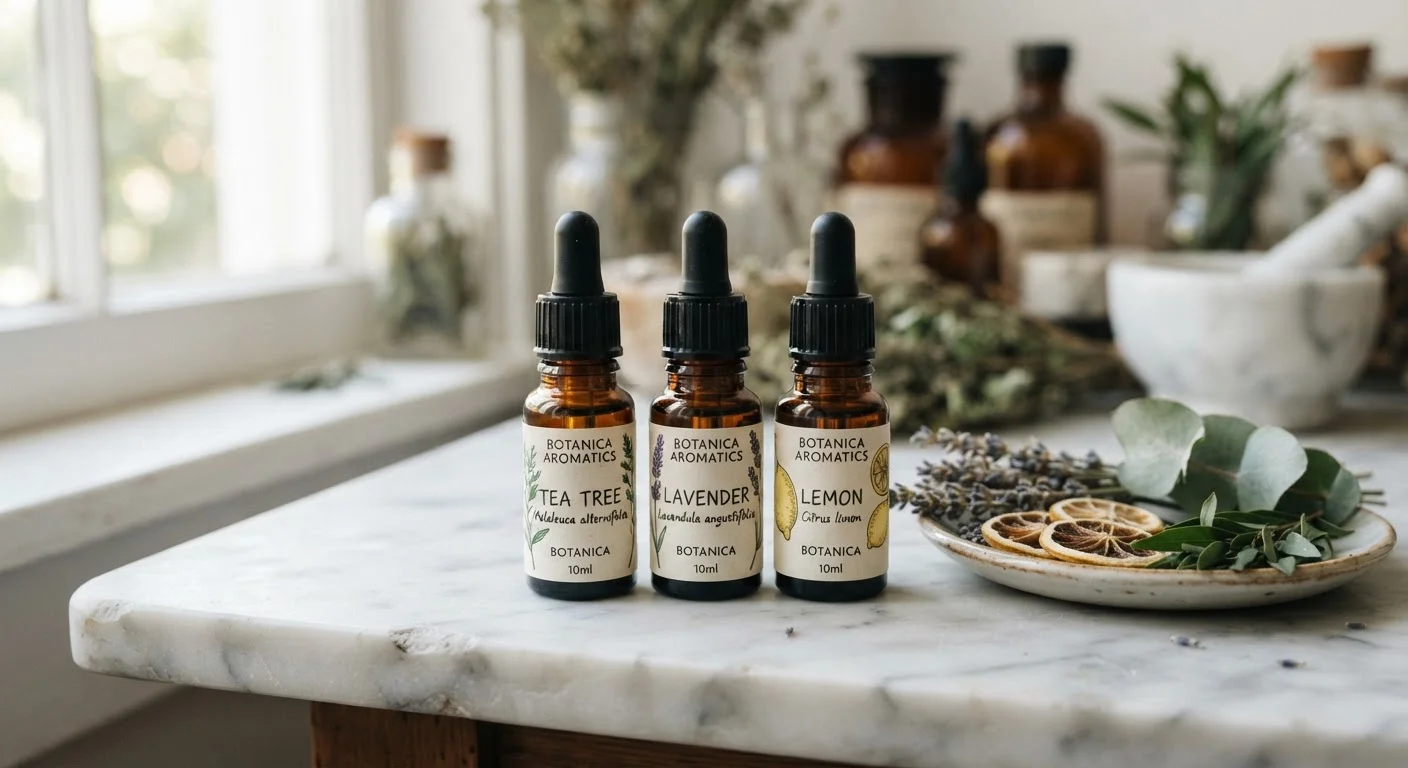
Essential oils are the one ingredient on this list that isn't strictly a pantry staple, but they're worth including because they do more than make your cleaners smell good. Several essential oils carry genuine antimicrobial and antifungal properties that add real cleaning value to your DIY formulas.
The ones worth buying
- Tea tree oil
- The gold standard for antimicrobial action in DIY cleaning. Studies show it's effective against common household bacteria and mold. Add 15-20 drops per quart of spray solution for bathroom surfaces and anywhere mold is a concern.
- Lavender oil
- Mildly antimicrobial and antifungal, with a genuine clean scent that doesn't read as chemical. Great in laundry rinses and fabric sprays.
- Lemon or orange essential oil
- Contains concentrated limonene - the same solvent found in citrus peels - which gives extra grease-cutting power to all-purpose sprays beyond what lemon juice alone provides.
- Eucalyptus oil
- Proven to repel dust mites and has antifungal properties. Useful in bedroom and bathroom sprays.
You don't need more than one or two oils to start. A small bottle of tea tree (30ml) typically costs $8-12 and contains 600+ drops - enough to make dozens of batches. At that scale, the cost per spray bottle of cleaner becomes negligible.
As you build out your pantry-cleaner toolkit, it's worth thinking about which containers and tools to keep on hand. The guide to kitchen tools worth spending on has useful perspective on where to invest and where a cheap version does the job just as well - a mindset that applies perfectly to your cleaning supply setup too.
Label Your Spray Bottles Every Time
It takes ten seconds and saves you a lot of confusion. Use a permanent marker or a strip of masking tape on every homemade spray bottle - write the ingredients and the date mixed. Vinegar and water look exactly like plain water, and a castile soap solution looks nearly identical to your vinegar glass cleaner. Mislabeling is the most common source of DIY cleaner frustration.
Start With One Recipe and Master It
The temptation is to overhaul your entire cleaning cabinet at once, but the better approach is to make one replacement at a time. Start with the glass cleaner (vinegar + water) - it's the easiest win. Once you're confident in that result, move to an all-purpose spray, then a scrub. You'll build trust in the process without wasting ingredients on experimental batches.
Buy Castile Soap in the Largest Size You'll Use
Castile soap has a shelf life of around three years, so buying a 32oz or 64oz bottle is almost always worth it. The per-ounce price drops significantly with size - often by 40-50% compared to small bottles. Just make sure you'll actually use it within a year or two; olive oil-based soaps can go rancid if left for very long periods.
How to Stock Your DIY Cleaning Pantry for Under $20
The beautiful thing about building a pantry-cleaner arsenal is that you're buying ingredients, not finished products. One jug of white vinegar, one box of baking soda, and one bottle of castile soap can collectively replace six or eight commercial products - and the math gets better every time you restock, because you usually only need to top up one ingredient at a time.
The starter kit
| Ingredient | Amount to buy | Approximate cost | Replaces |
|---|---|---|---|
| White distilled vinegar | 1 gallon | $3-5 | Glass cleaner, fabric softener, descaler |
| Baking soda | 2 lb box | $2-3 | Scrubbing powder, odor neutralizer, laundry booster |
| Castile soap (unscented) | 16 oz bottle | $8-12 | Dish soap, all-purpose spray, floor cleaner, hand soap |
| Coarse salt | 1 lb box | $1-2 | Abrasive scrub component |
| Tea tree essential oil | 30 ml bottle | $8-12 | Antimicrobial additive |
Total outlay: $22-34 for the first purchase. After that, you're topping up individual ingredients as needed - vinegar and baking soda every couple of months, castile soap and essential oil every six months to a year depending on how much you use.
Compare that to the average American household spending $600+ per year on cleaning products (per the American Cleaning Institute), and the math tells a very compelling story. You're not giving anything up - you're just paying for the actual chemistry instead of the branding.
Once you've got your ingredients stocked, the next step is putting them to work in specific recipes. The homemade cleaner recipes guide gives you exact formulas for all-purpose spray, glass cleaner, bathroom scrub, and more - with head-to-head comparisons against the commercial versions so you know exactly what you're getting.