
How Beauty Reward Tiers Work - and Whether Reaching the Next Level Is Worth It
Tiered loyalty programs promise better perks at higher levels, but the spend required may not always justify the climb.
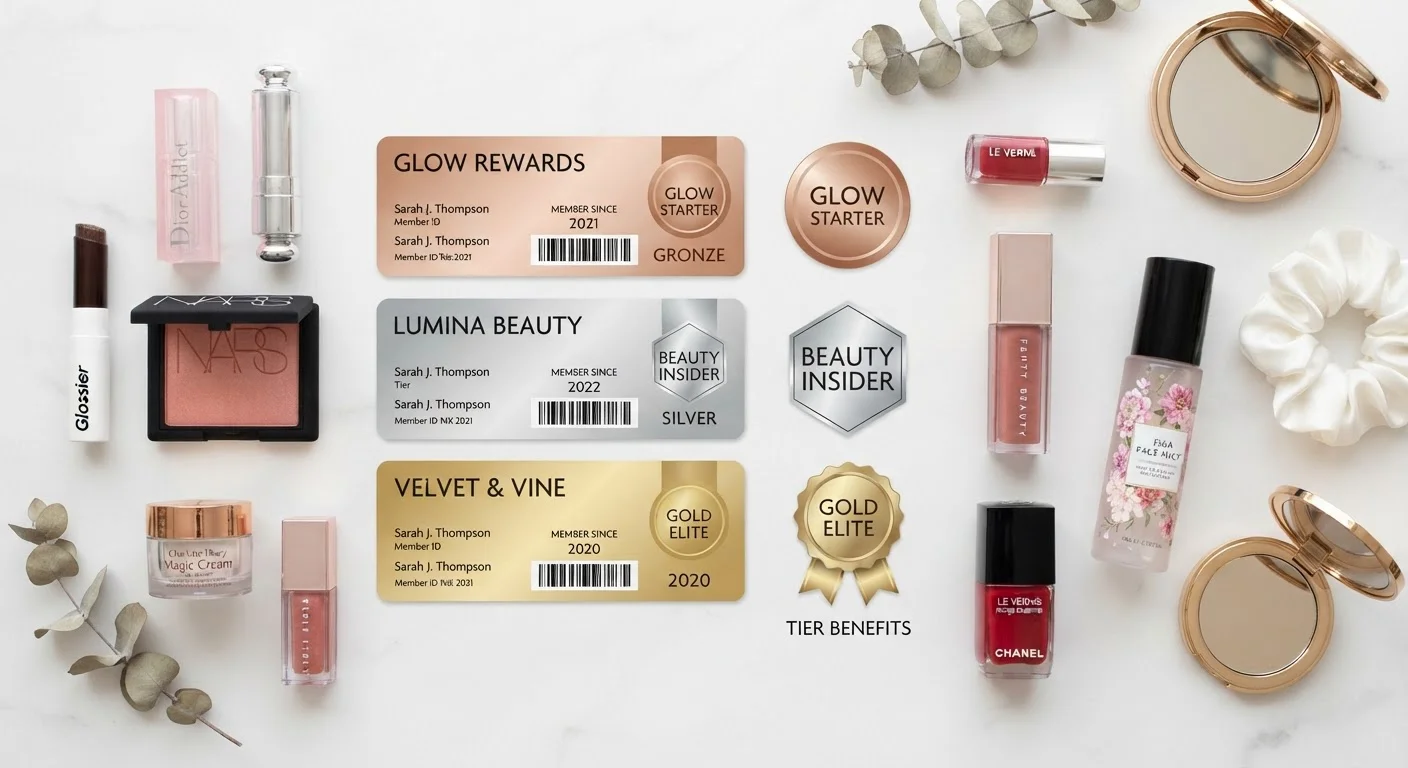
Photo: SaverSteals.com | Explore More. Shop Smarter. editorial
—— In This Article
Key Takeaways
- Most beauty loyalty programs use 2-4 spending tiers, each unlocking incrementally better perks.
- The actual dollar value of higher-tier benefits varies widely and is rarely advertised transparently.
- Overspending to reach the next tier often costs more than the perks are worth.
- Points expiration and tier resets can quietly erase accumulated progress.
- Casual shoppers may extract more value staying at entry level than chasing elite status.
Higher points multipliers accelerate reward accumulation
Mid- and top-tier members typically earn points at a faster rate per dollar, which can translate to more frequent free products or discounts - provided points are redeemed effectively before expiration.
Earlier access to sale events and promotions
Higher tiers often include priority access to seasonal sales, giving members a window to purchase popular items before they sell out - a tangible benefit for shoppers who regularly target specific products.
Waived or lowered free-shipping thresholds
Some programs grant free shipping at lower order minimums for elite members, which can reduce per-order costs noticeably for shoppers who make frequent, smaller purchases.
Exclusive perks add incremental value for regular buyers
Dedicated customer service lines, bonus birthday gifts, and free deluxe samples are perks that cost nothing beyond a spend threshold already being reached naturally.
Tier thresholds incentivize unnecessary overspend
The gap between tiers is designed to nudge shoppers into spending more than they planned. Purchasing products at full price to hit a threshold typically erodes any savings the tier might provide.
Annual resets can erase a year's progress
Most programs reset tier status at the start of each calendar year, meaning shoppers must re-earn their level continuously - a recurring cost that can outweigh recurring benefits.
Perk value is often lower than it appears
Perks like 'exclusive events' or 'early access' have limited monetary value if the products featured are available at comparable prices elsewhere shortly after.
Retailer lock-in limits price comparison
Concentrating purchases at one retailer to maintain tier status means fewer opportunities to comparison-shop, potentially costing more than the tier benefits return.
Points expiration can quietly nullify earned value
Many programs include inactivity-based points expiration clauses that can eliminate accumulated points before they're redeemed, particularly for infrequent shoppers who coast on prior status.
How Tiered Beauty Loyalty Programs Are Structured
Most major beauty retailers organize their loyalty programs into two to four spending tiers - commonly labeled with aspirational names like Insider, VIB, and Rouge, or Bronze, Silver, and Gold. Each tier requires reaching a cumulative annual spend threshold, and crossing that threshold unlocks a distinct set of perks that the lower level does not offer.
Entry tiers are typically free to join and reward basic behaviors: earning points per dollar spent, birthday discounts, and access to member-only sale events. Higher tiers layer on benefits such as increased points-earning rates, earlier access to promotions, free shipping thresholds, and dedicated customer service. Some programs also grant one-time bonus point awards when a shopper first crosses into a new tier.
The critical structural detail most shoppers overlook: tier status is usually recalculated annually. A shopper who reaches elite status in one calendar year must re-earn it the next, creating a renewal treadmill that benefits the retailer more than the customer. If you're new to navigating these programs, the First-Timer's Roadmap to Beauty Coupons and Loyalty Programs covers the foundational rules worth understanding first.
Pros of Reaching a Higher Reward Tier
For shoppers whose natural spending already approaches a threshold, advancing a tier can provide measurable upside without any behavioral change required.
Higher points multipliers accelerate reward accumulation
Mid- and top-tier members typically earn points at a faster rate per dollar, which can translate to more frequent free products or discounts - provided points are redeemed effectively before expiration.
Earlier access to sale events and promotions
Higher tiers often include priority access to seasonal sales, giving members a window to purchase popular items before they sell out - a tangible benefit for shoppers who regularly target specific products.
Waived or lowered free-shipping thresholds
Some programs grant free shipping at lower order minimums for elite members, which can reduce per-order costs noticeably for shoppers who make frequent, smaller purchases.
Exclusive perks add incremental value for regular buyers
Dedicated customer service lines, bonus birthday gifts, and free deluxe samples are perks that cost nothing beyond a spend threshold already being reached naturally.
Accelerated points multipliers - a common higher-tier perk - can meaningfully shorten the time to a redeemable reward. A shopper earning 1.5x points at mid-tier versus 1x at entry level accumulates reward currency roughly 50% faster on the same purchases, assuming redemption rates stay constant. For context on getting the most from that accumulation, see where most beauty shoppers go wrong with earning vs. redeeming.
Cons of Chasing the Next Tier
The disadvantages of tier-chasing are structural, not incidental - they're features of how these programs are designed.
Tier thresholds incentivize unnecessary overspend
The gap between tiers is designed to nudge shoppers into spending more than they planned. Purchasing products at full price to hit a threshold typically erodes any savings the tier might provide.
Annual resets can erase a year's progress
Most programs reset tier status at the start of each calendar year, meaning shoppers must re-earn their level continuously - a recurring cost that can outweigh recurring benefits.
Perk value is often lower than it appears
Perks like 'exclusive events' or 'early access' have limited monetary value if the products featured are available at comparable prices elsewhere shortly after.
Retailer lock-in limits price comparison
Concentrating purchases at one retailer to maintain tier status means fewer opportunities to comparison-shop, potentially costing more than the tier benefits return.
Points expiration can quietly nullify earned value
Many programs include inactivity-based points expiration clauses that can eliminate accumulated points before they're redeemed, particularly for infrequent shoppers who coast on prior status.
The most common trap is discretionary overspend: buying products earlier than needed, in larger quantities, or at full price specifically to hit a threshold. When the cost of that incremental spend exceeds the monetary value of the unlocked perks, the shopper has effectively paid for status rather than savings.
~$350-$1,000+
Typical annual spend to reach mid-tier beauty status
Spend thresholds vary by retailer, but mid-tier status at major beauty loyalty programs generally requires several hundred dollars in annual purchases.
1-3%
Approximate cash-back equivalent of most points programs
Consumer loyalty program analyses consistently estimate the effective cash-back rate of points-based beauty rewards at roughly 1-3% of spend, depending on how and when points are redeemed.
Tier resets compound this problem. A shopper who hits mid-tier status in month eleven and resets to entry level in January gains almost no benefit from their higher status - yet may have altered purchasing behavior significantly to reach it.
How to Evaluate Whether the Next Tier Is Worth Pursuing
A straightforward framework helps cut through the aspirational marketing around tier upgrades.
- Calculate your spend gap. Determine exactly how much more you'd need to spend to reach the next tier within the current program year.
- Assign a dollar value to each new perk. Free shipping thresholds, bonus point multipliers, and early-access events all have approximate cash equivalents. Be conservative - many perks are conditional or time-limited.
- Compare net value to gap cost. If the concrete value of new perks is less than the additional spend required to unlock them, the tier upgrade is a net cost, not a net benefit.
- Factor in consolidation opportunity. Concentrating spend at one retailer to reach a tier means forgoing price comparisons and potential savings elsewhere. This opportunity cost is real even if it's invisible.
Beauty shoppers managing broader budget decisions may also find it useful to consider beauty on a budget strategies when assessing where loyalty spending fits into their overall approach.
Tier Benefits Vary Significantly by Retailer
There is no industry-wide standard for what each tier level must include. One retailer's mid-tier might offer a meaningful points multiplier and free shipping, while another's provides only early-access notifications. Always review the specific benefits listed for your program before making spending decisions based on tier advancement. Program terms can also change between program years.

Beauty Editorial Team
Beauty Editorial Team is the collective byline for our editorial team and contributor network. Articles published under this byline or an editorial pen name are researched, written, and reviewed according to our editorial standards for clarity, consistency, and independence before publication.
View author profile