
Before You Restock Pet Supplies: A Household Audit Checklist
Use this checklist to assess what you actually have, what's expiring, and what's worth buying in bulk before your next pet supply shop.
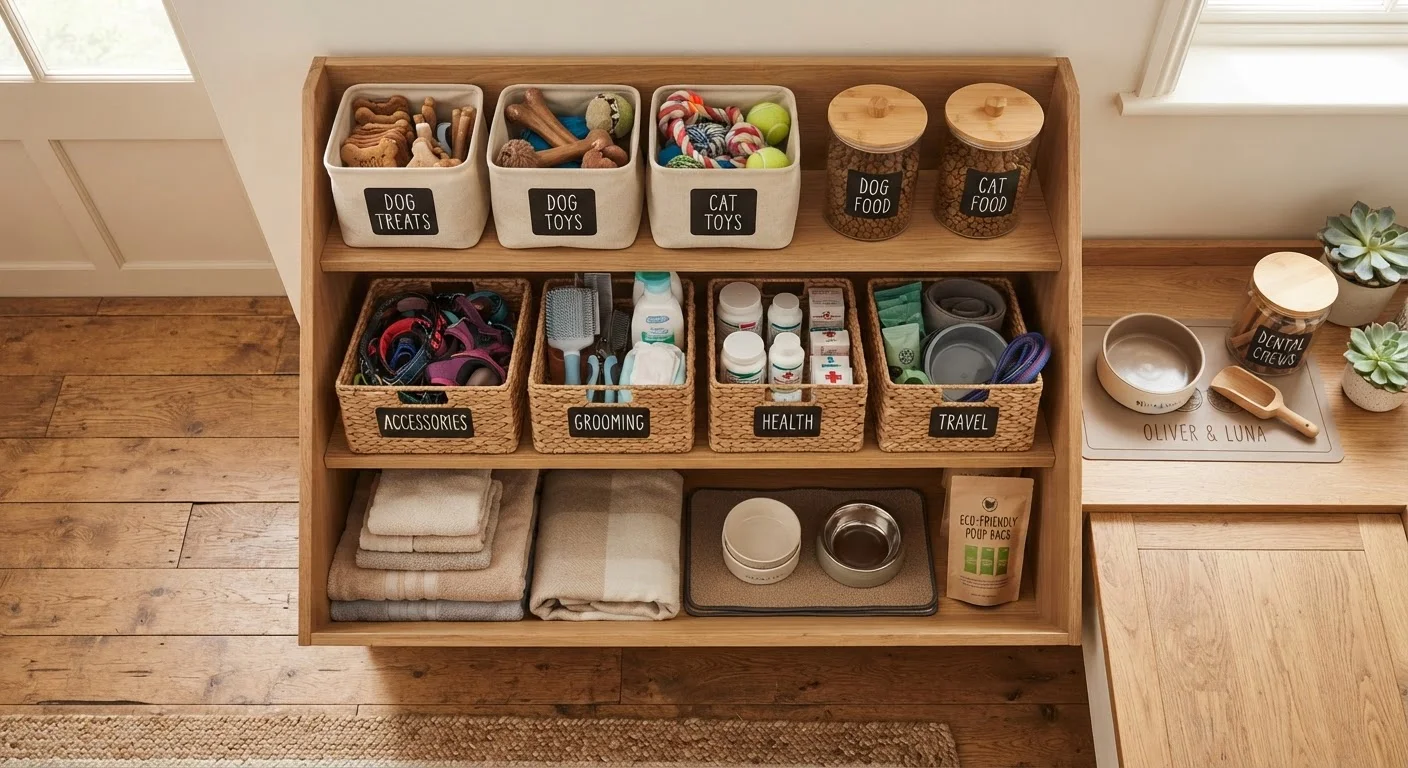
Photo: SaverSteals.com | Explore More. Shop Smarter. editorial
—— In This Article
Key Takeaways
- Auditing before restocking helps you avoid buying duplicates or items you already own.
- Expiration dates on food, medication, and flea treatments are easy to overlook without a systematic check.
- Knowing exact quantities on hand helps you decide what is genuinely worth buying in bulk.
- Condition checks on accessories and gear can reveal items ready for replacement before they fail.
- A written or digital inventory created during your audit saves time on every future shopping trip.
Why Audit Before You Shop?
Restocking pet supplies without first checking what you have is one of the most consistent ways pet owners overspend. Duplicate bags of food stack up in closets, half-empty shampoo bottles multiply under the sink, and expired flea treatments get discovered only when they're needed most. A structured household audit takes less than an hour and changes the entire quality of your next shopping trip.
This checklist is designed for pet owners who already have a functioning supply routine and want to make it leaner and smarter. If you're setting up from scratch, see our first-timer's roadmap instead. For those thinking about buying in volume after completing this audit, our companion piece on bulk buying pet supplies walks through exactly when and how that strategy makes sense.
Work through this checklist room by room, or category by category — whichever matches how your home is organized. Note quantities, expiration dates, and condition as you go.
Notepad or spreadsheet
Record inventory counts, expiration dates, and condition notes as you move through each supply category.
Permanent marker
Date newly opened items so you can track how quickly they are used and when they need replacing.
Smartphone camera
Photograph hard-to-read expiration dates and current stock levels for easy reference while shopping.
Small storage bins or bags
Separate items flagged as expired, damaged, or nearly depleted from current usable stock during the audit.
Completing Your Audit
Before touching your shopping list, gather what you need to do the audit properly. A notepad or simple spreadsheet works well for tracking counts; a permanent marker is useful for dating items you open today. Pull everything out of storage rather than relying on memory — supplies have a way of hiding behind other supplies.
Food & Treats
Health & Preventive Care Supplies
Grooming Supplies
Accessories, Gear & Housing
Toys & Enrichment
Cleanup & Sanitation
Once you've completed all categories, total up what genuinely needs replacing versus what simply needs reordering at a lower quantity. That distinction is the foundation of a realistic shopping list. Pair this audit with a monthly pet supply budget and you'll have both the inventory and the financial framework to shop with confidence rather than guesswork.
Never Use Expired Preventive Treatments
Flea, tick, and heartworm prevention products degrade after their expiration date and may no longer provide reliable protection. Using an expired product doesn't just risk ineffectiveness — it could also mean a gap in protection that allows an infestation or infection to establish. Always dispose of expired treatments properly and replace them before your pet's next due date.
If your audit surfaces gaps in preventive care items — parasite treatments, dental chews, or medications — cross-reference the annual pet health checklist to make sure nothing health-critical is being skipped. Supply spending and health spending are connected, and the budget pet care hub covers both sides of that equation.

Pets Editorial Team
Pets Editorial Team is the collective byline for our editorial team and contributor network. Articles published under this byline or an editorial pen name are researched, written, and reviewed according to our editorial standards for clarity, consistency, and independence before publication.
View author profile