
DIY Pet Enrichment: Keeping Your Pet Stimulated Without Spending Much
Boredom-related behaviour problems can lead to vet visits. Explore low-cost enrichment ideas for dogs, cats, and small animals that genuinely work.
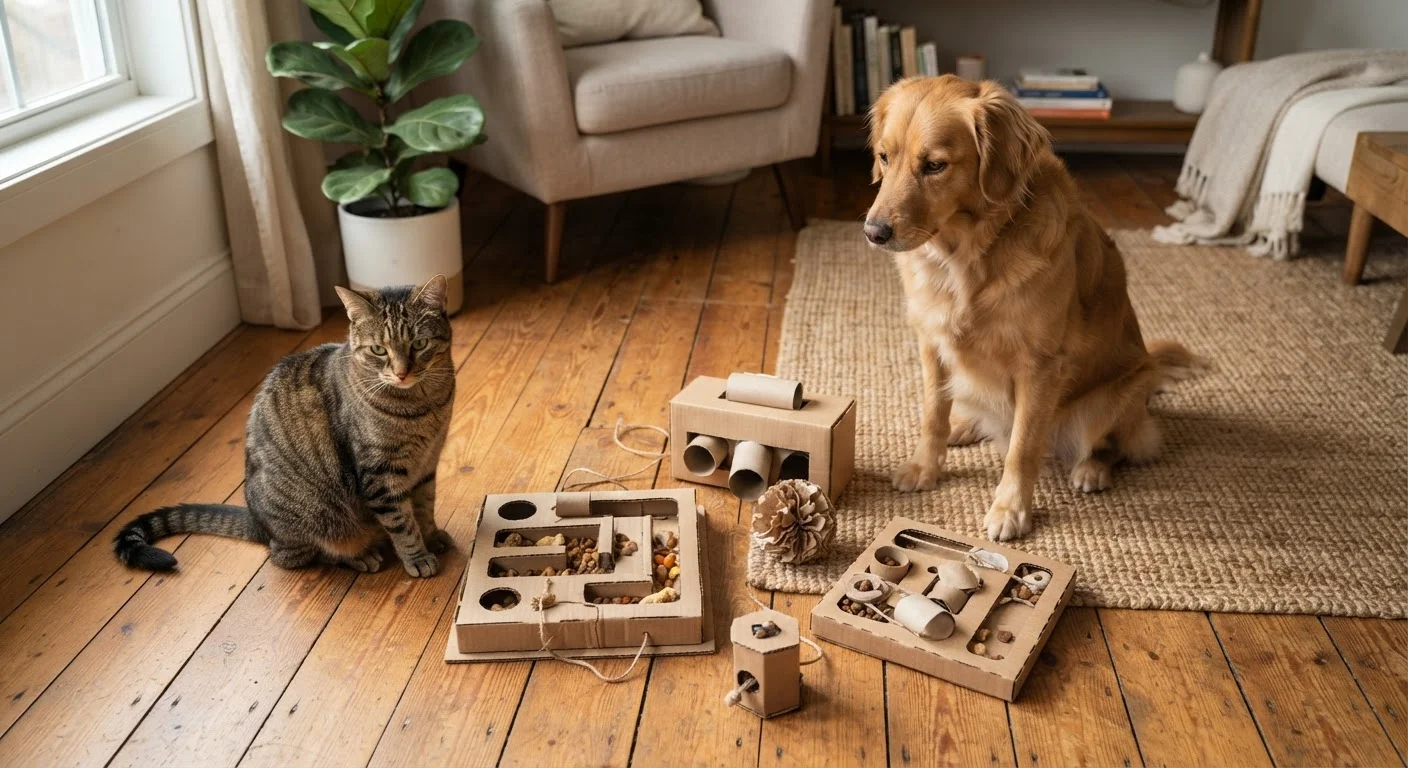
Photo: SaverSteals.com | Explore More. Shop Smarter. editorial
—— In This Article
Key Takeaways
- Mental stimulation reduces boredom-driven behaviours that can lead to costly vet visits.
- Most effective enrichment tools can be made from household items at little to no cost.
- Enrichment strategies differ meaningfully between dogs, cats, and small animals.
- Rotating activities matters as much as variety — novelty sustains engagement over time.
- DIY enrichment complements, rather than replaces, regular physical exercise and social interaction.
Why Enrichment Is a Health Issue, Not a Luxury
Boredom in pets is rarely quiet. It shows up as destructive chewing, repetitive pacing, excessive vocalisation, overgrooming, and redirected aggression — all behaviours that, left unaddressed, can escalate into genuine health and behavioural problems requiring professional intervention. Enrichment isn't about spoiling your pet; it's about meeting a baseline need that affects their physical and psychological wellbeing.
The good news is that effective enrichment doesn't require a budget line. Most of what animals find genuinely stimulating — novel scents, problem-solving challenges, sensory variety — can be delivered with everyday household items and a few minutes of setup time. If you're building out your overall care approach, the starter framework for new pet owners covers where enrichment fits within a broader, cost-conscious care routine.
Enrichment Needs Vary by Species and Age
What constitutes adequate enrichment differs significantly between dogs, cats, rabbits, rodents, and birds — and within species, a senior animal's needs differ from a juvenile's. The suggestions in this article are general starting points. If your pet has a known behavioural condition, chronic illness, or physical limitation, consult your veterinarian or a certified animal behaviourist before introducing new activities. Some enrichment formats (e.g., high-jump obstacles) are inappropriate for animals with joint conditions.
Eight Low-Cost Enrichment Ideas That Actually Work
Cardboard box mazes for cats
Flatten and reassemble cardboard boxes into tunnel systems or multi-chamber mazes using tape and a box cutter. Cut entry holes at varying heights to encourage jumping and climbing. Cats are predatory animals motivated by movement and exploration — a new structure activates investigative behaviour that commercial cat trees often stop triggering once familiar.
Refresh the maze every few weeks by rearranging panels or adding a new box. The cardboard also satisfies scratching instincts, which can reduce wear on furniture.
A rearranged cardboard maze can re-engage a cat more effectively than a familiar commercial toy.
Snuffle mats from rubber matting and fleece
A snuffle mat — a rubber mat with fleece strips tied through its holes — lets dogs and some small animals forage for kibble or treats by scent. This mimics natural foraging behaviour and slows fast eaters as a side benefit. Studies on canine cognition consistently show that nose work is among the most tiring forms of mental exercise relative to the time involved.
Rubber sink mats with drainage holes work well as a base. Cut fleece into strips roughly 1 inch wide and 6 inches long, then tie them through the holes until the surface is dense. Total material cost is typically under a few dollars when using repurposed fabric.
Nose work through a snuffle mat can tire a dog more efficiently than many forms of physical exercise.
Frozen food puzzles for dogs
Stuff a Kong-style rubber toy or a simple silicone ice cube tray with a mixture of your dog's regular food, plain unsalted broth, and safe fruit or vegetable scraps, then freeze. The thawing process adds a sustained challenge layer that extends engagement from seconds to 20 minutes or more.
Safe additions commonly include plain cooked sweet potato, blueberries, cucumber, and watermelon (seedless). Always verify specific foods against a veterinary-approved list before introducing them, as toxicity varies by species and individual health history.
A frozen food puzzle can extend a dog's mealtime engagement from seconds to 20 minutes.
Paper bag and tissue box foraging for small animals
For rabbits, guinea pigs, hamsters, and rats, paper bags stuffed with hay, dried herbs, and hidden pellets provide tactile and olfactory stimulation. Tissue boxes with a single entry hole slow foraging and encourage problem-solving. Avoid bags with plastic handles, glossy coatings, or dye-heavy printing.
Rotate the type of hiding material — hay one day, shredded plain paper another — to maintain novelty. Small animals often investigate the same item repeatedly if its scent changes, so slight variation goes a long way.
Rotating the hiding material in a foraging box can renew interest in the same basic setup.
Window perches and bird feeders for indoor cats
A stable window perch made from a small shelf bracket and a padded board costs very little to install and provides hours of passive enrichment. Placing a bird feeder or a small squirrel-activity station just outside the window turns the view into a live, unpredictable stimulus — sometimes called a 'cat TV' setup by animal behaviourists.
The key is positioning the perch at a height where the cat can observe comfortably without feeling exposed. Direct sun access also provides thermoregulatory benefit, which many cats seek instinctively.
A window perch paired with an outdoor feeder delivers hours of passive enrichment at minimal setup cost.
Scatter feeding instead of bowl feeding
Tossing a portion of your dog's or small animal's daily dry food across a grassy yard, a textured rug, or a snuffle mat transforms a 30-second meal into a 10–15 minute foraging session. No tools required. This practice is widely used in shelter environments to reduce stress and redirect hyperactivity.
For dogs, scatter feeding in a new outdoor location on walks (where safe and permitted) adds an olfactory dimension to the outing. Novelty of location amplifies the mental challenge.
Scatter feeding can turn a 30-second bowl meal into a 15-minute foraging session with zero extra cost.
DIY agility with household objects
For dogs with space indoors or in a yard, a simple agility circuit using broomsticks balanced across stacked books, sofa cushion weave poles, or a hula hoop held low encourages physical coordination and responsiveness to cues. This doubles as low-intensity training reinforcement.
Keep sessions under five minutes for puppies and seniors. The benefit here is as much about focused interaction with you as it is about the physical challenge — bonding time is itself a form of social enrichment that supports behavioural stability.
Short DIY agility circuits build coordination and reinforce obedience cues with no equipment cost.
Herb gardens and scent exploration stations
Many cats and rabbits respond strongly to safe herbs — cat grass, valerian, silver vine, and catnip for cats; fresh basil, mint, and dill for rabbits. Growing a small pot of these on a windowsill provides an interactive, renewable enrichment source. Scent variation — introducing a worn piece of cloth from a woodland walk, or rotating dried herbs in a small dish — activates investigative behaviour in most species.
A scent station can be as simple as a muffin tin with different safe scents placed in each cup. Allow the animal to investigate freely rather than guiding them — choice and autonomy are themselves enriching.
A rotating scent station costs almost nothing and activates investigative behaviour in nearly every species.
Rotate, Don't Accumulate
Keeping three or four enrichment setups in regular rotation is more effective than having a large collection available all at once. Novelty drives engagement — an item that's been absent for two weeks feels new again. Store items out of sight between uses rather than leaving them accessible permanently. This approach also prevents the spending spiral that comes with chasing the next new product. See how budget-conscious owners stretch their supply budgets for related strategies.
Making Enrichment a Sustainable Habit
The most common reason DIY enrichment falls away is that it feels like additional work. The practical fix is to attach it to routines you already have — prep a snuffle mat while your coffee brews, rotate a hiding spot when you clean the room. Consistency matters more than complexity.
Spending on enrichment toys can also spiral without a plan. If you've found yourself accumulating items that go unused, the article on pet toy spending traps is worth a read before your next purchase. And if you're trying to keep all pet costs predictable month to month, building a pet supply budget offers a step-by-step structure that accounts for enrichment alongside other recurring expenses.
This article is for informational purposes only. Consult a qualified veterinarian or certified animal behaviourist if your pet displays persistent behavioural concerns.

Pets Editorial Team
Pets Editorial Team is the collective byline for our editorial team and contributor network. Articles published under this byline or an editorial pen name are researched, written, and reviewed according to our editorial standards for clarity, consistency, and independence before publication.
View author profile