
Transporting Used Furniture Safely: What to Measure, Wrap, and Plan Before Collection Day
Avoid damage in transit with practical guidance on measuring doorways, wrapping vulnerable pieces, and choosing the right vehicle.
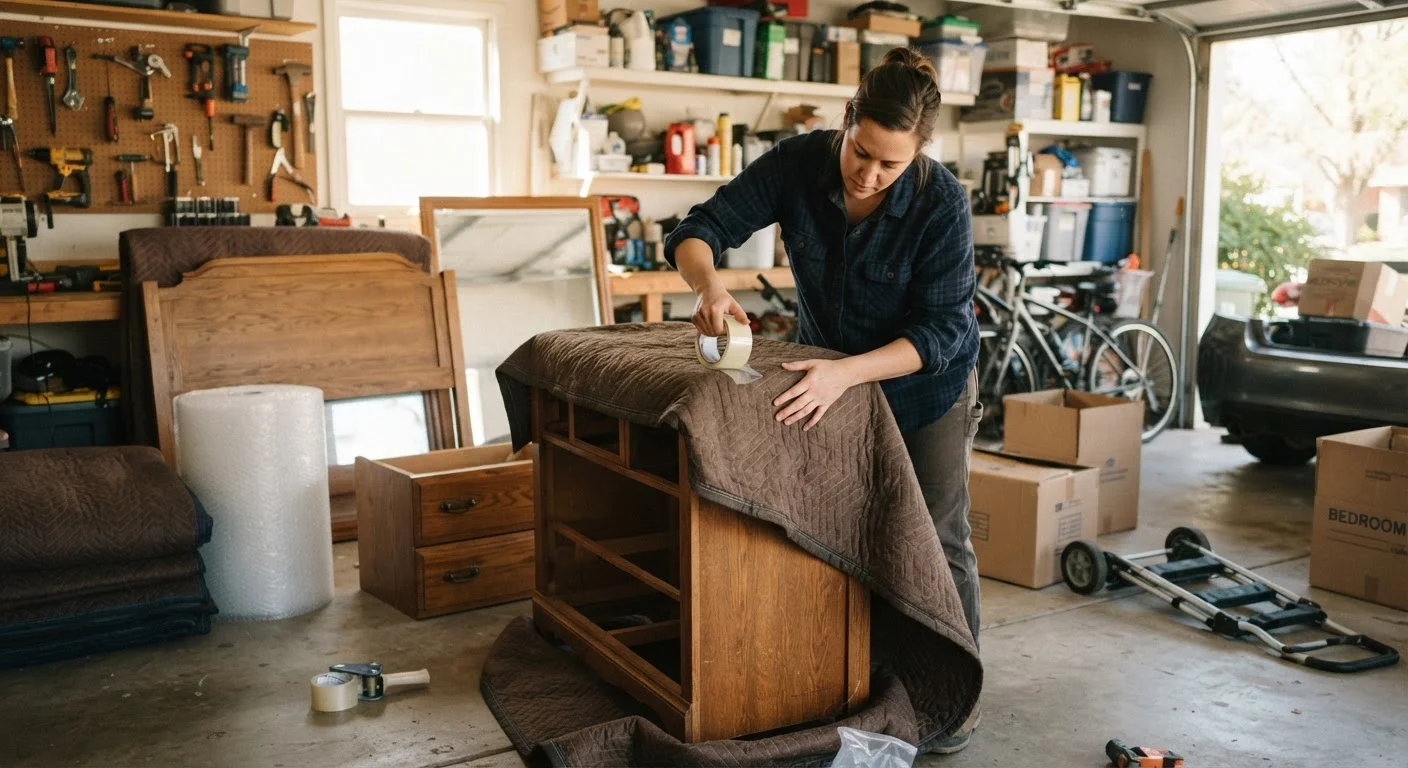
Photo: SaverSteals.com | Explore More. Shop Smarter. editorial
—— In This Article
Key Takeaways
- Measure the furniture, your vehicle cargo area, and every doorway before collection day.
- Disassemble legs, shelves, and drawers separately to reduce bulk and prevent damage.
- Moving blankets outperform bubble wrap for protecting large flat surfaces in transit.
- Secure loads with ratchet straps — sliding pieces cause the majority of transit damage.
- Factor transport costs into your total price before committing to any secondhand piece.
Why Transport Planning Makes or Breaks a Secondhand Deal
Buying used furniture is one of the more reliable ways to get solid pieces at a fraction of retail price — if you've done your homework upfront. The budget furniture guide covers how to evaluate quality before you commit. But a careful inspection at the seller's location counts for nothing if the piece arrives damaged because transport wasn't planned properly.
The risks are predictable: scratched veneers from unpadded surfaces rubbing together in transit, snapped legs from pieces loaded without support, and water-damaged upholstery from open truck beds. These aren't rare outcomes — they're what happens when moving day is improvised.
What you will need
The steps below give you a repeatable process: measure twice, wrap correctly for the material, load in the right order, and secure everything before the wheels move. This applies whether you're picking up a side table from a private seller or hauling a full dining set from an estate sale. For a broader look at the full secondhand buying process, the used furniture guide covers inspection, sourcing, and ongoing care alongside transport.
Never Move Heavy Furniture Alone
Back injuries from furniture moves are among the most common DIY moving injuries. Always have at least one helper for anything over 50 lbs, and use a dolly wherever the floor surface allows. Attempting to drag or tip heavy pieces solo increases the risk of injury to you and damage to the furniture.
What You'll Need
Gather these tools and supplies before collection day — improvising on-site wastes time and increases the chance of damage or injury.
Tape measure
Measure furniture dimensions and all doorways, hallways, and stairwells on both ends of the move.
Moving blankets or furniture pads
Wrap and cushion flat surfaces, corners, and legs to prevent scratches and dents during transport.
Ratchet straps
Secure wrapped furniture to the vehicle cargo floor or walls so pieces cannot shift in transit.
Stretch wrap (plastic film)
Bundle drawers, doors, and loose parts together and hold blankets in place without adhesive damage.
Furniture dolly
Move heavy items across flat surfaces with minimal lifting, reducing injury risk and floor damage.
Zip-lock bags
Store screws, bolts, and cam locks from disassembled furniture so nothing is lost before reassembly.
If you're renting a vehicle, book it at least 48 hours in advance, especially on weekends when cargo vans are frequently unavailable at short notice. Confirm the interior dimensions with the rental company rather than relying on general specs — cargo areas vary significantly between vehicle models of the same nominal size.
Borrow Before You Rent
Moving blankets and furniture dollies are commonly available through local library tool lending programs, neighborhood sharing groups, and community apps — often at no cost. Check these options before paying rental fees, which can add meaningfully to your transport budget.
Step-by-Step: From Pickup to Placement
Measure before you commit
Before collection day — ideally before you finalize the purchase — get three sets of measurements:
- The furniture itself: height, width, and depth at the widest points, including any protruding handles or legs.
- Your vehicle's cargo area: interior length, width, and height with seats folded or removed.
- The route at both ends: door frame widths, hallway widths, ceiling heights on stairs, and any tight corners or landings.
A standard interior doorway in US homes is roughly 80 inches tall and 32–36 inches wide, but older homes frequently run narrower. Measure the actual opening, not the door itself. If the piece won't clear on its own, check whether it can be tipped diagonally — many sofas and large dressers pass through at an angle that flat measurements don't immediately suggest. See the pre-purchase checklist for a full doorway and stairwell measurement guide.
Disassemble everything that comes apart
Removing legs, shelves, drawers, and detachable doors before moving has two benefits: it reduces the overall dimensions and removes the most fragile attachment points from load stress. Most flat-pack and mid-century pieces have bolt-on legs; check the underside before assuming something is fixed.
- Pull out all drawers and move them separately — they protect the drawer runners from bending under weight.
- Remove glass inserts from cabinets and display units; wrap each pane in moving blankets and transport vertically.
- Bag every screw, bolt, and cam lock immediately in a labeled zip-lock bag taped to the corresponding piece.
Wrap correctly for the material
Different materials need different protection strategies:
- Wood and laminate: Moving blankets on all flat surfaces, with corners double-wrapped. Secure blankets with stretch wrap, not tape — adhesive tape can lift veneer and lacquer finishes.
- Upholstery: Stretch wrap over the entire piece keeps fabric clean and prevents snagging. For light-colored upholstery, add a layer of plastic sheeting under the stretch wrap first.
- Glass and mirrors: Mark a large X across the glass surface with masking tape (this holds shards if the glass breaks), then wrap in moving blankets and carry upright — never flat.
- Metal frames: Pad any sharp corners with foam pipe insulation or folded blanket sections taped in place.
Choose and load the right vehicle
Match the vehicle to the load. A standard pickup truck bed (typically 5–6.5 feet long) handles most dressers and side tables but is too short for full sofas and king beds without careful angling and a tailgate extender. A cargo van or 10-foot moving truck is the reliable choice for anything over 7 feet in any dimension.
Loading order matters: heaviest items go in first, against the cab wall, with the weight distributed evenly left and right. Place wrapped furniture on moving pads on the cargo floor — never directly on bare metal. Stack lighter pieces on top only when they are stable and strapped independently.
Strap and secure the load
Every item needs to be secured independently. Loop ratchet straps over wrapped pieces and anchor them to the vehicle's fixed tie-down points — not to each other. Apply enough tension to eliminate any movement when you shake the piece by hand, but stop before the strap visibly compresses the furniture's padding or frame.
For open truck beds, add a cargo net over the entire load as a secondary layer — this catches anything that works loose during braking or turns. Check strap tension after the first mile of driving, as vibration can cause initial settling.
Plan the unload before you arrive
Think through the delivery end before you leave the seller's location. Confirm that your destination doorways, elevator dimensions (if applicable), and stairwell turns clear the pieces you're transporting — using the measurements from Step 1. Have the furniture dolly accessible from the vehicle first, not buried under other items.
If you're moving into a building, check whether you need to reserve a service elevator or loading dock in advance. Many apartment buildings require this and won't allow move-ins through the main lobby. Failing to arrange this can mean waiting hours or rescheduling entirely. Transport costs can add up unexpectedly — the hidden costs guide covers how to factor delivery and logistics into your overall secondhand budget.
Open Truck Beds Require Extra Precautions
Transporting furniture in an open pickup bed exposes it to wind, rain, and road debris. Even securely strapped pieces can sustain water damage or surface abrasion. Cover all items with a weatherproof tarp and secure the tarp independently of the furniture straps. Check local regulations — some states require loads to be fully covered by law.

Furniture Editorial Team
Furniture Editorial Team is the collective byline for our editorial team and contributor network. Articles published under this byline or an editorial pen name are researched, written, and reviewed according to our editorial standards for clarity, consistency, and independence before publication.
View author profile