
The Complete Guide to Navigating Furniture Sales and Clearance Events
Everything from understanding sale cycles to evaluating floor models — a thorough resource for budget-conscious furniture shoppers.
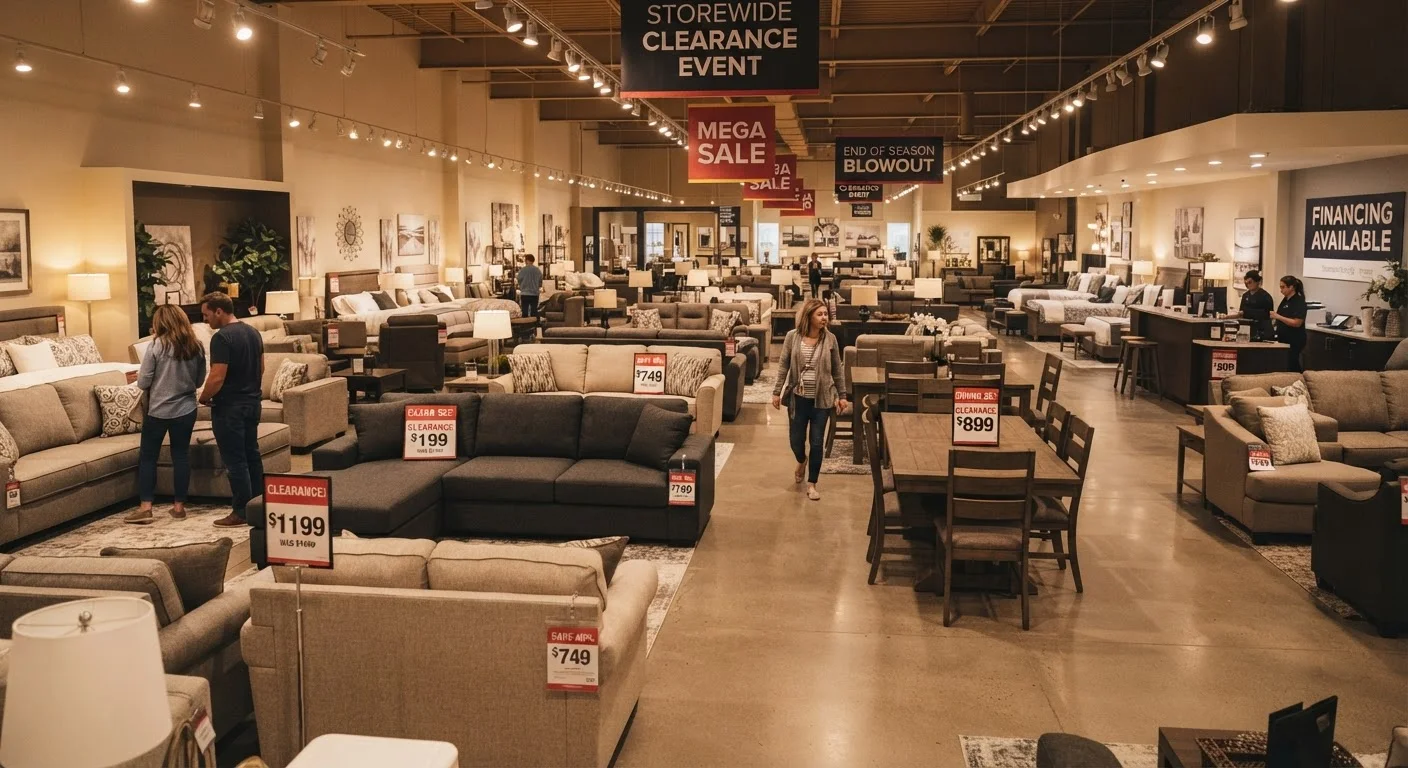
Photo: SaverSteals.com | Explore More. Shop Smarter. editorial
—— In This Article
Key Takeaways
- Furniture retailers follow predictable clearance cycles tied to model changeovers, not random promotions.
- Holiday weekends and post-January inventory resets are historically the most productive times to shop.
- Clearance and promotional sales work differently - each requires a distinct shopping approach.
- Floor models can offer real value, but require a structured physical inspection before purchase.
- Return and delivery policies often change during sale periods - always confirm before paying.
How Furniture Sale Cycles Actually Work
Most furniture retailers operate on a twice-yearly model refresh cycle, typically in late winter and late summer. When new inventory arrives, older models get marked down to clear floor space - these are the moments when genuine price reductions happen, as opposed to inflated "sale" prices on items that haven't moved.
Understanding this rhythm changes how you shop. Rather than reacting to advertised promotions, you can anticipate when real clearance inventory will appear. See our Furniture Sales Calendar for a month-by-month breakdown of when discounts tend to run deepest.
2x/year
Typical furniture model refresh cycles
Most major retailers rotate inventory in late winter and late summer, triggering genuine clearance markdowns on prior-season stock.
20-40%
Common floor model discount range
Floor and display models are routinely discounted by this margin, though the actual reduction varies by retailer and condition of the piece.
$100-$200+
Typical furniture delivery fee when not included
Promotional pricing sometimes excludes standard delivery, making it important to calculate total landed cost rather than the sticker price alone.
The Key Sale Windows to Target
Several windows consistently produce meaningful price drops across most furniture categories:
- Presidents' Day (February): One of the most reliable furniture sale weekends of the year, coinciding with post-holiday inventory clearance.
- Memorial Day and Labor Day: Major holiday weekends that retailers use to move spring and summer stock ahead of new arrivals.
- Post-January reset: After holiday overstock, January and early February often surface discontinued lines at reduced prices.
- Black Friday: Useful for some categories, though deeply discounted furniture is less common than in electronics - approach with measured expectations.
If you're working with a tight budget across multiple rooms, also consult our guide on buying furniture without compromising quality for complementary strategies.
Visit the showroom 2-3 weeks before a major holiday weekend to identify pieces you want, then return during the sale - you'll spend less time deciding under pressure and won't miss items that sell out quickly.
Pre-sale reconnaissance removes urgency from the decision, which is when most buyers overspend or settle for the wrong piece.
Ask a sales associate directly when the next model changeover is scheduled - many will tell you, and it gives you a concrete date to target rather than waiting for a promotion email.
Staff are generally aware of inventory transitions and have no incentive to conceal timing, especially if you present as a serious buyer already comparing options.
Clearance vs. Promotional Sales: Know the Difference
These two sale types get conflated, but they behave very differently.
Promotional sales are time-limited marketing events. Prices may be reduced from a listed retail price, but that retail price is sometimes set artificially high. The item will likely remain available after the event ends. These promotions reward patient shoppers who compare prices over time rather than acting on urgency.
Clearance sales involve actual inventory the retailer needs to move - discontinued models, end-of-line stock, or display pieces. Selection is finite and won't be restocked. When a clearance tag appears, the markdown is generally real, and the window to act is genuinely limited.
The same principle applies in other retail verticals. The anatomy of an electronics sale event covers how to distinguish doorbusters from genuine clearance - much of that logic transfers directly to furniture shopping.
Evaluating Floor Models and Open-Box Pieces
Floor models can represent real value - often 20-40% below standard retail - but they require a more disciplined inspection than boxed merchandise.
Work through this checklist before committing:
- Structural integrity: Sit on upholstered pieces, open drawers, and apply lateral pressure to joints. Any wobble or creak signals a problem.
- Surface condition: Look at pieces in natural light, not just showroom lighting. Note scratches, fading, and stains, then negotiate based on documented damage rather than hoping it won't matter.
- Missing hardware: Ask staff to confirm all assembly components and documentation are present, particularly for flat-pack or modular items.
- Cleaning history: For upholstered pieces, ask what cleaning has been performed. A professional clean may be needed before use, which adds to actual cost.
If secondhand furniture is also on your radar, the used furniture hub covers pre-owned evaluation criteria in more depth.
Questions to Ask Before You Buy
Sale conditions often differ from standard purchase terms. Before finalizing any transaction, get clear answers to the following:
- Is this item returnable? Many clearance and floor-model purchases are final sale. Confirm this explicitly - don't assume the standard policy applies.
- What are the delivery terms? Promotional pricing sometimes excludes free delivery, which can add $100-$200+ to the actual cost.
- Does the warranty still apply? Floor models and clearance stock may carry reduced or voided manufacturer coverage. Ask for written confirmation of what remains in effect.
- Can the price be negotiated further? On floor models with visible wear, it's reasonable to ask for an additional reduction, particularly at independent retailers.
Return policy vigilance matters across all sale categories - the guide on return policies during sale events lays out the broader consumer rights framework worth understanding before any significant purchase.
This article is for informational purposes only. Pricing, retailer policies, and sale schedules vary and are subject to change - always verify current terms directly with the retailer before purchasing.

Furniture Editorial Team
Furniture Editorial Team is the collective byline for our editorial team and contributor network. Articles published under this byline or an editorial pen name are researched, written, and reviewed according to our editorial standards for clarity, consistency, and independence before publication.
View author profile