
The Anatomy of an Electronics Sale Event
Flash sales, doorbusters, and clearance racks work very differently. Understand each format so you can shop them strategically.
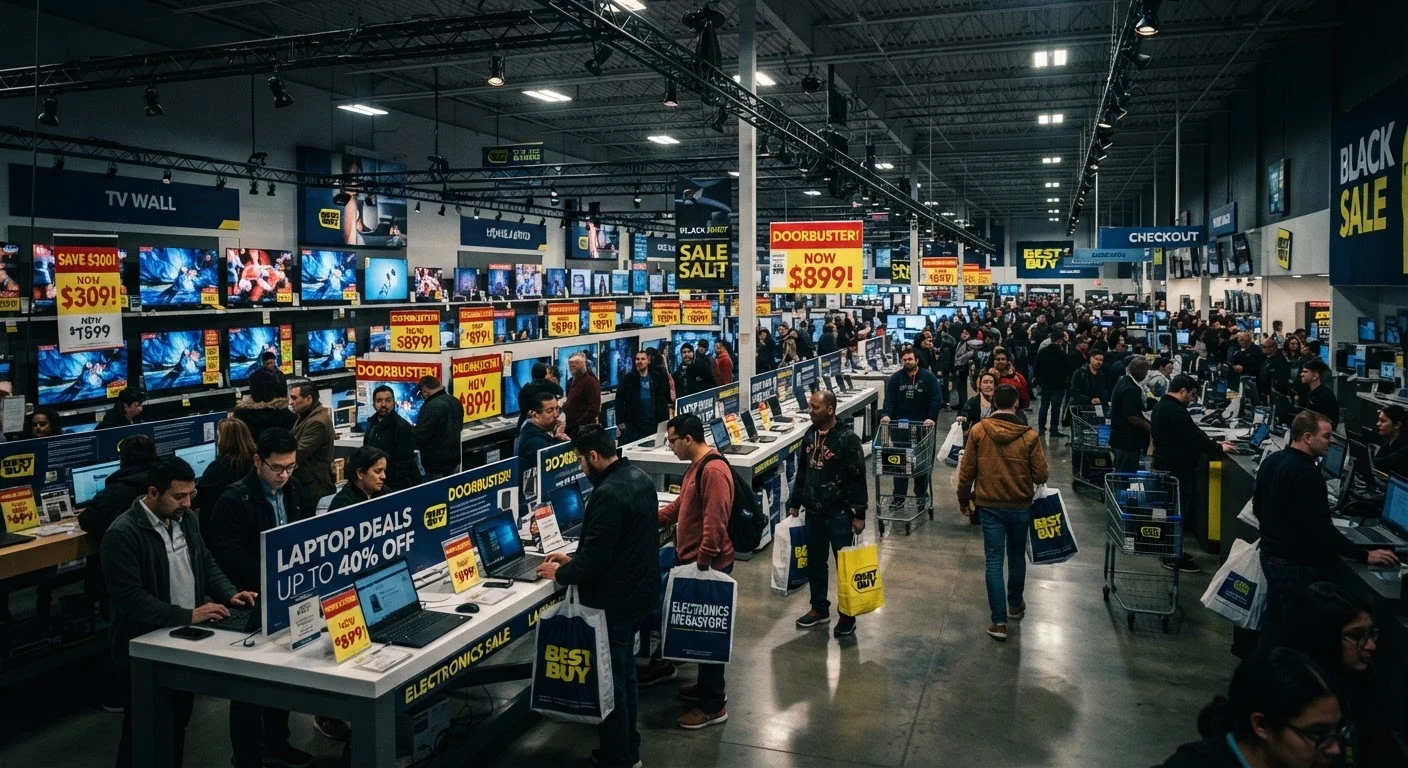
Photo: SaverSteals.com | Explore More. Shop Smarter. editorial
—— In This Article
Key Takeaways
- Flash sales, doorbusters, clearance, and seasonal promotions each follow distinct pricing and inventory logic.
- Doorbuster items are typically limited in quantity and designed primarily to attract in-store traffic.
- Clearance markdowns reflect the retailer's need to move aging inventory, not necessarily a product's decline in value.
- Price history tools can help you verify whether a sale price represents a real reduction from typical retail.
- Bundled accessories during sale events can obscure whether the core product itself is actually discounted.
Four Sale Formats, Four Different Motivations
Every electronics sale event has a business logic behind it - and that logic determines who benefits most. Retailers don't discount products out of generosity; they do it to move inventory, generate traffic, or compete on perception. Recognizing which format you're dealing with is the first step toward shopping it effectively.
The four most common formats are flash sales, doorbusters, clearance events, and seasonal promotions. Each one operates on a different timeline, targets different inventory, and serves a different retail goal.
~30%
Typical doorbuster discount depth vs. standard price
Industry analysts generally observe that loss-leader doorbusters in consumer electronics are discounted 25-40% below standard retail to generate traffic, though quantities are tightly controlled.
4-6 hrs
Median duration of online flash sales
Retail research on e-commerce promotions suggests most flash sales are structured as half-day windows or shorter, using time pressure as the primary conversion mechanism.
2-3x
Increase in bundle promotions during peak sale events
Retail analysts note a significant rise in accessory bundling around major sale periods, as bundles allow retailers to maintain margin on core products while appearing to offer broader value.
Flash Sales: Speed Over Substance
Flash sales are short-duration promotions - sometimes just a few hours - typically offered through email lists, app notifications, or dedicated deal pages. The scarcity window is intentional: urgency is the mechanic that drives conversion.
The critical thing to understand about flash sales is that the discount is relative to a reference price, which may or may not reflect what most shoppers actually pay on a normal day. Before acting on any flash sale, use a price-tracking tool to pull up the item's historical price range. If the flash price is lower than the item's 30-day average, the discount is real. If not, the urgency is manufactured.
Flash sales frequently appear on open-box or refurbished units. These can represent genuine value, but confirm the return window and warranty coverage independently. See our pre-purchase checklist before committing.
Doorbusters: Traffic Tools, Not Broad Savings
Doorbusters are high-visibility, deeply discounted items offered in deliberately small quantities at the start of a sale event. Their purpose is to fill stores - or spike website traffic - not to provide wide access to savings. Once the allocated units sell, the item returns to its standard price.
Doorbusters are loss leaders in the truest sense: a retailer may price a single television model significantly below cost, betting that most shoppers who come for the deal will also fill their cart with full-margin products. Understanding this keeps expectations realistic. If you specifically want the doorbuster item, preparation matters: know the exact model number, confirm stock availability at your preferred location, and have a plan for arriving or logging on at the sale's start time.
Prepare Before the Sale Starts
For high-demand sale formats like doorbusters, preparation is the differentiator. Research the exact model number in advance, confirm stock availability at your intended retailer, and have your payment method and account credentials ready. Arriving - physically or digitally - at the moment the sale opens is often the only way to secure the promoted item.
Clearance Events: Genuine Markdowns With Caveats
Clearance pricing is among the most honest discount formats - the retailer genuinely needs to move product to free up shelf or warehouse space. This often occurs when a successor model is incoming, when a product line is discontinued, or when a seasonal sales window has passed.
The tradeoff is that clearance items may be approaching end-of-life for software support, may no longer be eligible for trade-in programs, or could be missing components if they've been returned. Price-per-feature comparisons matter here: a clearance price on last year's model only represents value if that model still meets your actual needs. The pre-purchase checklist covers compatibility and support lifecycle checks worth running before any clearance buy.
Clearance mechanics differ across retail categories. For a useful parallel, the complete guide to navigating furniture clearance events illustrates how similar inventory logic plays out in a different vertical.
Seasonal Promotions: Predictable but Crowded
Seasonal sale events - most prominently late-November sales cycles and back-to-school promotions - are the most anticipated and most analyzed points in the electronics retail calendar. Because they're predictable, both retailers and consumers plan around them, which creates an interesting dynamic: competition among retailers can produce genuine price drops, but it also produces significant noise in the form of inflated reference prices and aggressive bundle packaging.
Bundling is particularly common during seasonal events. A laptop offered with a free carrying case and software subscription may appear to carry exceptional value - but the bundle structure can obscure whether the hardware itself is actually discounted. Our guide on how bundling affects perceived value walks through exactly how to evaluate these combinations.
Seasonal promotions also vary by product category. Display panels and large appliances tend to see their deepest promotions in November. Laptops and tablets often see stronger discounts during back-to-school windows. Tracking historical patterns by category - rather than assuming all electronics behave the same during any given sale - leads to better-timed purchases.
Frequently Asked Questions

Electronics Editorial Team
Electronics Editorial Team is the collective byline for our editorial team and contributor network. Articles published under this byline or an editorial pen name are researched, written, and reviewed according to our editorial standards for clarity, consistency, and independence before publication.
View author profile