
Electronics Categories Where Refurbished Makes the Most Sense
Laptops, tablets, routers, and more — some tech categories are better suited to refurbished buying than others. Here's why.
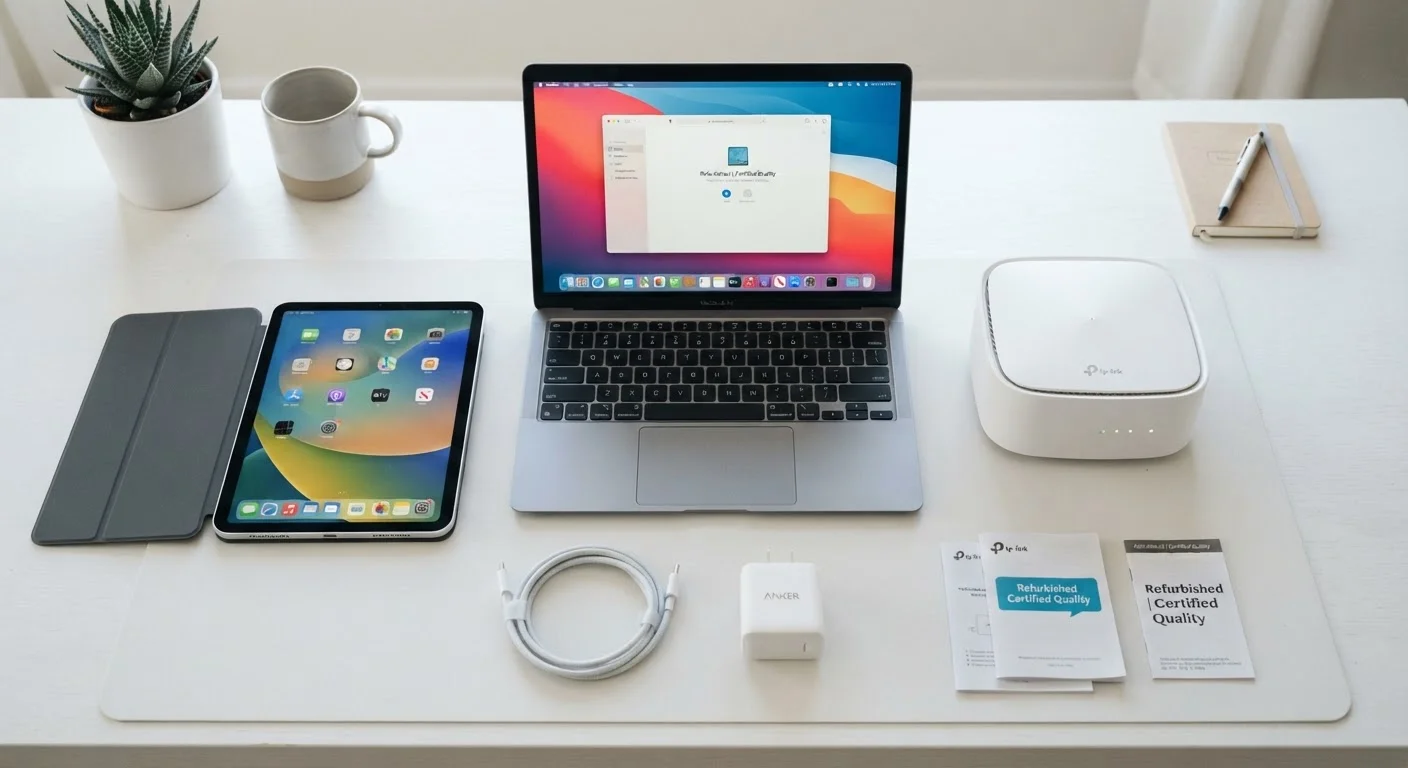
Photo: SaverSteals.com | Explore More. Shop Smarter. editorial
—— In This Article
Key Takeaways
- Refurbished makes the most sense in categories where performance is easy to verify and software does the heavy lifting.
- Certified refurbishment programs from manufacturers offer stronger quality assurances than third-party resellers.
- Cosmetic condition grades matter less for devices kept at a desk than for those carried daily.
- Categories with slow hardware turnover - like routers and monitors - offer particularly strong refurbished value.
- Always confirm warranty coverage and return windows before purchasing any refurbished device.
Why Category Choice Shapes Your Refurbished Risk
Refurbished electronics occupy a wide spectrum of quality and value - and where a device falls on that spectrum depends heavily on what kind of product it is. A refurbished laptop from a manufacturer-certified program is a fundamentally different purchase than a refurbished pair of earbuds from an unknown third-party seller. Understanding which categories lend themselves to confident refurbished buying can sharpen your decision-making before you spend a dollar.
The key variables are: how easy it is to test and verify the device's core functions, how quickly that category's hardware evolves, and how much wear physical use typically inflicts. Categories that score well across all three tend to deliver reliable value when bought refurbished. For a full breakdown of grading scales, warranty types, and what certified refurbishment actually means, see the complete buyer's reference on refurbished electronics.
Laptops
Laptops are arguably the strongest category for refurbished buying. Their core functions - keyboard input, display output, battery performance, storage, and connectivity - are all straightforwardly testable. Certified refurbishment programs from manufacturers typically replace batteries and run full diagnostic cycles, addressing the components most likely to show age.
Laptops also occupy a relatively stable hardware maturity curve in the mid-range. A two- or three-year-old business-class laptop often handles productivity workloads just as effectively as a current-year entry-level model, making the generational gap less costly than in more rapidly evolving categories.
A certified refurbished laptop's core functions are fully testable, making quality verification more reliable than almost any other category.
Tablets
Tablets follow similar logic to laptops but with one additional advantage: they have fewer moving parts. There's no mechanical keyboard, no spinning drive, and typically no fan - fewer components means fewer failure points to inspect. A refurbished tablet that passes a touchscreen responsiveness test, battery cycle check, and camera verification covers virtually all functional concerns.
For use cases like reading, video streaming, or light productivity, a refurbished tablet from a prior generation often performs indistinguishably from a current model for everyday tasks. Pay attention to software support timelines, however - older tablets may be approaching the end of their operating system update windows.
Fewer moving parts make tablets one of the more straightforward categories to evaluate when buying refurbished.
Networking Equipment (Routers and Switches)
Home and small-office routers are a sleeper hit in the refurbished market. These devices spend their entire lives stationary, plugged in, and untouched - physical wear is essentially nonexistent. Their function is binary and easy to verify: either they route network traffic correctly or they don't.
Router hardware also evolves slowly relative to consumer devices. A refurbished Wi-Fi 6 router from a prior release cycle may offer nearly identical real-world throughput to its successor for typical household use, while carrying a meaningfully lower price. This is one category where cosmetic condition is almost entirely irrelevant.
Routers live stationary lives - physical wear is near-zero, making refurbished units particularly low-risk.
Desktop Monitors
Monitors are durable, simple in their functional requirements, and easy to evaluate at purchase. The key checks - panel uniformity, dead pixels, backlight bleed, and port functionality - can all be confirmed quickly. Unlike portable devices, monitors aren't subject to drops, temperature fluctuations, or battery degradation.
Because display technology at mainstream resolutions (1080p and 1440p) has been mature for years, a refurbished monitor from a reputable source frequently delivers identical visual performance to a new unit. This is a category where cosmetic wear on the chassis has zero impact on the experience.
Display technology at mainstream resolutions is mature - a refurbished monitor often delivers identical visual performance to a new one.
Desktop and All-in-One Computers
Desktop systems - both towers and all-in-one designs - are well-suited to refurbished buying for many of the same reasons as laptops, with the added benefit that their stationary placement eliminates wear from portability. Business-grade desktops in particular are built to commercial durability standards and are frequently refurbished in high volumes, which supports more consistent inspection and grading quality.
Storage and memory are the components most worth scrutinizing in a refurbished desktop. Look for sellers that specify drive health status and, where possible, confirm that HDDs have been tested or replaced. SSDs are generally more resilient to the kind of use patterns seen in typical office environments.
Business-grade desktops are refurbished in high volumes, supporting more consistent inspection quality across units.
Smart Speakers and Streaming Devices
Smart speakers and streaming sticks occupy a lower price tier, which sometimes makes refurbished savings feel modest in absolute terms - but the risk profile is equally low. These devices are almost entirely software-driven; their hardware rarely degrades in ways that affect performance. A factory reset restores them to a clean state, which any legitimate refurbishment program will have already performed.
Connectivity and account-unlinking are the main things to confirm. Ensure the device has been fully deregistered from a previous account, a step that certified and manufacturer refurbishment programs handle as standard practice. This is also a category where common myths about refurbished reliability tend to be most overblown.
Smart speakers and streaming devices are almost entirely software-driven - hardware rarely degrades in ways that affect performance.
Making the Most of Your Refurbished Purchase
Across these categories, a few principles hold consistently. First, prioritize certified refurbishment programs - manufacturer or major-retailer programs typically include multi-point inspections, replacement of worn components, and at least a 90-day warranty. Second, read the condition grade carefully: "Grade A" or "Excellent" generally means minimal cosmetic wear and fully functional internals, while lower grades may reflect heavier use that's acceptable for a desk-bound device but less so for a daily carry.
Check Battery Cycle Count on Portable Devices
For laptops and tablets, battery condition is the single most important hardware detail to confirm. Certified programs often replace batteries outright, but if that's not specified, ask the seller for the battery cycle count or health percentage. A battery at 80% or above of original capacity is generally considered acceptable for most use cases. Anything lower should factor into your price expectations.
If you're newer to refurbished buying or want to avoid common pitfalls, it's worth reviewing costly assumptions shoppers make with refurbished tech - particularly around return windows and warranty misreads. The electronics deals hub can also help you track current pricing context across categories.
This article is for informational purposes only. Product availability, warranty terms, and refurbishment standards vary by seller and change over time. Verify all details directly with the seller before purchasing.

Electronics Editorial Team
Electronics Editorial Team is the collective byline for our editorial team and contributor network. Articles published under this byline or an editorial pen name are researched, written, and reviewed according to our editorial standards for clarity, consistency, and independence before publication.
View author profile