
Spotting Inflated 'Original Prices' on Electronics Listings
A crossed-out sticker price isn't always what the item ever sold for. Learn the signals that indicate a manufactured discount.
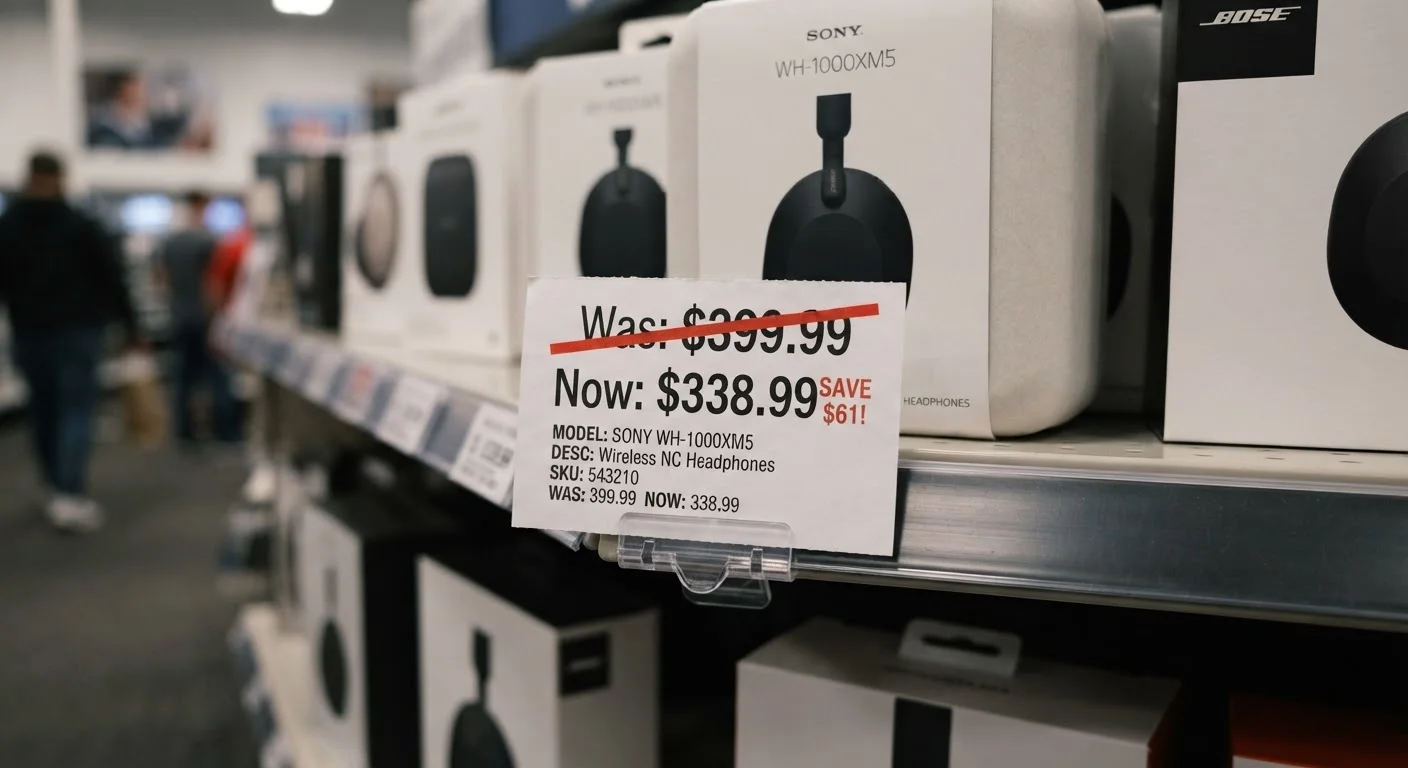
Photo: SaverSteals.com | Explore More. Shop Smarter. editorial
—— In This Article
Key Takeaways
- Reference prices on electronics listings are frequently set above actual selling prices, making discounts appear larger than they are.
- Price-tracking tools can reveal whether a 'sale price' is genuinely lower than the item's historical market price.
- Comparing prices across multiple retail channels is one of the most reliable ways to gauge true value.
- Retailer-exclusive model numbers can make direct price comparisons deliberately difficult for shoppers.
- Understanding how reference pricing works helps you evaluate any discount claim with appropriate skepticism.
Why Electronics Listings Are Especially Prone to Inflated Reference Prices
Consumer electronics sit at an intersection of rapid model turnover, complex specification sets, and high consumer motivation to find a deal. That combination creates ideal conditions for reference pricing tactics - where a higher 'original' or 'was' price is displayed alongside the current price to make savings appear larger than they are.
Unlike a plain commodity, an electronics product carries enough perceived complexity that many shoppers feel unequipped to independently verify value. A crossed-out sticker price exploits that uncertainty. Retailers and third-party sellers know that most buyers won't cross-reference a listing against its price history or check multiple channels before purchasing.
Understanding where inflated reference prices come from - and the specific signals that reveal them - is among the most practical skills a budget-conscious electronics shopper can develop. It's a topic that applies well beyond electronics too: reference pricing is a well-documented retail practice across categories, though electronics presents its own distinct challenges.
Reference Pricing Is a Legal Gray Area
In the United States, the FTC has issued guidance stating that a 'former price' used as a reference must reflect a price at which the item was actually offered for a substantial period. However, enforcement is inconsistent, and many inflated reference prices go unchallenged. Treat every crossed-out price as a claim that requires independent verification, not a guaranteed statement of fact.
Common Mistakes Shoppers Make When Evaluating Sale Prices
The errors below reflect patterns seen repeatedly in how shoppers respond to discount signals on electronics listings. Each mistake stems from a reasonable assumption that the retail environment is specifically designed to encourage.
Accepting the crossed-out 'original price' as a factual historical selling price without verification.
Why it happens: Retailers present reference prices prominently alongside discounts, and the visual framing implies the item genuinely cost more before. Most shoppers don't have an easy way to challenge that claim in the moment.
Assuming a large percentage discount automatically means strong value.
Why it happens: Percentage-off framing is psychologically compelling. A '40% off' label triggers a sense of urgency and gain regardless of whether the base price was realistic.
Failing to check prices across multiple retail channels before concluding a deal is genuine.
Why it happens: Shoppers often search within a single platform they trust and stop once they see a discount applied. The convenience of familiar retailers discourages broader comparison.
Treating a 'sale' price that has persisted for months as evidence of genuine savings.
Why it happens: Perpetual sales are common in electronics retail. Because a countdown timer or 'sale' label stays on a listing indefinitely, shoppers encounter it cold and assume it represents a temporary reduction.
Overlooking that a lower price may reflect a model approaching end-of-life rather than a genuine discount.
Why it happens: Price drops on electronics sometimes signal that a newer generation is imminent, prompting retailers to clear inventory. Shoppers interpret the drop as a windfall without considering why it occurred.
Retailer-Exclusive Model Numbers Obscure Comparisons
Some electronics manufacturers create model variants sold exclusively through specific retailers. These variants may differ from standard models only in minor ways - a bundled accessory or a slightly different color - but the unique model number makes direct price comparisons across stores far harder. If you encounter a model number you can't find anywhere else, factor that opacity into your confidence about the listed reference price.
Practical Tools for Verifying Whether a Discount Is Genuine
Several free tools can help establish whether a listed reference price reflects anything real. Price-history trackers record actual transaction prices over time, making it straightforward to see whether a product was ever consistently sold at or near the 'original' figure. If the price history shows a flat line near the current 'sale' price, the reference number was likely never a genuine market price.
Beyond history tools, comparing prices across the manufacturer's direct storefront, major general retailers, and specialist electronics sellers will quickly reveal whether a 'sale' price is genuinely below-market or simply in line with standard pricing everywhere. This is particularly relevant for refurbished or open-box items - a category where reference pricing can be especially opaque. The refurbished electronics market has its own pricing norms that differ from new-product retail.
~87%
Online shoppers influenced by reference pricing
Consumer behavior research has broadly found that the presence of a higher reference price meaningfully increases perceived value and purchase likelihood, even when shoppers are aware of the practice.
Months
Typical duration of 'sale' prices on electronics listings
Price-tracking data routinely shows consumer electronics listed at a 'sale' price for months at a time, indicating the discounted figure is effectively the standard market price.
Finally, note that price drops on electronics don't always mean what they appear to. A significant markdown late in a product's retail lifecycle may reflect inventory clearance ahead of a model refresh rather than a genuine promotional event. Both can offer legitimate value, but they require different reasoning - and neither confirms that the original reference price was ever real.

Electronics Editorial Team
Electronics Editorial Team is the collective byline for our editorial team and contributor network. Articles published under this byline or an editorial pen name are researched, written, and reviewed according to our editorial standards for clarity, consistency, and independence before publication.
View author profile