

Key Takeaways
Option A
Resistance Bands
The ultra-portable, wallet-friendly underdog.
Best for: Budget-conscious beginners and frequent travelers who need effective, space-saving strength training at home or on the go.
Option B
Free Weights
The time-tested, progressively powerful classic.
Best for: Intermediate to advanced lifters seeking measurable strength gains and a durable, long-term investment in home gym equipment.
If you have under $30 to spend right now
Resistance Bands
A quality set of loop bands or handled resistance bands covers dozens of exercises for the price of a single dumbbell pair. It's genuinely hard to beat that entry cost.
If you're serious about building measurable strength long-term
Free Weights
Dumbbells and barbells let you add precise increments of resistance over months and years - the backbone of any serious progressive overload program.
If you travel frequently or work out in small spaces
Resistance Bands
A full band set weighs under a pound and fits in a carry-on. No dumbbell rack can compete with that level of portability.
If you're recovering from an injury or prioritizing joint health
Resistance Bands
Bands provide accommodating resistance that reduces joint stress at vulnerable positions, making them a staple in physical therapy and low-impact training.
If you want durable equipment you won't need to replace for years
Free Weights
Cast iron and steel dumbbells essentially last forever with minimal care. Budget bands can degrade or snap within one to two years of regular use.
The Real Cost Breakdown: What You're Actually Paying For
Let's talk money first, because that's exactly why you're here. When you're building a home gym on a tight budget, every dollar is a decision - and resistance bands and free weights represent two very different financial commitments upfront.
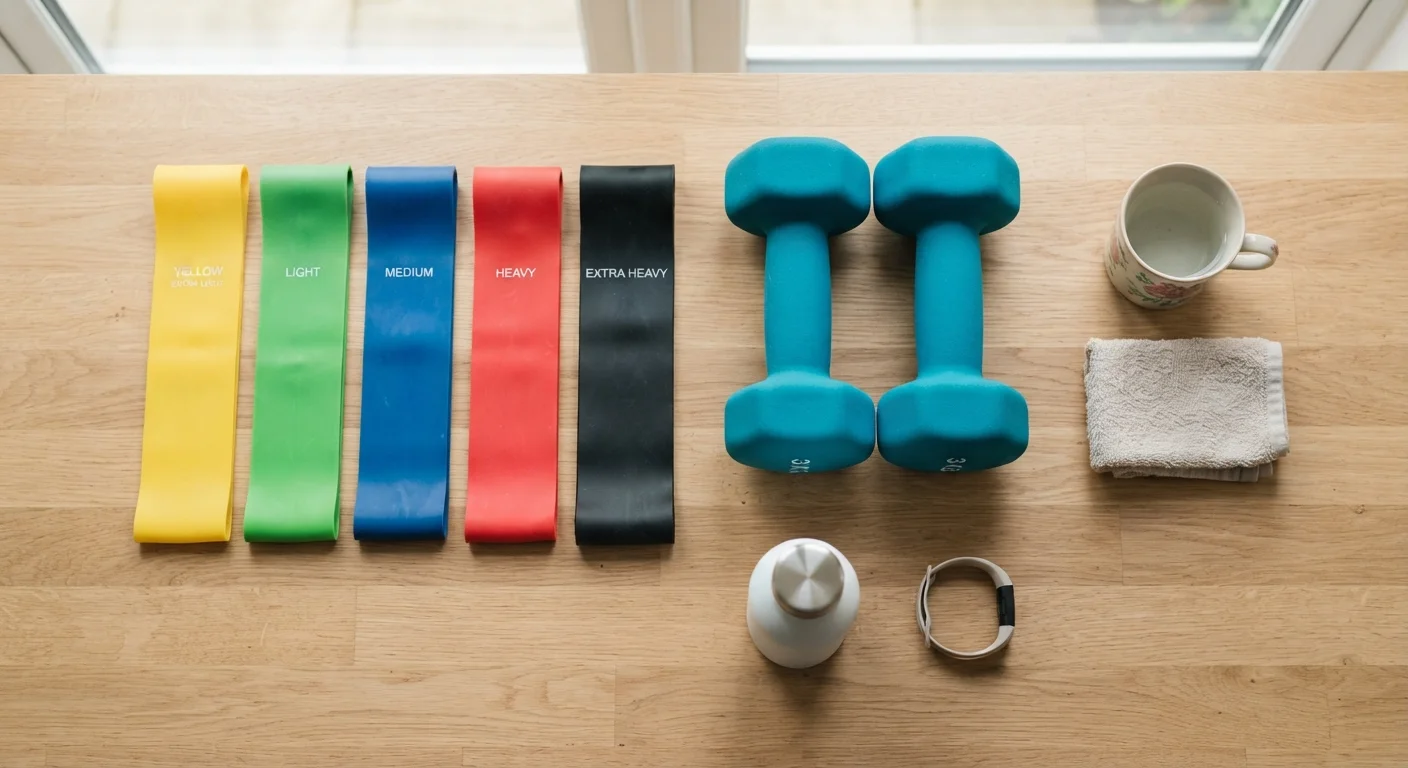
Resistance bands are one of the most affordable fitness products on the market, full stop. A basic set of five loop bands (light to extra-heavy resistance) typically runs between $10 and $25. Step up to a set of tube bands with handles and door anchors, and you're still looking at $20-$50. Premium fabric bands or heavy-duty therapy bands with higher resistance ceilings top out around $60-$80 for a comprehensive kit. That's your entire home gym starter pack for less than a single month's gym membership in most cities.
Free weights, on the other hand, scale rapidly with the weight involved - because you're literally buying metal. A single pair of 10 lb dumbbells might cost $20-$30 new, but a set that covers the range you'll actually need for a full-body routine (say, 5 lb through 30 lb in five-pound increments) can easily hit $150-$300 new. Adjustable dumbbells like the popular Bowflex SelectTech line reduce the footprint and can be smarter value, but they still start around $150-$200 for a decent range.
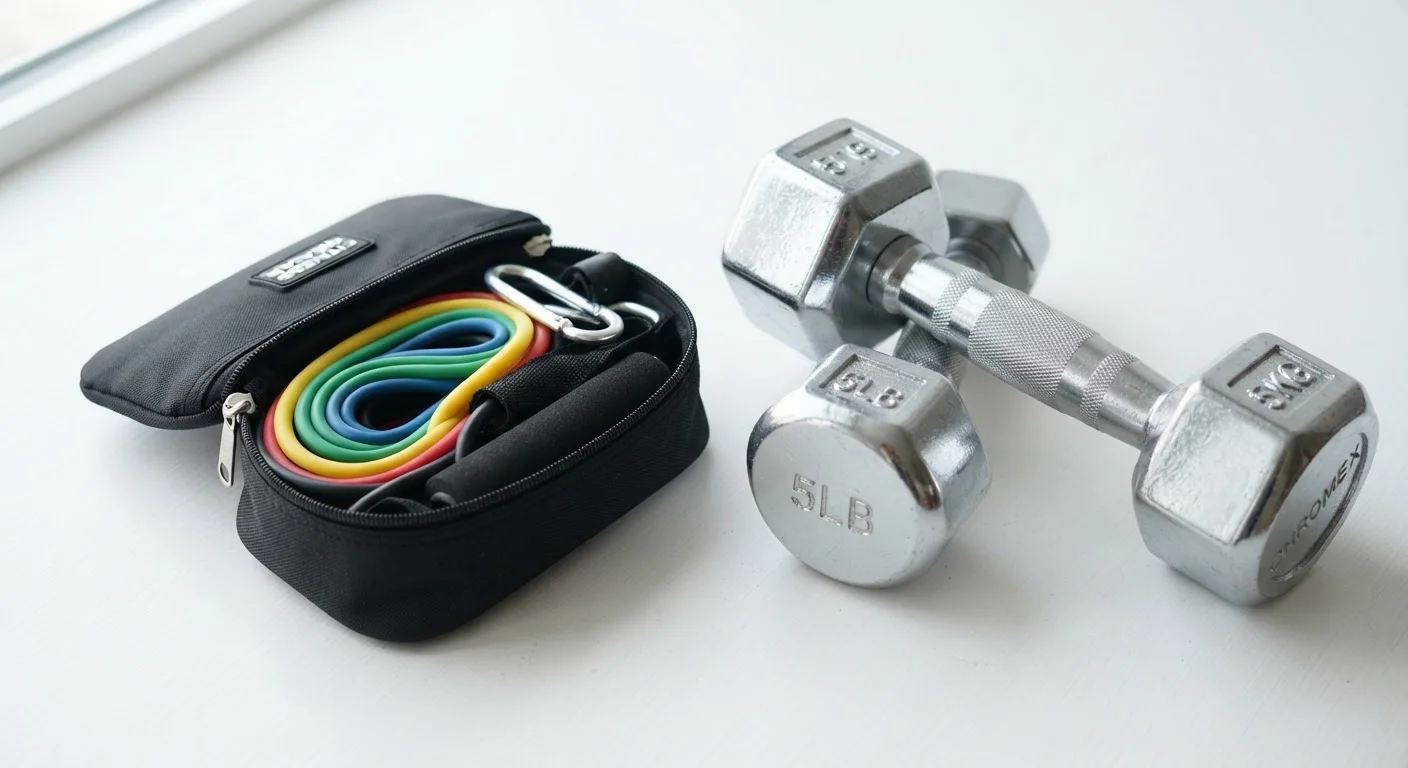
One often-overlooked cost factor: shipping and storage. Resistance bands ship cheaply (or free with Prime), take up a single drawer, and weigh almost nothing. A set of dumbbells is heavy, sometimes requiring freight shipping if bought online, and needs a dedicated rack or floor space. If you live in a studio apartment, those square-footage costs are real.
The honest verdict on price? Bands win the upfront battle by a wide margin. But there's more to value than the sticker price - so let's dig deeper. For a broader look at how fitness equipment pricing works, check out what the price tag on fitness equipment actually tells you before you swipe your card.
$10-$50
Average cost of a full resistance band set
Most major retailers and Amazon list comprehensive band kits in this range, compared to $150-$300+ for an equivalent dumbbell weight range.
~Equal
Muscle activation: bands vs. free weights
A 2019 meta-analysis in the Journal of Human Kinetics found elastic resistance training produced comparable muscle strength gains to conventional resistance training.
$0.25-$0.75
Per-pound cost of secondhand dumbbells
Secondhand marketplaces like Facebook Marketplace regularly list used dumbbells well below the $1.50-$2.00 per pound typical retail rate.
30+ years
Lifespan of cast iron dumbbells with proper care
Cast iron and steel free weights are essentially indestructible under normal home gym use, making them a strong long-term value despite higher upfront cost.
1-3 years
Typical lifespan of budget resistance bands
According to fitness equipment testers, latex resistance bands under regular use and exposure to sweat and UV light typically degrade within one to three years.
Head-to-Head Comparison: Bands vs. Weights Across Every Key Factor
Price is just one dimension of value. To really know which tool stretches your fitness dollar furthest, we need to compare them across all the factors that affect your actual results and day-to-day experience.
| Criterion | Resistance Bands | Free Weights |
|---|---|---|
| Upfront Cost | $10-$50 for full set | $50-$300+ for usable range |
| Portability | Fits in a small bag | Heavy, not portable |
| Storage Space | Minimal - one drawer | Rack or dedicated floor space |
| Progressive Overload | Approximate - band levels vary | Precise - add exact increments |
| Exercise Variety | Very high - 50+ movements | High - but fewer angles |
| Durability | 1-3 years typical lifespan | Decades with minimal care |
| Joint Friendliness | Accommodating, lower impact | Gravity-dependent, more joint load |
| Muscle Building Potential | Solid for beginners-intermediate | Superior for advanced strength |
| Injury/Rehab Use | Excellent - physio staple | Limited for rehab applications |
| Long-Term Cost | Replacement every few years | One-time investment |
A few of these rows deserve deeper context:
Progressive Overload: The Science Behind Gains
This is where free weights pull ahead in a meaningful way. Progressive overload - gradually increasing the stress placed on your muscles over time - is the fundamental driver of strength and muscle growth. With dumbbells, you can add 2.5 or 5 lbs at a time with exact precision. With bands, you're jumping between resistance levels that aren't standardized across brands and vary depending on how far you stretch them. It works, but it's fuzzier. For anyone following a structured strength program like 5x5 or a hypertrophy block, that precision matters.
Versatility: More Moves Per Dollar
Here's where bands quietly impress. A single handled band set unlocks rows, chest presses, squats, lateral walks, bicep curls, tricep pushdowns, shoulder presses, face pulls, hip thrusts, glute kickbacks, pallof presses - the list genuinely goes on. Many of those movements are difficult or impossible to replicate with only a pair of same-weight dumbbells. Bands also work well for assisted pull-up training, stretching, and mobility work, adding another dimension free weights simply can't touch.
Durability: The Long Game
This is bands' biggest weakness. Even quality latex bands will degrade over time - UV exposure, sweat, and repeated stretching all break down the material. Budget bands from unknown brands can snap within months. Free weights, by contrast, are essentially indestructible. A set of cast iron dumbbells bought today could still be in use in 30 years. When you calculate cost-per-year-of-use, weights often come out ahead over a long enough timeline.
A Note on Band Resistance Ratings
Resistance band resistance levels (light, medium, heavy, etc.) are not standardized across manufacturers. A 'heavy' band from one brand may feel very different from another's. When shopping, look for bands that list actual resistance in pounds at a specified stretch length - this gives you a far more accurate basis for comparison and progression tracking. Treat brand-specific labels as rough guides only.
Secondhand Bands: Approach With Caution
While secondhand dumbbells are a smart buy, secondhand resistance bands are a different story. It's nearly impossible to assess the structural integrity of a used band - micro-tears invisible to the eye can cause sudden snapping under tension, which is both a workout interruption and a genuine safety hazard. For bands, buy new. For weights, buy used. That's the budget-smart rule of thumb.
Effectiveness for Real Fitness Goals: Do Bands Actually Work?
The biggest skepticism most people bring to resistance bands is the effectiveness question: Can I really build muscle and get strong with just rubber loops? The short answer is yes - with some important caveats.
Research published in the Journal of Human Kinetics and other sports science outlets has shown that resistance band training produces comparable muscle activation and hypertrophy to free weight training, particularly for upper body exercises. A 2019 meta-analysis found that elastic resistance training resulted in similar strength gains to conventional resistance training in multiple muscle groups. So the science is on bands' side more than many gym-goers realize.
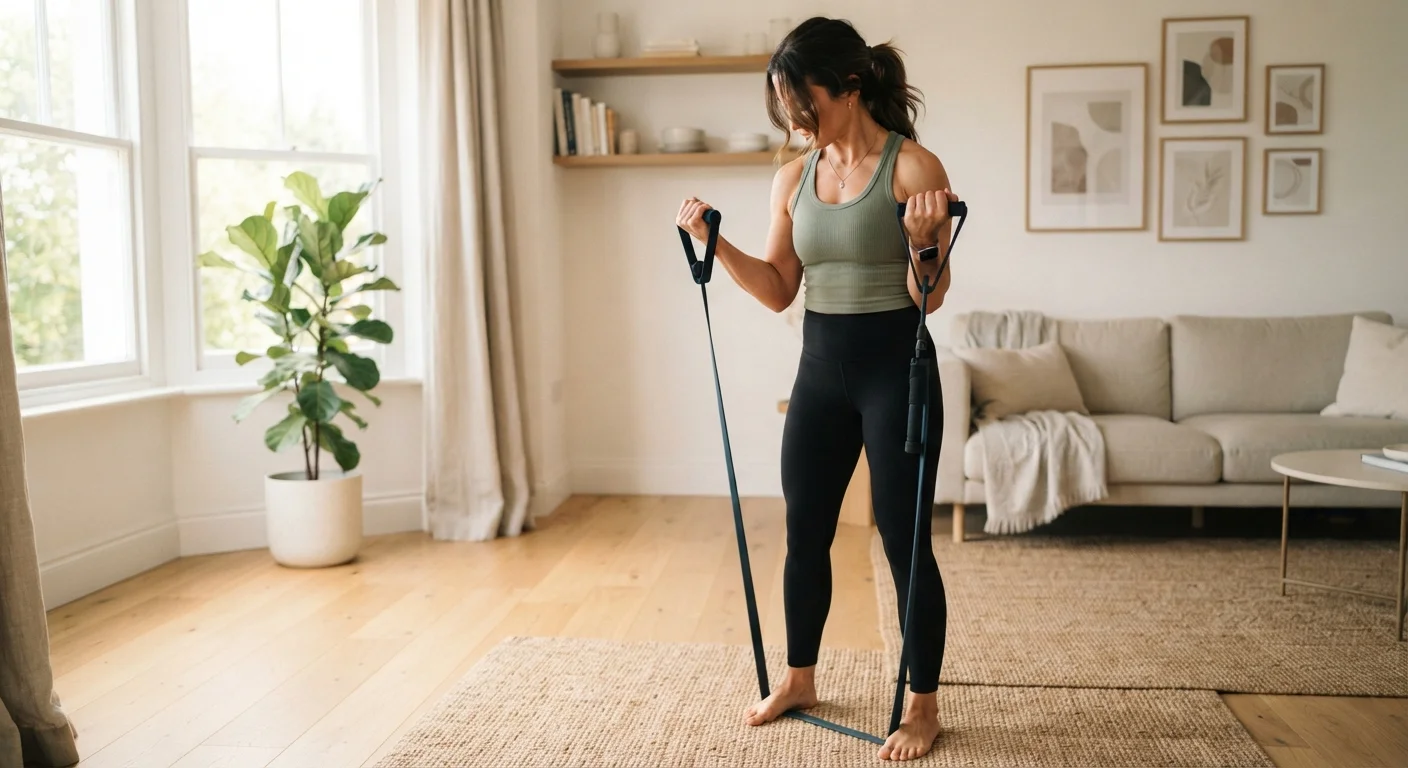
That said, there are real limitations. Bands provide what's called accommodating resistance - the resistance increases as the band stretches, meaning it's hardest at the end range of motion. This is actually excellent for exercises like squats and hip hinges (where you're naturally stronger in the top position), but it changes the stimulus compared to a dumbbell curl, where gravity creates peak tension at the mid-range. Neither is objectively better - they're just different stimuli, and variety is generally good for muscle development.
For true max-strength training - powerlifting, Olympic lifting, or loading a squat past your bodyweight - bands alone won't cut it. You need the consistent, gravity-based load of free weights (or a barbell) to build peak force output. But for the vast majority of home gym users aiming for a leaner, fitter, stronger body, bands are surprisingly powerful tools.
Who Thrives With Bands?
- Beginners building foundational strength and movement patterns
- People in physical therapy or recovering from injury
- Anyone prioritizing fat loss through circuit and metabolic training
- Travelers who need to keep a program consistent on the road
- Older adults for whom joint-friendly resistance is a priority
Who Needs Free Weights?
- Intermediate and advanced lifters chasing specific strength benchmarks
- Anyone following a structured, periodized strength program
- People who want to build significant muscle mass over years
- Home gym builders making a long-term investment
The Smart Budget Strategy: How to Build Your Kit Over Time
Here's the take that most comparison articles won't give you: the bands vs. weights debate is largely a false binary. The smartest budget fitness strategy is a staged hybrid approach - and knowing the sequence makes all the difference.
Stage 1 - Start With Bands ($15-$50)
If you're just beginning or working with a tight budget right now, a quality set of loop bands and/or a tube band set with handles gives you everything you need for months of effective training. Brands like Fit Simplify, WODFitters, and Serious Steel offer solid quality without premium prices. Learn the movements, build baseline strength, and get consistent - this is the foundation everything else builds on.
Stage 2 - Add a Few Strategic Dumbbells ($40-$100)
Once you've outgrown lighter band resistance for certain exercises - particularly pressing and pulling movements - add one or two pairs of dumbbells at weights you'll use most (often 15-25 lbs for women, 20-35 lbs for men, depending on fitness level). Watch for sales at Dick's Sporting Goods, watch Facebook Marketplace religiously (secondhand dumbbells are everywhere and often in perfect condition), and check out discount retailers like Five Below or TJ Maxx for occasional steals.
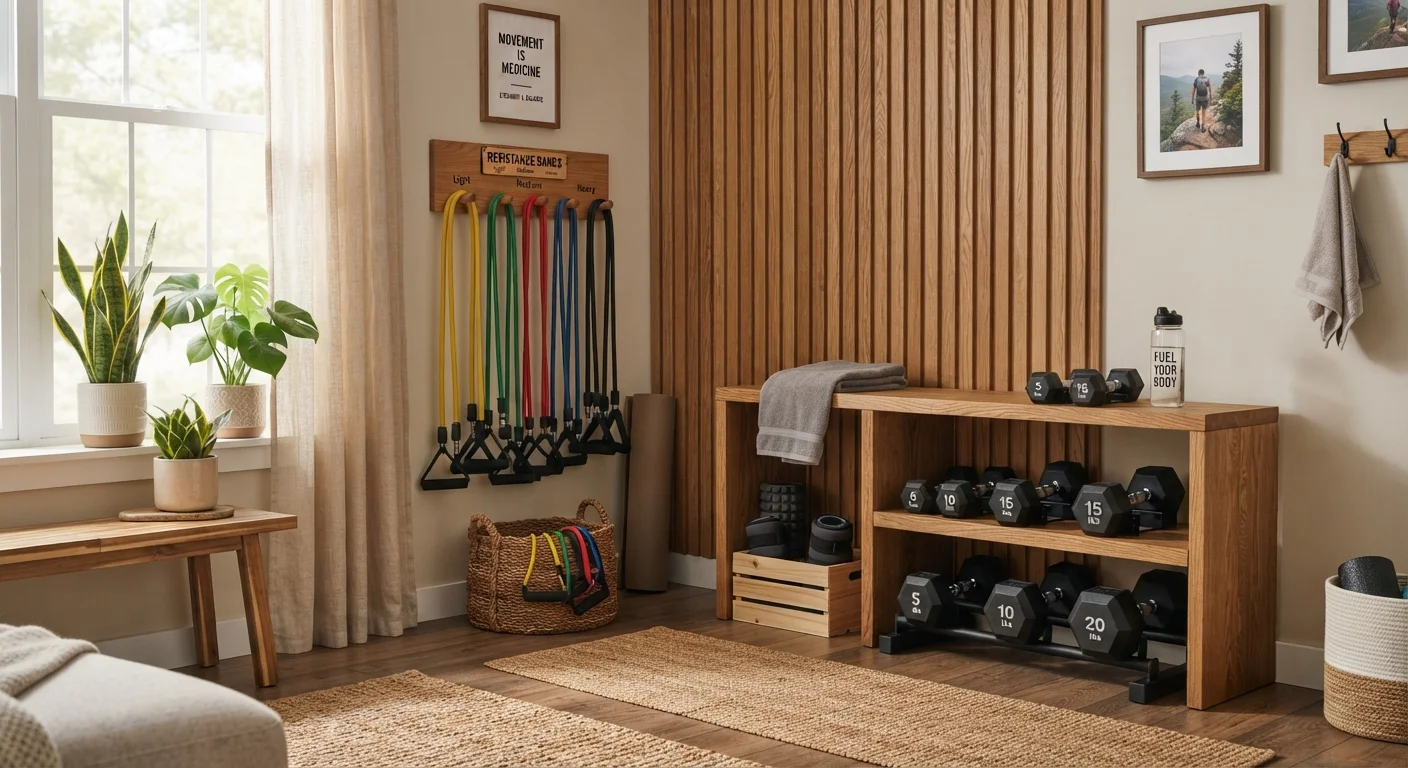
Stage 3 - Expand Deliberately ($50-$150 over time)
From there, fill gaps strategically. Add heavier dumbbells as you progress. Consider a pull-up bar ($20-$30) that makes your bands even more versatile for assisted work. A kettlebell or two can round out the setup beautifully. Before buying anything new, always ask: does this fill a gap my current setup genuinely can't cover? That discipline keeps your budget tight and your equipment meaningful.
The goal isn't to build a commercial gym in your living room - it's to have exactly the tools that support your current program, purchased at the right time. Understanding what separates budget gear that's worth it from gear that's just cheap is crucial here, which is exactly what our guide on decoding fitness equipment price tags digs into.
Think of your home gym as a living, growing investment rather than a one-time purchase, and you'll make far smarter decisions along the way.
Where to Find the Best Deals on Both Right Now
Knowing what to buy is half the battle. Knowing where and when to buy it is what separates a smart shopper from someone who just paid full retail. Here are the consistently best sources for both resistance bands and free weights on a budget:
For Resistance Bands
- Amazon: Prices are competitive and reviews are plentiful. Stick to brands with 4+ stars and thousands of reviews. Watch for Lightning Deals, especially around New Year and fall fitness season.
- Target/Walmart online: Often carry solid house-brand options (like All in Motion at Target) at aggressive price points.
- Dollar Tree & Five Below: Basic loop bands sometimes appear here for $1-$5. Great for a backup travel set or rehab-light resistance, though they won't hold up to heavy use.
For Free Weights
- Facebook Marketplace & Craigslist: The undisputed champions for secondhand dumbbells. Gyms close, people move, and iron ends up selling for $0.25-$0.75 per pound instead of the $1.50-$2/lb retail rate. Patience pays off here.
- OfferUp and local buy-nothing groups: Same concept, sometimes even better prices with neighbors offloading gear after failed fitness resolutions.
- Dick's Sporting Goods seasonal sales: January (New Year), spring (outdoor season), and Black Friday all bring meaningful discounts on name-brand dumbbells. Sign up for their email list for early access.
- Rogue Fitness Boneyard: For serious lifters - Rogue sells cosmetically imperfect but fully functional weights and barbells at significant discounts. Worth checking if you want quality that lasts decades.
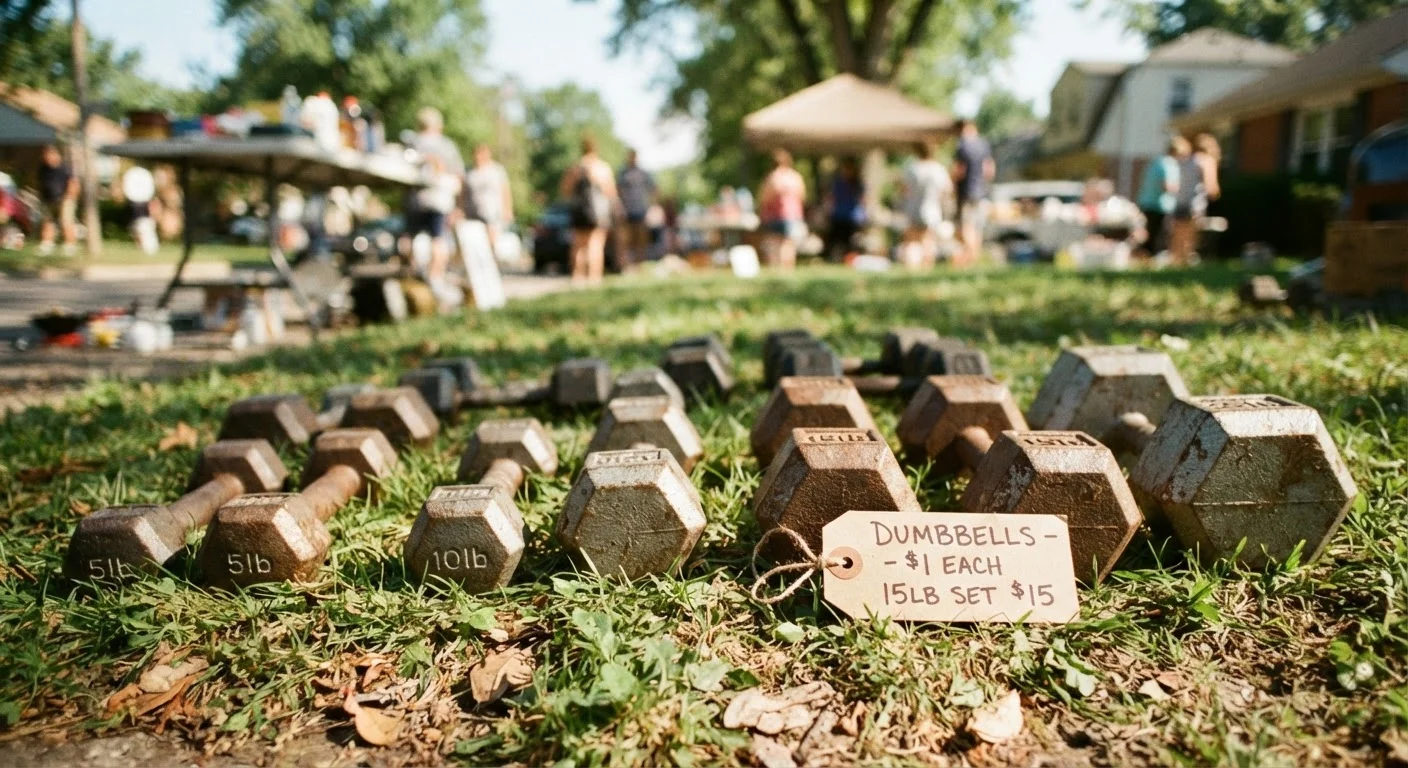
One golden rule: never buy dumbbells at full price during January. Supply chains get tight and prices spike right after New Year when everyone's motivated. Shop in late February or March when the resolution crowd has moved on and retailers are trying to clear inventory. For bands, the math is different - prices are already so low that timing matters less than just picking a trusted brand.
Whatever you decide, remember this: the best fitness equipment is the equipment you'll actually use consistently. A $300 set of dumbbells gathering dust is worth less than a $20 band set you reach for every morning. Choose the tool that excites you, fits your space, and matches where you are in your fitness journey right now - then go make it work.