
Ways Shoppers Overpay for Furniture - and the Patterns Behind Each Mistake
Anchoring effects, urgency tactics, and ignoring total cost of ownership are just some of the traps furniture shoppers fall into.
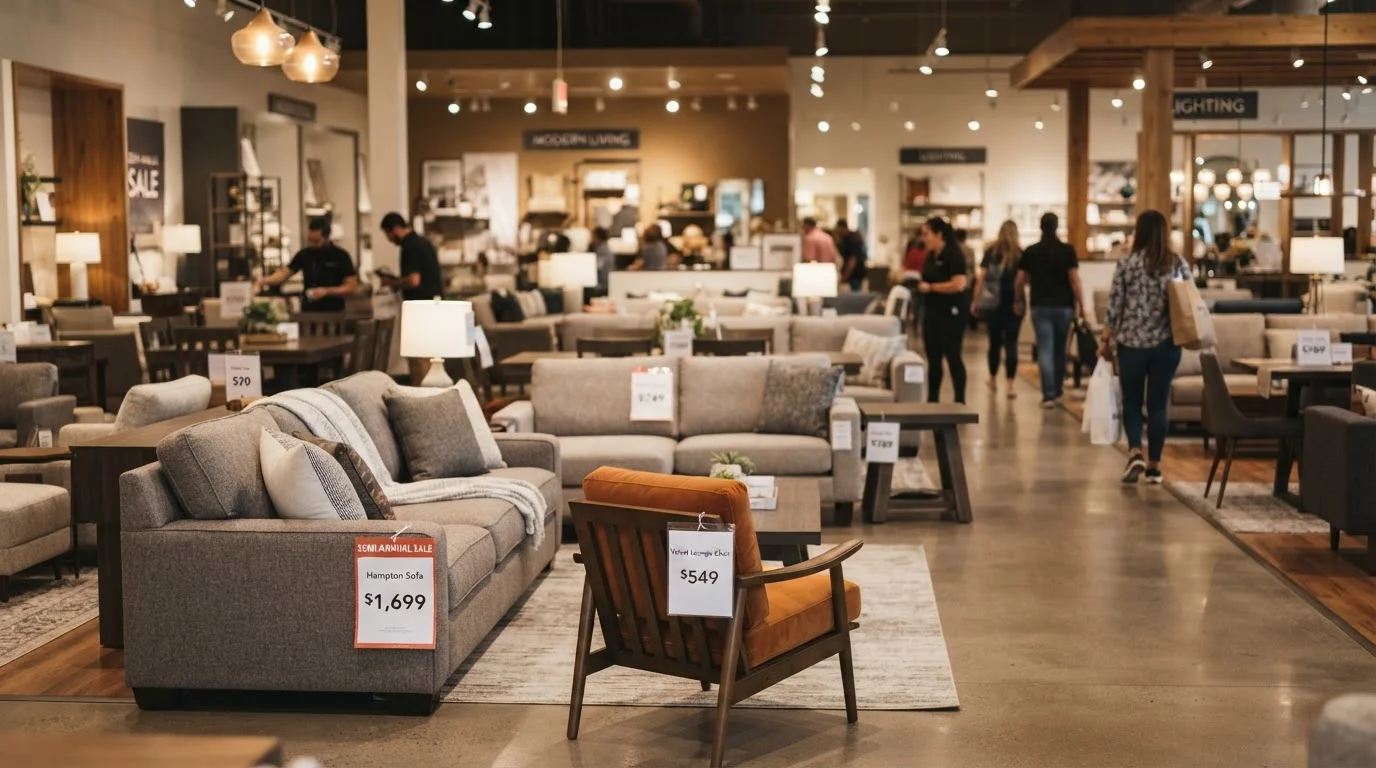
Photo: SaverSteals.com | Explore More. Shop Smarter. editorial
—— In This Article
Key Takeaways
- Anchoring effects make inflated 'original' prices feel like genuine reference points - they rarely are.
- Urgency tactics like countdown timers exploit pressure to decide before you've done real comparison shopping.
- Total cost of ownership - delivery, assembly, durability - regularly exceeds the sticker price by a significant margin.
- Furniture pricing follows seasonal and inventory cycles; timing a purchase around these can yield meaningful savings.
- Impulse purchases driven by showroom staging lead buyers to overspend on pieces that don't fit their actual space.
The Structural Reasons Furniture Shoppers Overpay
Furniture retail is built around a handful of pricing mechanics that consistently work against uninformed buyers. Understanding these mechanics isn't about cynicism - it's about knowing what you're actually evaluating when you stand in front of a price tag.
Anchoring, urgency staging, and obscured total costs are the three most effective tools retailers use to push spending above what a piece is worth. Each exploits a specific gap between how shoppers think they make decisions and how they actually make them. Common furniture pricing myths overlap directly with these mechanics - a 'clearance' tag, for instance, is often an anchor in disguise.
The mistakes below aren't obscure edge cases. They're patterns that show up repeatedly across all price points, from flat-pack to mid-range upholstered goods.
Treating the 'original' price as a reliable benchmark when evaluating a discount.
Why it happens: Retailers use price anchoring - displaying a high reference price alongside a sale price - to make the discount feel substantial. Shoppers anchor to that first number without verifying whether the item was ever widely sold at that price.
Responding to artificial urgency - countdown timers, 'only 2 left' indicators, or 'sale ends Sunday' messaging.
Why it happens: Scarcity and time pressure are well-documented psychological levers. Shoppers fear missing a deal more than they value deliberate decision-making, so they commit before comparison shopping is complete.
Ignoring total cost of ownership by focusing only on the sticker price.
Why it happens: Delivery fees, assembly charges, required accessories (bed frames, drawer liners, hardware), and the likelihood of replacement within a few years are mentally separated from the purchase decision. Shoppers compare ticket prices, not all-in costs.
Buying from a showroom floor layout without measuring the actual space at home.
Why it happens: Showroom staging is designed to make furniture look proportional and inviting. Pieces appear smaller relative to high ceilings and open floor plans than they will in a typical home room.
Overlooking the furniture sale calendar and buying at full price during peak demand periods.
Why it happens: Most shoppers buy furniture reactively - when they move, redecorate, or something breaks - rather than timing purchases to retailer inventory cycles. This reactive posture puts them in the market during the worst pricing windows.
How to Build Better Habits Around Furniture Purchases
Most overspending on furniture isn't the result of a single bad decision - it's the cumulative effect of skipping steps that feel inconvenient in the moment: measuring twice, waiting out artificial urgency, adding up the full cost.
Recurring Sales Are Not the Exception - They're the Model
If a retailer runs the same promotional event multiple times a year, the 'sale' price is effectively the market price for that item. Waiting for the 'next sale' is a reasonable strategy, but it only works if you're tracking whether the baseline price shifts between events. Some retailers quietly raise pre-sale prices before major promotional windows to preserve the appearance of a significant discount.
Timing helps significantly. If your need isn't immediate, aligning a purchase with inventory clearance cycles - typically post-holiday and late summer - gives you access to genuine markdowns rather than manufactured ones. For a practical approach to structuring a furniture budget around these patterns, buying furniture on a budget without compromising quality lays out the trade-offs clearly.
Secondhand furniture introduces its own pricing traps. The same anchoring and urgency dynamics appear in private-sale and resale contexts, and condition assessment adds another layer of complexity. The same critical eye that protects you in a retail showroom applies in resale settings - exploring used furniture options is worthwhile, but only with clear evaluation criteria in place.
The consistent thread across all these mistakes is the same: reactive, pressure-driven decisions produce worse outcomes than deliberate ones. Slow the process down, verify the numbers independently, and treat any messaging designed to speed up your decision as a signal to pause.

Furniture Editorial Team
Furniture Editorial Team is the collective byline for our editorial team and contributor network. Articles published under this byline or an editorial pen name are researched, written, and reviewed according to our editorial standards for clarity, consistency, and independence before publication.
View author profile