
Reading the Retail Calendar: When Clothing Categories Go on Sale Throughout the Year
Seasonal markdowns follow predictable patterns. Learn which clothing categories typically drop in price and when, so you can plan purchases in advance.
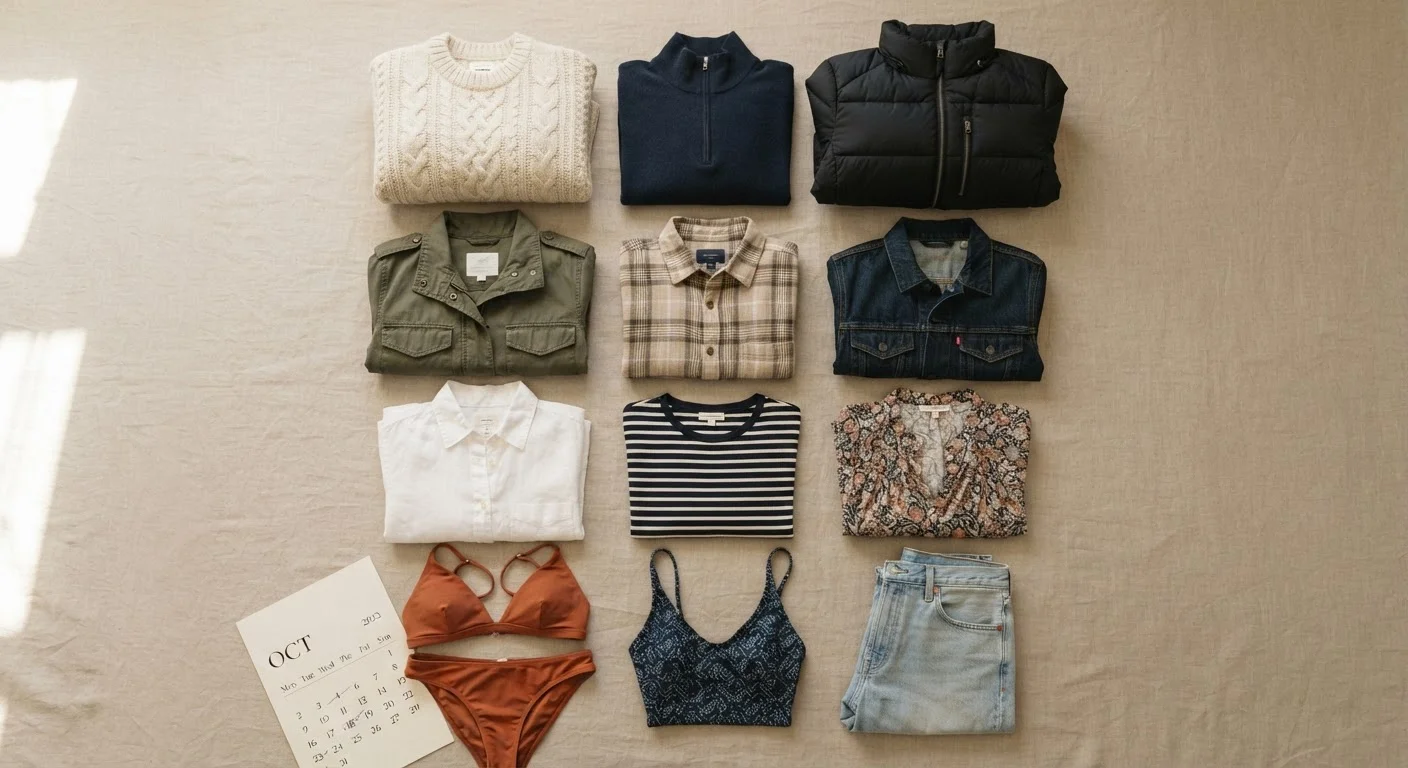
Photo: SaverSteals.com | Explore More. Shop Smarter. editorial
—— In This Article
Key Takeaways
- Clothing price drops follow seasonal inventory cycles, not random promotional decisions.
- Winter coats, swimwear, and back-to-school items each have distinct markdown windows.
- End-of-season clearance typically offers steeper discounts than mid-season promotional sales.
- Planning purchases 4-8 weeks after a season peaks often yields the best markdowns.
- Holiday weekends (Labor Day, Memorial Day) trigger genuine category-specific price cuts.
Why Clothing Prices Follow a Calendar
Retailers order clothing inventory four to six months before it hits the sales floor. That lead time creates a structural pressure: once the next season's shipment is inbound, current stock must move. The result is a relatively consistent pattern of markdowns that repeats year after year, category by category.
This is distinct from manufactured urgency or flash sales. End-of-season discounts are driven by genuine operational need - floor space, inventory carrying costs, and new merchandise arrival dates. Understanding how those markdowns are structured helps you distinguish a real clearance from a promotional price bump dressed up as a discount.
The practical implication: if you can tolerate buying slightly out of season, you can consistently pay less for the same items by waiting for the inventory cycle to work in your favor.
4-6 months
Lead time before clothing hits retail floors
Standard industry practice has retailers placing orders months in advance, creating the inventory pressure that drives end-of-season markdowns.
2x per year
Major seasonal merchandise cycles in clothing
Most clothing retailers operate on a spring/summer and fall/winter merchandise calendar, creating two primary clearance windows annually.
Late January
Typical peak clearance month for winter outerwear
Industry observers consistently note January and early February as the window when winter coat discounts reach their deepest point.
A Month-by-Month Guide to Clothing Category Markdowns
Not all clothing categories go on sale at the same time. Here's how the retail calendar typically breaks down across major categories:
- January-February: Deep clearance on winter coats, heavy knitwear, and cold-weather accessories. Retailers are clearing space for spring arrivals. This window often produces the steepest seasonal discounts on outerwear.
- March-April: Transitional and lightweight layers (cardigans, light jackets) begin at full price as spring collections launch. Winter clearance may continue in reduced form.
- May-June: Summer apparel - shorts, tees, sundresses, and swimwear - arrives at full price. Memorial Day weekend often brings promotional discounts on spring items that haven't sold through.
- July-August: Swimwear and summer styles begin markdown cycles in late July as retailers shift toward fall. Back-to-school basics (jeans, casual tops, sneaker-adjacent footwear) peak in demand, keeping prices firm through early August.
- August-September: Unsold back-to-school inventory starts clearing. Early fall pieces arrive at full price. Labor Day weekend promotions often coincide with genuine late-summer clearance.
- October-November: Fall apparel - flannels, mid-weight jackets, boots - sells at or near full price. Pre-holiday promotional windows (notably Black Friday) can offer discounts on select items, though selection and discount depth vary widely.
- December: Holiday gifting drives full-price demand on cold-weather clothing. Post-Christmas clearance begins in late December on any remaining fall and holiday inventory.
Shopping Strategies That Work With the Calendar
Timing alone isn't enough - you also need a practical approach to act on these windows effectively.
Build a purchase list before the markdown window opens. Knowing you'll need a winter coat next year means you can shop end-of-January clearance with intention rather than browsing aimlessly. Decide on general fit, style, and category needs in advance.
Prioritize basics over trend pieces when shopping clearance. Classic styles - neutral-toned outerwear, well-cut jeans, plain knitwear - retain usefulness longer than heavily seasonal trend items. Buying a fashion-forward piece in a clearance color or silhouette that's already past its trend peak limits how much use you'll get from it.
Complement timing strategies with resale channels. Secondhand and resale shopping operates on a different pricing logic - supply-driven rather than calendar-driven - which can fill gaps when retail clearance windows have limited sizing or selection.
Track Prices a Few Weeks Before the Window
Rather than waiting for a specific date, start monitoring prices on items you need about three to four weeks before the typical markdown window for that category. This gives you a baseline to recognize when a genuine price drop occurs versus a minor promotional adjustment. Keeping a simple list of items and their current prices takes only a few minutes but significantly improves your ability to act on real discounts.
It's also worth noting that clothing pricing patterns differ from other categories. Electronics follow product release cycles more than seasonal inventory pressure, and furniture markdowns are tied to showroom refresh cycles rather than fashion seasons. Clothing is one of the more predictable categories precisely because it runs on a twice-yearly (spring/summer and fall/winter) merchandise calendar.
What the Calendar Can't Predict
Seasonal patterns are useful heuristics, not guarantees. Several factors can disrupt typical markdown timing:
- Weather anomalies: A warm winter may push coat clearance earlier than expected as demand drops. A cold spring can delay swimwear markdowns.
- Supply chain disruptions: If new season inventory arrives late, retailers may hold prices on current stock longer rather than discount it.
- Retailer-specific calendars: Some retailers run their clearance cycles on slightly different schedules, and discount depth varies by business model (full-price department stores vs. off-price formats behave differently).
The calendar gives you a planning framework, not a precise price-drop date. Monitoring prices on items you've identified in the weeks leading up to a typical markdown window - rather than assuming a specific date - is a more reliable approach.
Frequently Asked Questions

Clothing Editorial Team
Clothing Editorial Team is the collective byline for our editorial team and contributor network. Articles published under this byline or an editorial pen name are researched, written, and reviewed according to our editorial standards for clarity, consistency, and independence before publication.
View author profile