
Why Paying Full Price for Books Is Often Avoidable
Many readers assume discounts only apply to unpopular titles. We separate fiction from fact about how book pricing and discounting actually works.
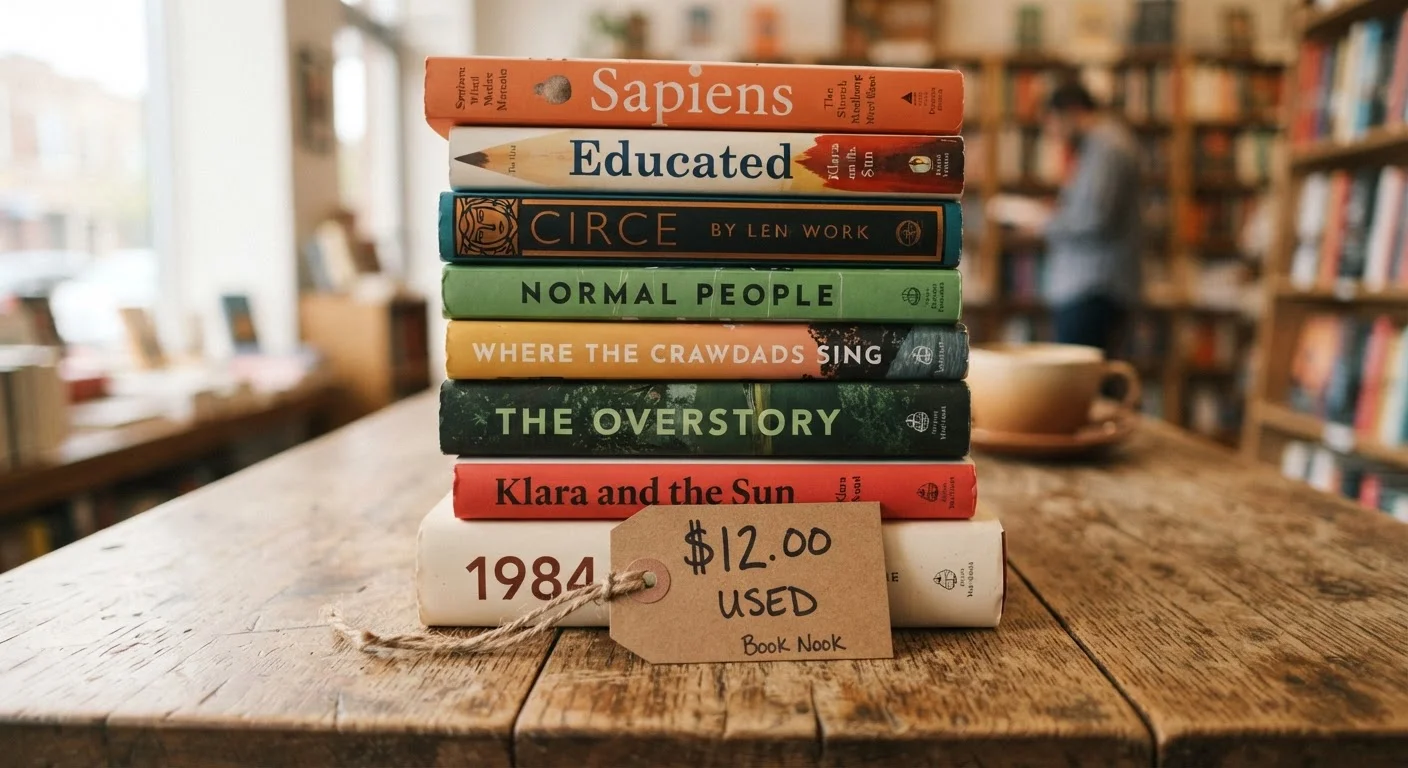
Photo: SaverSteals.com | Explore More. Shop Smarter. editorial
—— In This Article
Key Takeaways
- Publishers routinely discount titles across all popularity levels, not just slow sellers.
- Public libraries, digital platforms, and remainder markets offer legitimate free or low-cost access.
- List price is a ceiling, not a floor - most books are available for less through multiple channels.
- New releases are discountable sooner than most readers expect.
- Understanding where discounted books come from helps you find reliable savings without guesswork.
The Assumptions Keeping Readers Overpaying
Most budget-conscious shoppers already know the basics: use the library, check thrift stores, look for sales. But a surprising number of readers still pay full cover price for books - not because cheaper options don't exist, but because they're working from faulty assumptions about how book pricing actually works.
Book retail has a genuinely unusual pricing structure. Publishers set a list price, but that price almost immediately becomes negotiable at every point along the supply chain. Understanding that reality - and busting the myths that obscure it - is the fastest way to stop overspending on reading.
The myths below are common, persistent, and worth correcting directly. For an even deeper look at where affordable books actually originate, see the full map of where discounted books actually come from.
Myth
Discounts only appear on books nobody wants to buy.
Fact
Publishers and retailers discount titles across the entire catalog, including bestsellers and new releases.
The remainder market - where publishers sell overstock at steep reductions - does include slow-moving titles, but it also regularly features books that sold well and simply reached the end of a print run. Major retailers routinely discount current bestsellers as a competitive tactic, and publisher direct sales, book clubs, and library systems provide access to popular titles at reduced or zero cost. Popularity and price are largely unrelated once you look past the cover.
Myth
You have to wait years for a new book's price to drop.
Fact
Many new releases are discounted within weeks, particularly in ebook formats or through membership programs.
Hardcover pricing does tend to hold longer than paperback or digital, but even that window has shortened. Ebook editions of new releases are frequently discounted during promotional periods shortly after launch. Library digital lending often makes new titles available at no cost within months of publication, sometimes sooner depending on acquisition budgets. Readers willing to consider formats other than hardcover rarely need to wait years for meaningful price relief.
Myth
Library copies are always worn out or unavailable for popular titles.
Fact
Most public library systems regularly replace high-demand titles and offer digital lending with no physical wear at all.
Physical library copies do circulate heavily, but libraries with active collection budgets replace worn copies and purchase multiple editions of in-demand books. More significantly, digital lending platforms connected to library cards - which provide access to ebooks and audiobooks - deliver titles in perfect condition every time, with no degradation from prior use. Wait times exist for popular digital titles, but hold queues move faster than many readers expect, and the cost is zero.
Myth
Buying used books means settling for unknown condition and reliability.
Fact
Used book marketplaces use standardized condition grading, and many sellers offer return policies.
Established used book platforms apply consistent condition descriptors - terms like "like new," "very good," "good," and "acceptable" carry agreed-upon meanings that sellers are held to. Marketplace platforms typically offer buyer protection for items that don't match their listed condition. Sticking to sellers with strong feedback ratings and reading condition notes carefully reduces risk substantially. The uncertainty that does remain is a manageable factor, not a reason to default to full-price retail.
Myth
Free book options are only for classics or public domain works.
Fact
Contemporary titles are widely available at no cost through libraries, publisher promotions, and digital lending programs.
While it's true that public domain works are freely available through projects like Project Gutenberg, the free-book landscape extends well beyond nineteenth-century literature. Public libraries provide access to contemporary fiction and nonfiction through digital platforms. Publishers periodically make recent titles free as promotional tools - particularly the first book in a series. Reading communities and nonprofit digital libraries also distribute contemporary works under open licensing. Free access to current books is less rare than most readers assume.
What Smart Book Shoppers Know That Others Don't
Once you accept that list price is a ceiling rather than a standard, a few practical habits follow naturally. First, check availability across multiple channels before purchasing - library systems (including digital lending through apps like Libby), used marketplaces, remainder retailers, and publisher direct sales each serve different parts of the catalog. Second, recognize that condition and edition matter. A discounted book in fine condition is a genuine saving; a heavily marked-up used copy of the wrong edition is not.
Watch for Costs That Offset Apparent Savings
A discounted book isn't always a better deal once you factor in shipping charges, edition mismatches, or condition issues. Buying the wrong edition of an academic text, for example, can render it useless. Always verify edition details before purchasing used or discounted copies, and account for any shipping fees when comparing prices across channels.
It's also worth noting that digital formats - ebooks and audiobooks - are subject to their own pricing dynamics. Library ebook licenses work differently from personal ownership, and some titles rotate in and out of availability. Those nuances are worth understanding before assuming a format is always the cheaper route.
Before assuming you've found a deal, it's worth reading about the hidden costs that can make cheap books expensive - shipping fees, poor condition, and wrong editions can quietly erase any savings.
For readers willing to look beyond obvious channels, the options multiply considerably. Less obvious places to find deeply discounted books covers sources that most shoppers overlook entirely, from university surplus sales to community book swaps.

Books Editorial Team
Books Editorial Team is the collective byline for our editorial team and contributor network. Articles published under this byline or an editorial pen name are researched, written, and reviewed according to our editorial standards for clarity, consistency, and independence before publication.
View author profile